"This first production contract is a major milestone for the JDAM LR program, demonstrating our ability to deliver long-range precision-strike capability at a significantly lower cost," Boeing vice president of precision engagement systems Bob Ciesla said in the company's release.
Boeing’s $75 million undefinitized production contract
The Air Force has approved production of a turbojet‑boosted Joint Direct Attack Munition (JDAM), triggering a $75 million undefinitized contract with Boeing that paves the way for the Navy to receive the first kits, Boeing said in a Wednesday press release. The release did not disclose how many JDAM Long Range (JDAM LR) kits will be procured under that initial award.
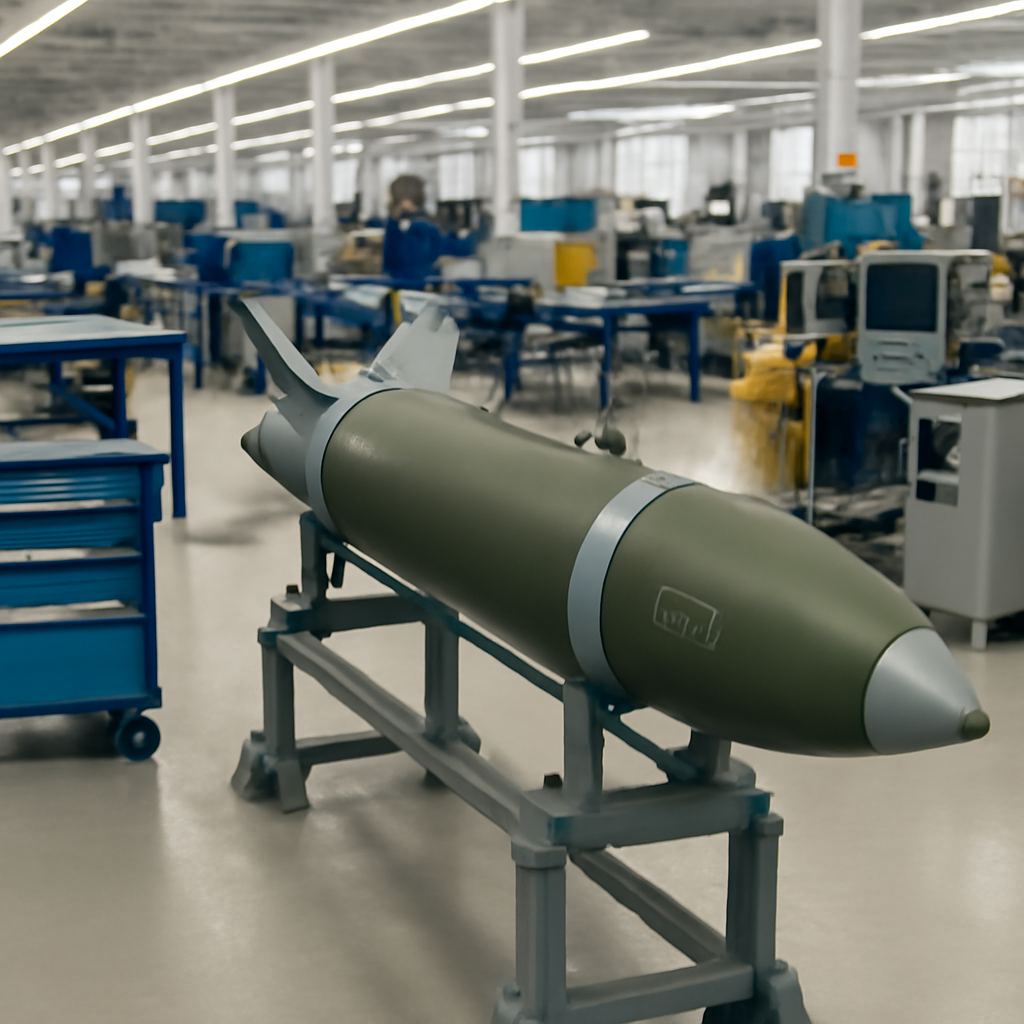
Boeing described the contracted item as the BSU‑111/B Payload Delivery Unit — essentially the complete kit that, when fitted to an unguided bomb, converts it into the engine‑equipped JDAM LR. Boeing also said it invested roughly $100 million of internal funding to develop the weapon and touted the ability to "leverage existing JDAM infrastructure" to scale production more quickly.
JDAM LR performance: range, payload and integration
Boeing says the engine-equipped JDAM LR extends the weapon’s reach to over 340 miles for a 500‑pound class payload. That is a substantial increase relative to earlier configurations: the standard JDAM was limited to roughly a dozen miles without the boost, while an "extended range" glide variant already in service reaches a little over 45 miles, according to a Boeing fact sheet quoted in the release.
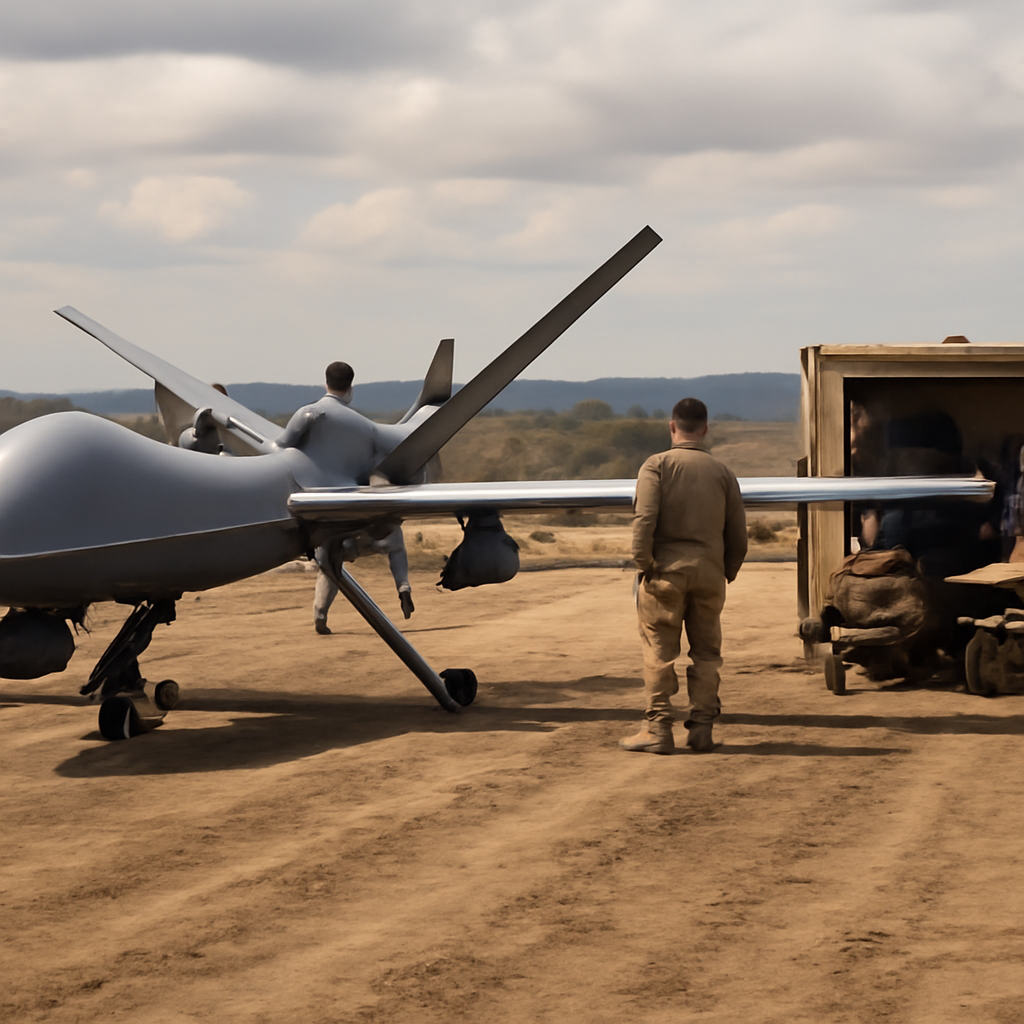
In company statements, Boeing asserted the JDAM LR can be "rapid[ly] integrat[ed]" with any aircraft capable of carrying previous JDAM kits. The company named fighters such as the F‑15, bombers like the B‑52, and MQ‑9A Reaper drones as examples of platforms that could carry the new kit; Boeing also tested the weapon on an F/A‑18 Super Hornet.

This site is the portfolio.
OSINTSights runs on Cloudflare Workers, D1, R2, and Vectorize, with an AI pipeline on Hetzner ARM. Nubivance designed, built, and operates it. We do the same for clients.
See what we buildNavy flight tests and accuracy claims
The Navy publicly revealed the long‑range modification for the JDAM kit in April and reported a dual set of flight tests that demonstrated the weapon "maintaining consistent guidance directly to its target" at a distance of "approximately 200 nautical miles." Boeing’s April release said the first shot "landed within meters of its planned target" and that a second test "successfully incorporat[ed] altitude changes and weapon maneuvering during an otherwise similar flight."
Pentagon procurement context and stockpile concerns
The timing of JDAM LR production coincides with a Pentagon push for cheaper alternatives to increasingly costly munitions, the company release noted. The decision follows reporting that the U.S. military’s stockpile of ground‑launched, precision munitions has been diminished by the war with Iran, a concern first reported by Reuters and referenced in the Boeing material.
Boeing framed JDAM LR as a lower‑cost precision strike option that could let aircraft attack from greater standoff ranges, potentially reducing risk to crews and platforms in contested airspace and offering a way to preserve ground‑launched inventories.
What this means for the Navy, the Air Force, and aircraft operators
- The Navy: With the first kits slated for the Navy under the initial contract, naval planners will evaluate how JDAM LR fits with carrier air wings and strike doctrine, including integration with platforms already used in testing such as the F/A‑18 Super Hornet.
- The Air Force: Air Force decision‑makers have signed off on production, creating a pathway for servicewide adoption; they will need to coordinate quantities, distribution, and how the new kits complement existing glide and non‑powered JDAM variants.
- Aircraft operators (fighters, bombers, MQ‑9A Reaper operators): Units that already employ JDAM predecessors could expect "rapid" integration claims to shorten qualification and operational acceptance timelines, while operators will watch for specific carriage, release envelopes, and mission planning changes associated with the turbojet‑boosted kit.
The Air Force’s approval and Boeing’s production contract mark a clear transition from testing to manufacture for JDAM LR, but important program details remain to be disclosed publicly. The initial undefinitized $75 million award signals near‑term deliveries to the Navy and the prospect of wider service use, yet the company release does not specify the number of kits contracted, nor a delivery schedule.
The immediate next milestones to watch — based on the company and Navy statements — are formalization of the contract quantity and timeline, early production deliveries to the Navy, and operational integration on the range of aircraft Boeing cited. Those steps will determine whether the JDAM LR serves as a lower‑cost, longer‑reach option at scale, or remains a more limited capability available in select inventories.
Source: Breaking Defense — Air Force signs off on production of long-range JDAM