“This CERP critical design review is the culmination of an enormous amount of engineering and integration work from Boeing, Rolls Royce, and the Air Force that will enable the B-52J to remain in the fight for future generations,” Lt. Col. Tim Cleaver, the CERP program manager, said in a news release.
The CERP critical design review and Boeing’s next steps
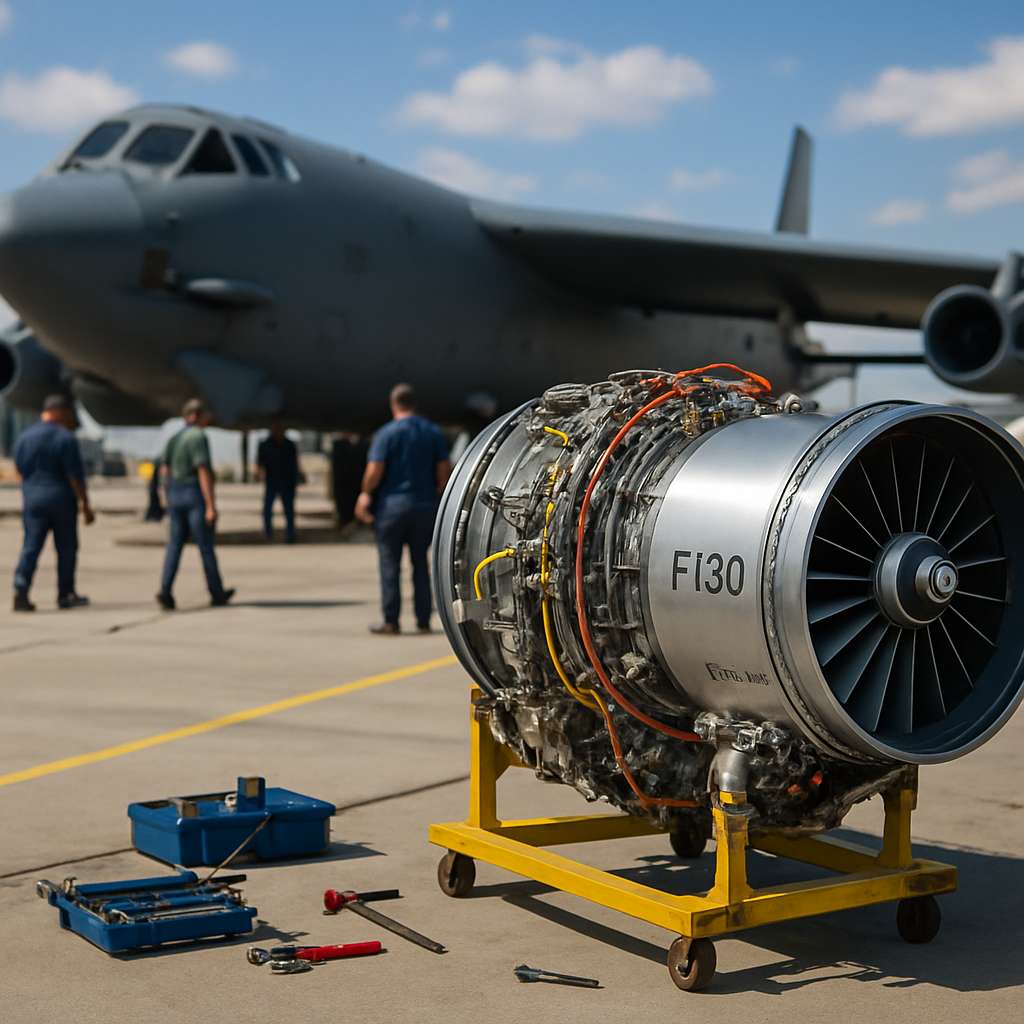
Air Force officials announced that the Commercial Engine Replacement Program (CERP) passed its critical design review, clearing Boeing to begin replacing the B-52’s 1960s-era Pratt & Whitney TF33-PW-103 engines with Rolls-Royce F130 engines. The Air Force said Boeing, “the prime contractor for integration, is procuring and manufacturing parts, and will begin modifying the first two B-52H aircraft into the B-52J configuration at its facility in San Antonio, Texas.” The first bomber is scheduled to arrive for modification later this year.
Rolls-Royce F130 engines: contract, testing, and prior integration trouble
The F130 effort has its own chronology in the record. In 2021 the Air Force awarded Rolls-Royce a $2.6 billion contract to build the F130 engines. According to the public account, the F130s passed their own critical design review in late 2024 and “completed operability and altitude testing in February,” a sequence that Defense One first reported. The program has not been without friction: last year Boeing was blamed for F130 integration problems that drew scrutiny across the upgrade plan.

Audit-ready is a season. It shouldn't be.
Evidence in spreadsheets, controls drifting between audits, frameworks multiplying on flat headcount. Nubivance runs continuous compliance on Rapid7 Cyber GRC - SOC 2, HIPAA, ISO 27001, PCI, CMMC.
End the scrambleFlight testing at Edwards AFB and the B-52J redesignation
The first re-engined B-52s will be flown to Edwards Air Force Base, California, for testing before program managers give the go-ahead for the remainder of the fleet. As the Air Force replaces the 76 B-52H bombers’ powerplants and implements a radar upgrade, those aircraft will be redesignated B-52Js. The Air Force characterizes the engine upgrades as “crucial for keeping the B-52 Stratofortress a formidable asset in the nation’s long range strike arsenal through 2050 and beyond.”
Cost oversight and the radar-upgrade Nunn-McCurdy breach
The B-52 upgrade plan faced heavy scrutiny after radar-upgrade costs triggered a Nunn-McCurdy Act breach. That budget and oversight pressure came alongside the integration problems attributed to Boeing, increasing congressional and program-level attention to cost, schedule, and technical risk. Program managers now face the twin tasks of concluding engine integration testing and stabilizing the radar modernization within acceptable cost and schedule parameters.
How the Air Force, Boeing, and the Mitchell Institute will watch the rollout
- Air Force program managers will watch the Edwards AFB flight test program closely: successful tests there are the explicit gating event before wider fleet modifications proceed.
- Boeing, as prime integrator and the shop modifying the first two aircraft in San Antonio, will focus on delivering parts and resolving the integration issues that previously drew blame.
- The Mitchell Institute for Aerospace Studies and defense analysts will track force-capacity outcomes: a February report from the Mitchell Institute noted that a future force of 200 B-21s combined with remaining B-52s “would more than double the Air Force’s current longrange strike sortie capacity,” and observed that a force mix with more than 70 percent stealthy B-21s would restore historical capacity to penetrate the most challenging air defenses.
The facts are straightforward and consequential. The B-52 first entered service in 1955 and “has flown missions ever since—most recently in the war on Iran,” the Air Force release noted. The service is building the next-generation B-21 bomber to replace its B-1s and B-2s—but not its B-52s—making the success of CERP central to the Air Force’s long-range strike posture for decades to come. The program’s immediate milestone is concrete: the first re-engined bomber arrives in San Antonio later this year and its subsequent flight testing at Edwards AFB will determine whether integration problems and cost pressures can be kept at bay as the fleet moves toward the B-52J era.