“Integrated test is a key component.” — Brig. Gen. Mark Massaro
What the Air Force Test Center is building for the F-47 program
The Air Force Test Center (AFTC), based at Edwards Air Force Base in California, is reshaping how it prepares for flight testing of the U.S. Air Force’s sixth-generation F-47 fighter as the program moves toward a targeted first flight in 2028 and initial operational fielding in the early 2030s. In a virtual talk the Air & Space Forces Association’s Mitchell Institute for Aerospace Studies hosted yesterday, AFTC head Brig. Gen. Mark Massaro described a deliberate effort to mix developmental test (DT) and operational test (OT) elements and to bring operational test partners into planning earlier to accelerate delivery of critical capabilities.
Massaro framed the effort as both procedural and cultural: “So, how we mix together the DT [developmental test] and OT [operational test] elements, how we bring our operational test partners in earlier to define the requirements early on in the test planning process,” he said, arguing that early test information can apply to final operational test requirements and thus speed the program.
How AFTC intends to couple software practices with flight testing
Massaro said the AFTC is borrowing concepts from agile software development to create iterative test and capability release patterns. “If you think back to software testing and you think about agile software development, is having an iterative capability that you constantly iterate on,” he said, noting test planning increasingly targets regular decision points rather than traditional milestone charts.
He also highlighted a push to use advanced digital processing to accelerate model iteration and the feedback loop from flight test to design. “Another thing … is on the digital front, using our software tools, that super intelligence, graphic processing units, which have a significantly higher capability to process information, to really refine model iteration,” Massaro said. He cited computational fluid dynamics and flight-test-derived data — including loads and high-alpha maneuvering — as examples of areas where faster model updates can inform design choices more quickly.

This site is the portfolio.
OSINTSights runs on Cloudflare Workers, D1, R2, and Vectorize, with an AI pipeline on Hetzner ARM. Nubivance designed, built, and operates it. We do the same for clients.
See what we buildMixing virtual and live testing: LVC and hardware-in-the-loop
The AFTC intends to blend virtual and live testing to address real-world constraints. Massaro pointed to both capability and geography as drivers: ranges cannot replicate “the width and the depth and the height of the ranges” or the full laydown of systems needed to execute realistic threat engagements, he said. That limitation pushes testers toward live, virtual, constructive (LVC) concepts that allow virtual elements to augment physical flights.
One concrete approach Massaro described is plugging real hardware into virtual environments so that operational flight program software (OFPs) or actual sensors feed into a simulated battlespace. “You’re getting real-world software, the OFPs, or you’re getting real-world sensing information coming into that virtual environment and feeding it there,” he explained — a method the AFTC uses to anchor models in real-world inputs while leveraging simulation scale.
Secret demonstrators, simulators, and the F-22’s test role
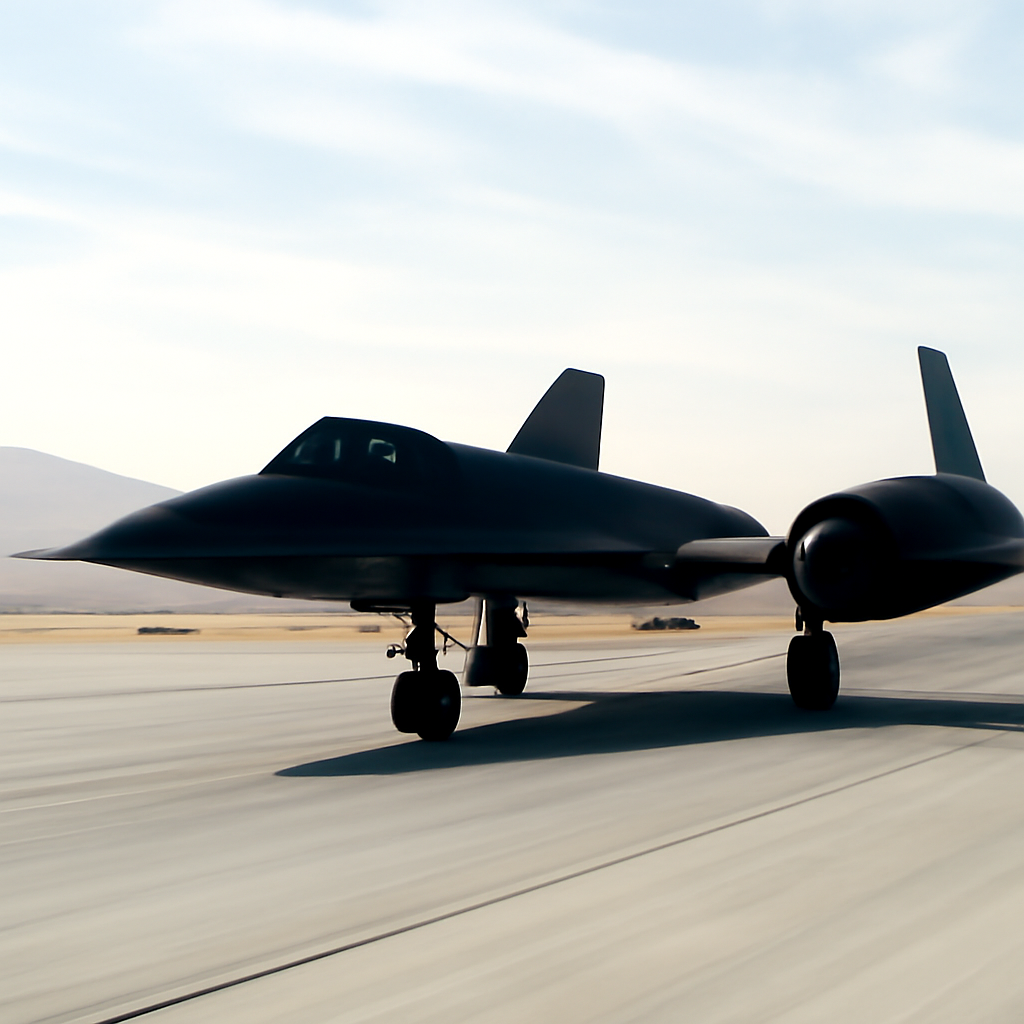
The F-47 program has already benefited from classified flight testing using full-scale demonstrator aircraft and extensive simulation and modeling, the source reports. A simulator "likely already exists," Massaro said, and could be used for risk reduction and flight-dynamics tuning ahead of the public test campaign.
The Air Force has also repurposed parts of its F-22 test infrastructure to support Next Generation Air Dominance (NGAD) work; the F-47 is described in the source as part of NGAD, alongside the Collaborative Combat Aircraft (CCA) drone program, new weapons, and jet engines. The service transformed its F-22 test force in 2023 to support NGAD-related testing, and that effort continues to inform capability development for the F-47.
What this means for Boeing, the AFTC, and warfighters
- Boeing: The source says Boeing is building the first flying F-47 example and that construction is well underway to establish a full production line. Boeing also won the Navy’s F/A-XX contract, a related sixth-generation carrier-based effort.
- The Air Force Test Center (AFTC): AFTC is positioning integrated DT/OT planning, iterative software-informed testing, and high-fidelity modeling to compress test timelines and provide decision makers with more frequent, capability-specific information.
- Warfighters: Earlier operational test involvement and accelerated software/capability iterations aim to deliver usable capabilities to the user on timelines that “might not be a normal milestone chart,” according to Massaro — an approach intended to put validated capabilities into hands sooner rather than later.
Bottom line: laying groundwork against an aggressive schedule
The AFTC’s strategy is multipronged: integrate DT and OT activities, apply agile-like iteration to software and capability releases, leverage GPUs and refined modeling to shorten the test-design loop, and mix live and virtual testing to overcome range limits. Those steps are framed explicitly as means to accelerate delivery of the F-47 program, which the Air Force and prime contractor Boeing continue to say is on track for a 2028 first flight and operational fielding in the early 2030s.
How well the integrated testing model, expanded digital tooling, and LVC techniques compress schedule and risk will be watched closely as the public test phase approaches; for now AFTC is building the processes and tools it says it will need to support the next chapter of flight testing.
https://www.twz.com/air/how-the-groundwork-for-f-47-flight-testing-is-being-laid