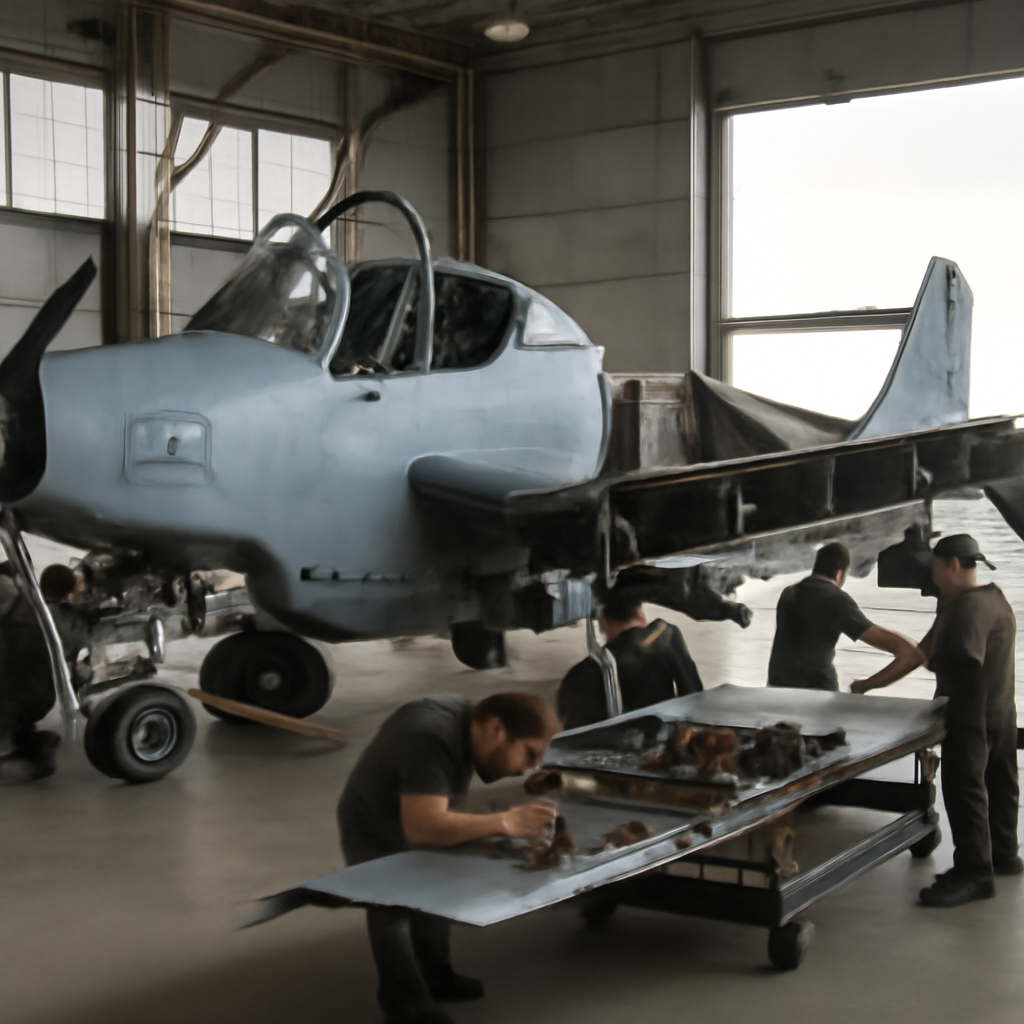
“We have demonstrated this capability by doing a timed disassembly and reassembly in a controlled environment and a hangar. We will next look to conduct the activity in an actual mobility aircraft during our operational test later this calendar year,” Lt. Col. Robert Wilson, AFSOC’s Armed Overwatch Requirements Branch Chief, told reporters.
Lt. Col. Robert Wilson on the operational test timeline
Air Force Special Operations Command (AFSOC) plans to move the OA-1K Skyraider II’s rapid breakdown and reassembly capability out of the hangar and into an operational environment later this calendar year, Lt. Col. Wilson said ahead of the annual SOF Week exposition. The command already has timed disassembly and reassembly runs in controlled conditions; the next step is to perform the activity aboard “an actual mobility aircraft” as part of an operational test.
What the rapid disassembly and reassembly capability is designed to deliver
According to Wilson, the capability reduces the time to take apart and reassemble a Skyraider from days or weeks to a “matter of hours.” It requires only a handful of people, which AFSOC characterizes as a low logistic footprint. That reduced time and manpower requirement, the command says, allows the aircraft to be moved more flexibly and kept out of predictable locations, complicating adversary planning while enabling persistent presence at lower cost than some other platforms.

Audit-ready is a season. It shouldn't be.
Evidence in spreadsheets, controls drifting between audits, frameworks multiplying on flat headcount. Nubivance runs continuous compliance on Rapid7 Cyber GRC - SOC 2, HIPAA, ISO 27001, PCI, CMMC.
End the scrambleTransport testing in larger mobility aircraft (C-17s)
AFSOC is examining the use of larger mobility aircraft such as the C-17 to move Skyraiders. The command does not yet know how many OA-1K airframes will fit in a C-17; Wilson said that question will be resolved as part of the operational test program to be conducted later this calendar year. AFSOC also plans to run rapid disassembly and reassembly events as part of exercises, likely next year, to increase repetitions and operational readiness.
Skyraider missions, fleet build-up, and combat-readiness expectations
Wilson described three main mission sets for the Skyraider fleet: intelligence, surveillance and reconnaissance (ISR); close air support (CAS); and precision strikes. He framed the OA-1K as “a new era for AFSOC,” with flexibility to support counterterrorism-like missions, crisis and contingency response, competition with more advanced adversaries, and “even aspects of full-on conflict.”
AFSOC’s delivery timeline to date: the command announced receipt of the first five Skyraiders at last year’s SOF Week expo; since that announcement, AFSOC has received 18 aircraft and expects a “handful more” by the end of this fiscal year. The program of record calls for a total of 75 Skyraiders. Wilson would not provide exact deployment dates but said the aircraft will be ready for combat in the “coming years.”
What this means for the Indo-Pacific, the joint force, and adversaries
- The Indo-Pacific theater: AFSOC framed the breakdown capability as a tool to overcome what the command called the “tyranny of distance,” a phrase the command uses to describe the logistical challenges presented by vast geographic distances in the Indo-Pacific. Faster, lower-footprint movement of aircraft is intended to mitigate those challenges.
- The joint force: By offering persistent presence at lower cost and freeing up higher-end assets for other locations, AFSOC says the OA-1K can provide armed overwatch that increases survivability for joint elements while reducing demand on more costly platforms.
- Adversaries: The command argues that the ability to disassemble and reassemble the Skyraider “in a matter of hours” and without a fixed dedicated location complicates an adversary’s ability to predict where aircraft will be based or readied, creating operational uncertainty for opposing forces.
AFSOC’s immediate next steps are clear in the command’s account: conduct operational testing of rapid breakdown and reassembly aboard mobility aircraft later this calendar year, follow with exercise-based repetitions likely next year, and continue fleet deliveries toward the 75-aircraft program of record. How many OA-1Ks fit in a C-17 and the detailed timelines for wider deployment remain questions AFSOC intends to answer through those planned tests and exercises.



