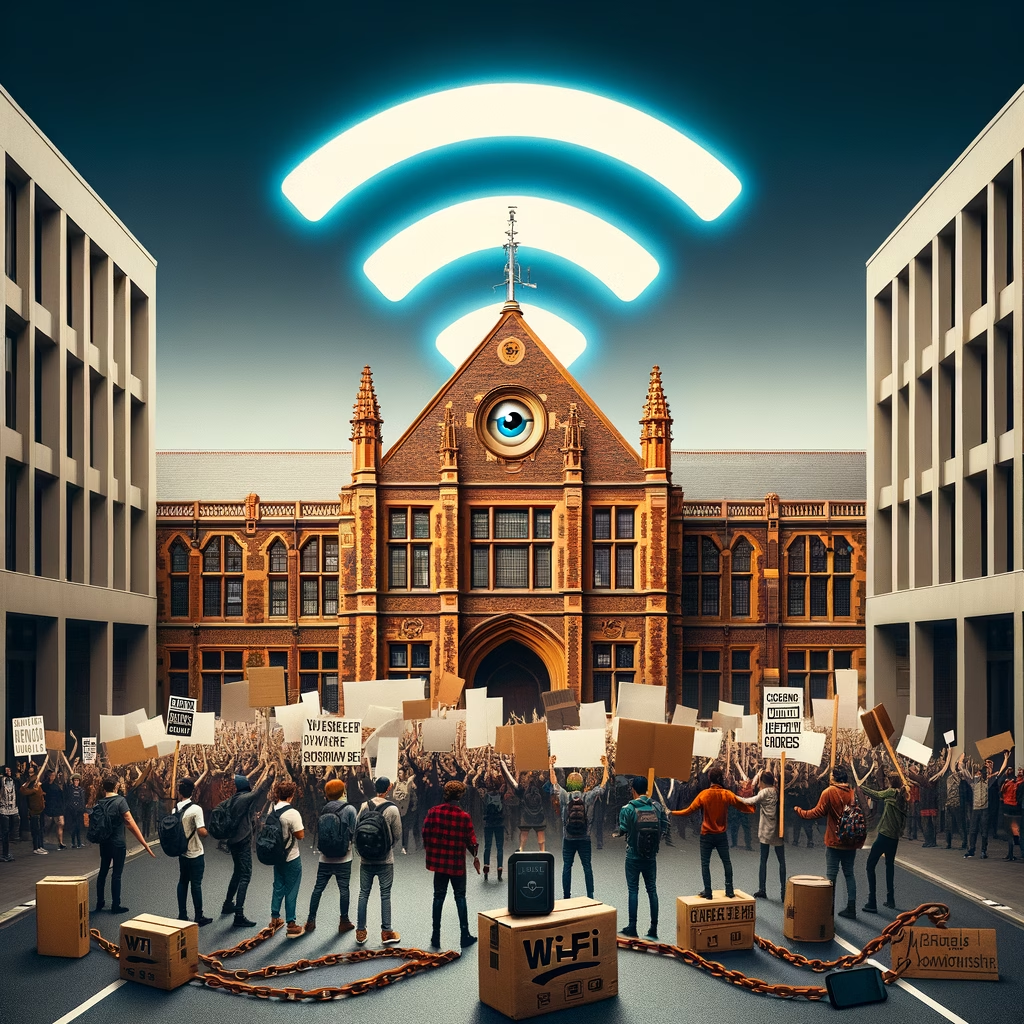
When a university repurposes the campus wireless network — the same system that supports lectures, research, and study groups — to identify protesters, it forces a hard conversation: is the institution protecting safety and property, or eroding the trust that underpins academic freedom? The recent reporting that the University of Melbourne used Wi‑Fi connection logs to trace students during demonstrations puts that dilemma in stark relief and highlights how routine technical capability can collide with civil liberties.
Wi‑Fi location data: how networks map people on campus
Modern campuses rely on centrally managed Wi‑Fi for more than internet access. Authentication systems, device registration, and location services keep connections secure, manage traffic, support room booking and enable emergency notifications. Those conveniences produce logs: timestamps, access-point associations, and device identifiers such as MAC addresses. When those logs are cross-referenced with campus account records, they can produce granular Wi‑Fi location data that reveals where particular devices — and likely the people carrying them — have been on campus.
In the University of Melbourne case, university IT and security staff reportedly used those logs to identify devices connected during protests and then tied those devices back to student accounts. Those identifications were used in disciplinary or investigative contexts. The technical capability is neither novel nor inherently malicious, but its use raises critical questions about governance, transparency and proportionality.
Operational needs frequently clash with privacy expectations
Campus IT teams rightly point out practical reasons for keeping network logs. Connection records help diagnose outages, mitigate cyberattacks, and provide forensic evidence in vandalism or threat investigations. From that perspective, some level of logging is an accepted security practice.
But universities are also places where dissent and protest are a legitimate part of academic life. Many students expect they can participate in lawful demonstrations without being singled out by administrative surveillance tools. Turning Wi‑Fi systems into de facto location trackers risks chilling political activity and irreparably damaging trust between students and university leadership.
Technical capability outpaces policy
The episode illustrates a recurring pattern: technology enables fine‑grained observation faster than governance frameworks evolve. Wi‑Fi location data can be incredibly precise in dense campus environments. Without explicit limits on retention, access controls, and oversight, that capability can be repurposed beyond intended operational uses.
Different stakeholders view the trade‑offs through their own lenses. Technologists emphasize utility and urge strict internal controls — role‑based access, mandatory audit trails, and automation that reduces unnecessary exposure. Administrators and law enforcement may focus on security obligations and legal compliance. Students and civil‑liberties advocates push for clear rules that protect the right to protest, including requirements for warrants or internal approvals before identifiable logs are used for disciplinary actions.
Privacy, security and the risk of abuse
Long‑term retention and broad access to Wi‑Fi logs not only enable institutional surveillance; they also create attractive targets for bad actors. If logs containing identifiable movement data are stored without adequate protection, they can be used for doxxing, extortion or harassment. Minimizing the attack surface and limiting who can access sensitive logs are therefore both privacy and security imperatives.
Practical steps universities should adopt
Privacy and IT governance experts recommend several measures to balance operational needs with civil liberties:
– Publish transparent policies that state what network data are collected, retention periods, and the legal or administrative circumstances under which they may be accessed. Transparency helps set expectations and reduces suspicion.
– Restrict access to identity-linked Wi‑Fi location data to a minimal set of authorized personnel. Require written approvals, maintain immutable audit logs of queries, and implement strong oversight mechanisms.
– Apply data minimization: use anonymized or aggregated data for trend analysis and operational planning, and keep identifiable records only where there is a narrowly defined, documented justification.
– Engage the campus community — students, faculty and staff — in policy design and periodic reviews so that norms and practical needs are aligned.
– Incorporate privacy-by-design in network architecture: limit retention automatically, separate identity and location logs where possible, and use technical mitigations to prevent casual correlation of records.
Legal and ethical context
Globally, data‑protection regimes impose varying constraints on the collection and processing of personal data. Even where the law permits certain uses of Wi‑Fi logs, ethical considerations argue for restraint and proportionality. Policies that allow routine access to location-linked records without high thresholds of oversight will likely face regulatory and reputational scrutiny.
A broader institutional lesson
The University of Melbourne episode is not merely about one campus; it’s a concrete example of how infrastructure choices amplify institutional power. Networks that once appeared neutral can become tools of accountability or intrusion depending on governance. The right response is not to abandon security tools but to pair them with robust policy, independent oversight, and active engagement with the community they serve.
Conclusion: stewarding Wi‑Fi location data responsibly
As campuses modernize and rely ever more on digital systems, the central question persists: can universities be guardians of both safety and open discourse, or will convenience and reactive decision‑making tip the balance toward surveillance? Clear policies on Wi‑Fi location data, strict access controls, data minimization, and meaningful community involvement offer a path to reconcile security needs with respect for academic freedom. The choices administrators make now will shape campus trust and civic engagement in a world where technology increasingly maps where we go and what we do.



