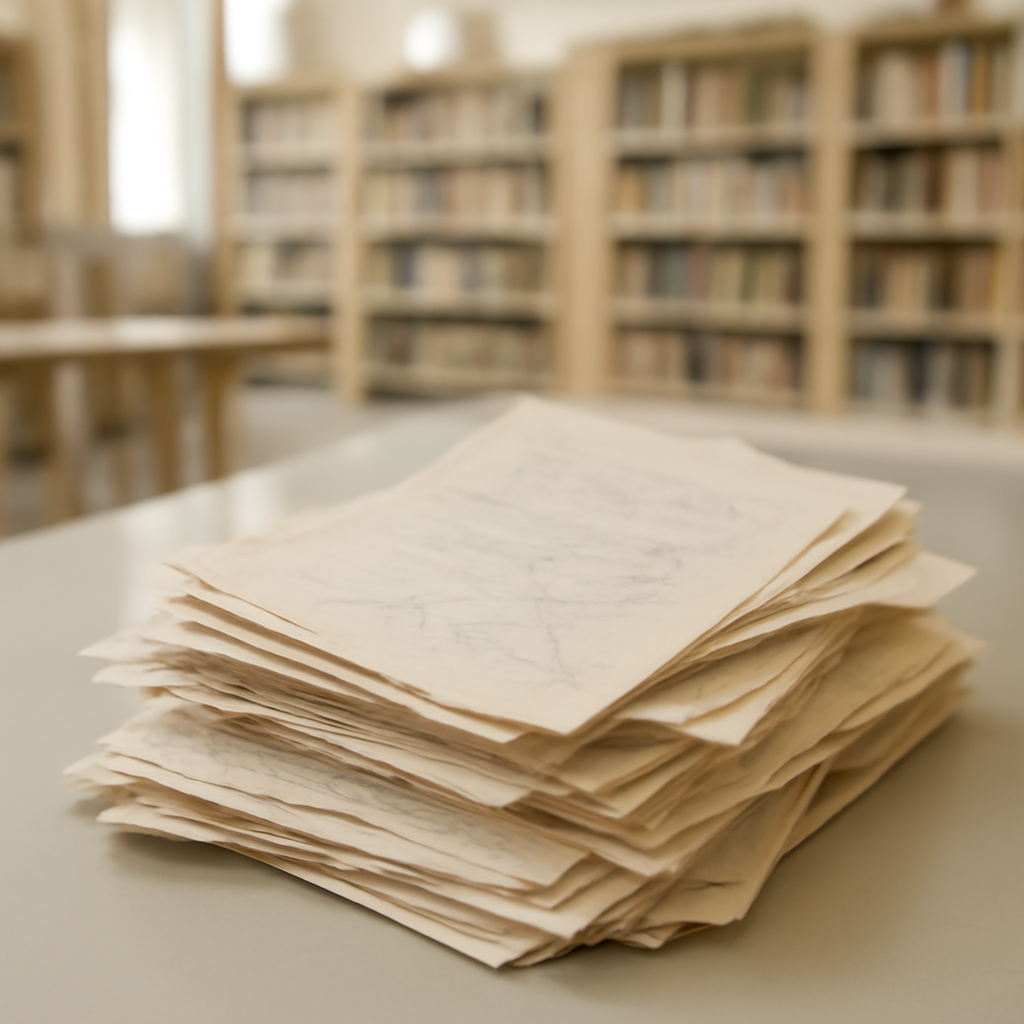
The November 2023 auction in London
The paperwork, previously unknown to scholars and collectors, emerged at auction in London in November 2023 and drew a price approaching $500,000. The sale transferred a single, long-hidden collection out of private hands and into the public sphere of study and ownership. The auction itself — the event that brought these documents into the open — is the moment that turned private notes into a source for historians and technologists to examine.
Delilah: Turing’s portable voice-encryption system (1943–1945)
The cache contains many sheets in Alan Turing’s own handwriting detailing a top-secret engineering project Turing worked on from 1943 to 1945. The project carries the name “Delilah.” The papers describe Delilah as Turing’s portable voice-encryption system, and they note that the name was drawn from Delilah, the biblical deceiver of men. These pages therefore provide direct documentary evidence tying Turing to a wartime effort to encrypt voice communications and to the specific design period of 1943–1945.

This site is the portfolio.
OSINTSights runs on Cloudflare Workers, D1, R2, and Vectorize, with an AI pipeline on Hetzner ARM. Nubivance designed, built, and operates it. We do the same for clients.
See what we buildBayley’s notes and the papers’ survival
In addition to Turing’s handwriting, the cache includes material written by a person identified in the papers as Bayley — often in the form of notes taken while Turing was speaking. It is explicitly because Bayley retained those papers that the record survived: Bayley kept the documents until he died in 2020, a span the source describes as 66 years after Turing passed away. That chain of custody — Turing’s manuscripts, Bayley’s contemporaneous notes, and Bayley’s decades of safekeeping — is the factual pathway by which these wartime plans reached an auction block in 2023.
What this means for historians, cryptographers, and the public
- Historians of science and wartime technology: These primary documents supply direct, dated material from Turing himself on a named engineering project, allowing archival study of a previously unknown aspect of his wartime work.
- Cryptographers and technical scholars: The sheets in Turing’s handwriting describing Delilah — labelled as a portable voice-encryption system and dated 1943–1945 — give technical historians a new source to analyze the origins and intentions of voice-encryption efforts attributed to Turing.
- The interested public and collectors: The auction in London and the nearly half-million-dollar price establish both the monetary and historical value attached to these papers, and they explain why an individual’s decision to keep notes for decades can determine whether such material survives to be studied.
These are the concrete facts the record supplies: a previously unknown cache, Turing’s own handwriting describing a project named Delilah (a portable voice-encryption system dated 1943–1945), Bayley’s contemporaneous notes, Bayley’s long custodianship until his death in 2020, and the November 2023 auction in London that brought the papers to public attention for almost $500,000.
The remaining work now belongs to scholars and conservators who will examine the pages the auction produced. The papers themselves, whether they yield technical schematics, operational notes, or questions that cannot yet be answered, offer an unmistakable, material link to a wartime engineering effort that until 2023 had been invisible in the archival record.