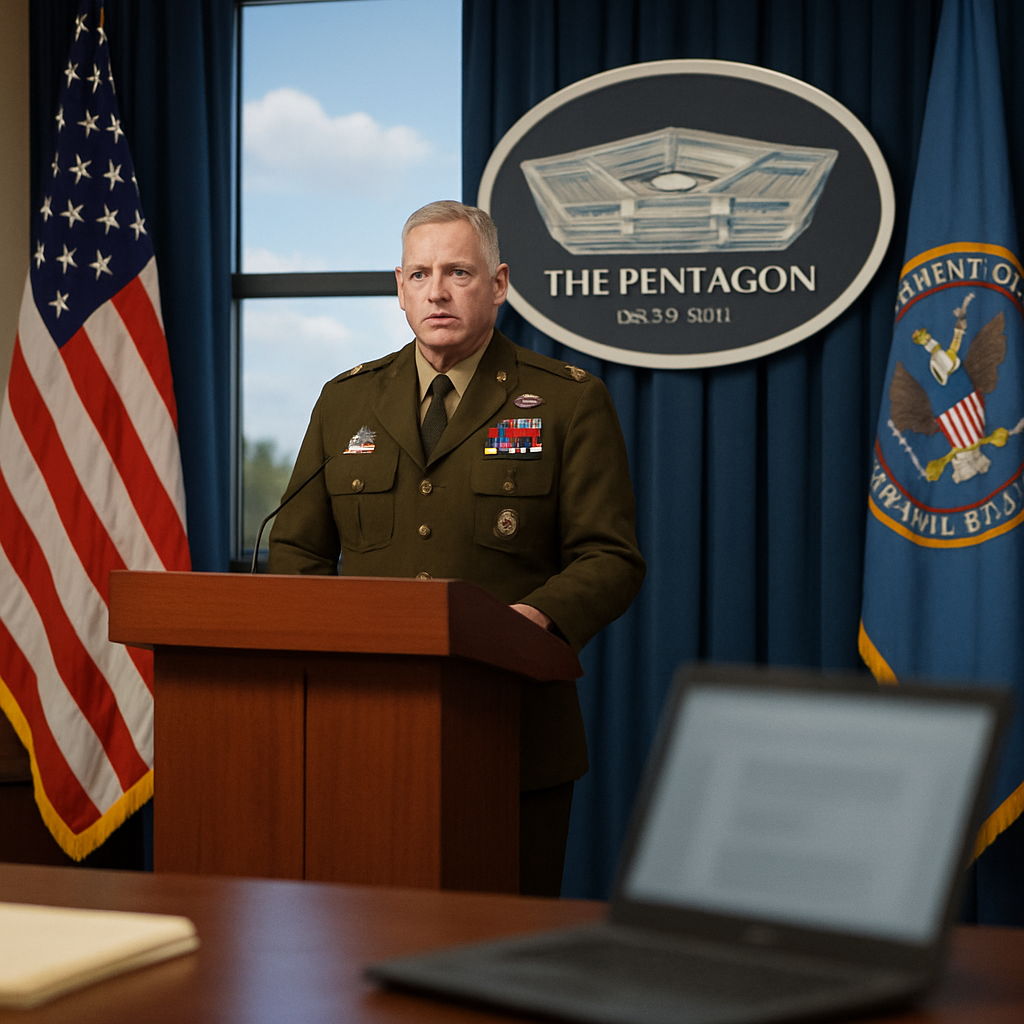
The Space Force's FY27 budget request asks for $71.2 billion — a fourfold increase from the service's FY2022 appropriation of $17.4 billion — and the White House has nominated Lt. Gen. Doug Schiess to be the service's third Chief of Space Operations as that expansion is underway.
Lt. Gen. Doug Schiess's current responsibilities
The White House nomination names Schiess as the third-ever Chief of Space Operations and notes his present role as the Space Force's deputy chief of operations. In that capacity he has "overall responsibility for development and implementation of service policy" and serves as Gen. Chance Saltzman's deputy for the Joint Chiefs of Staff. Those duties place him at the nexus of internal service management and interservice coordination.
Operational command experience at Vandenberg SFB and US Space Command
Schiess's record also includes front-line operational leadership. He was previously double-hatted as head of Space Forces–Space, the Space Force’s component command to US Space Command, and as head of the command’s Combined Joint Space Force Component at Vandenberg SFB, Calif. The nomination notes that this background gave him hands-on experience in "day-to-day operations, exercises and mission planning," in addition to his policy and bureaucratic responsibilities.

The cyber insurance questionnaire just landed. Now what?
SOC 2, HIPAA, insurance renewals - someone has to own security strategy. Nubivance provides fractional CISO leadership without the full-time salary.
Get a security leadService growth under Gen. Chance Saltzman
The nomination comes as the Space Force has undergone rapid growth. In fiscal 2022 the service was appropriated $17.4 billion and comprised about 8,700 active duty Guardians. The FY27 budget request asks for $71.2 billion and includes a proposed increase in end strength from today’s 10,657 active forces to 13,200. The source frames Schiess’s nomination as occurring against this backdrop of rising budgets and personnel targets.
Doctrine and the normalization of warfighting in space
Gen. Chance Saltzman’s tenure has emphasized a shift in how the service conceptualizes operations in orbit. The nomination text says Saltzman "led a charge to normalize the concept of warfighting in space," arguing for offensive as well as defensive operations on orbit and for establishing "space superiority" as a central Joint Force requirement. That effort culminated in publication last April of the Space Force’s first "Space Warfighting Framework." Schiess arrives with both policy-making authority and operational command experience at a moment when doctrine is being explicitly reoriented toward warfighting concepts.
What this means for policymakers, technologists, and procurement leaders
- Policymakers and regulators: They will contend with a requested FY27 budget of $71.2 billion and a proposed end-strength rise from 10,657 to 13,200. Those figures will frame oversight, authorization, and appropriations discussions as the service seeks to fund rapid expansion.
- Technologists and security teams: Schiess’s blend of policy and operational experience, coupled with a doctrine that emphasizes offensive and defensive operations in space, means engineers and operators will need to align system development and testing with evolving mission planning and exercises conducted at locations such as Vandenberg SFB.
- Procurement leaders and acquisition officials: The contrast between the FY2022 appropriation of $17.4 billion and the FY27 request of $71.2 billion — together with proposed growth in end strength — will require adjustments to multi-year buying plans, industrial-base commitments, and workforce scaling.
The White House nomination "sets him up to succeed Gen. Chance Saltzman" as the Space Force chief, according to the announcement, putting a leader with both bureaucratic and operational resumes at the center of a service that is expanding in size, budget and doctrinal ambition. The next chapter for the Space Force will unfold as those budget and personnel proposals are processed and as the organization continues to operationalize the Space Warfighting Framework published last April.
Original reporting: Lt. Gen. Doug Schiess tapped as 3rd Space Force chief — Breaking Defense