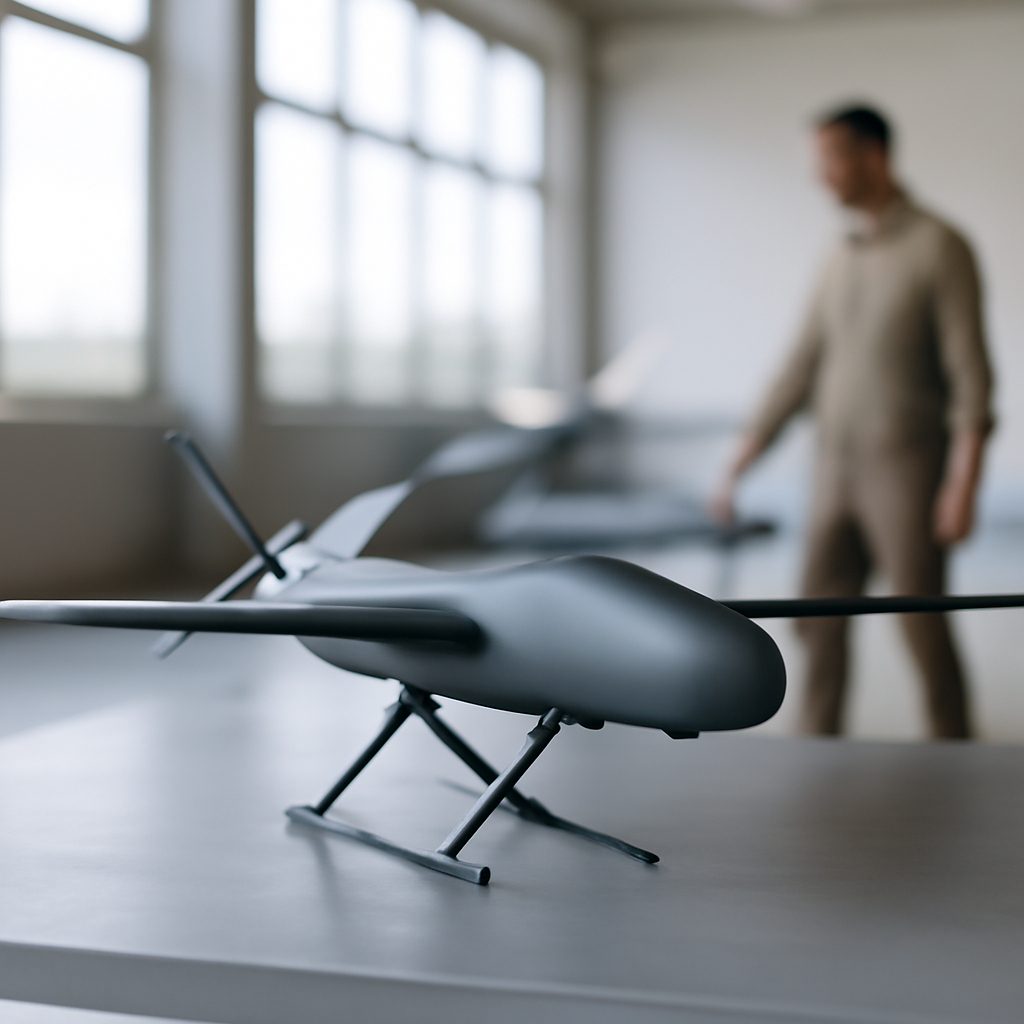
"AI-enabled autonomy is becoming increasingly important in addressing the complexity of modern operational environments," Ran Gozali, CEO of Uvision, said as the two companies announced a technology partnership on Sept. 24. The agreement will place Estonian autonomy software on Israeli loitering munition platforms for an unnamed NATO customer.
What was agreed on Sept. 24: Uvision and Lendurai unite software and airframes
Uvision, an Israeli maker of loitering munitions, and Estonian autonomy firm Lendurai signed a partnership agreement that will see Lendurai's software installed on Uvision platforms for a NATO customer that the companies did not name. The statement framed the work as an integration of autonomy software with unmanned systems to meet “the evolving needs of NATO Forces,” language quoted directly from Uvision leadership.
Neocortex and Accipiter: the Lendurai capabilities in play
The deal highlights Lendurai’s software — in particular the Neocortex system — as the core contribution. The company describes Neocortex as having been “battle-proven in Ukraine.” Lendurai also manufactures a drone interceptor called Accipiter, but the announcement emphasized software integration rather than explicitly linking the Accipiter or any single Uvision model to the contract.

Audit-ready is a season. It shouldn't be.
Evidence in spreadsheets, controls drifting between audits, frameworks multiplying on flat headcount. Nubivance runs continuous compliance on Rapid7 Cyber GRC - SOC 2, HIPAA, ISO 27001, PCI, CMMC.
End the scrambleUvision’s platforms and recent product moves
Founded in 2011, Uvision is the developer of the Hero family of loitering munitions, which the company describes as systems that deploy wings after launch and as “combat-proven smart integrated systems.” The announcement did not say whether the integration will involve the Hero line specifically; it noted Uvision has broadened its product range after acquiring Israel’s SpearUAV, a maker of smaller tactical systems. Separately, Uvision unveiled a new battle management system called Cortex in June, intended to link sensors and Uvision systems including the Hero, Viper and Peregrine.
The company has pushed into European markets recently: it established a European subsidiary in Munich in March called Uvision Europe “intended to anchor its European activities.” Uvision has also pursued the U.S. market — in October 2025 it announced what the company described as an almost $1 billion contract with its U.S. partner Mistral to Hero-120 to the U.S. army.
Estonia, the Baltics, and the NATO connection
The public statement frames Estonia as both a technological partner and a location whose national posture matters to the deal: the report notes Estonia is “known for its software capabilities” and that Estonia, Lithuania and Latvia “have all been modernizing their forces amid increasing threats from Russia.” The announcement positions the partnership as supplying capabilities tailored to NATO operational requirements while also “laying the groundwork for broader cooperation in the future,” according to Siim Maivel, CEO of Lendurai.
What this means for NATO forces, Estonia, and Uvision
- NATO forces: Integration of Lendurai’s Neocortex into Uvision airframes is presented as a way to field “AI-enabled autonomy” on loitering munitions and related systems — capabilities the announcement frames as responsive to operational complexity.
- Estonia: The deal is an early public sign of industrial cooperation that leverages Estonian software expertise; Lendurai’s role centers on autonomy software already characterized by the company as battle-proven in Ukraine.
- Uvision: The pairing with Lendurai fits Uvision’s recent commercial push into Europe, its Munich subsidiary, the June launch of the Cortex battle management system, and its prior marketing success that included a major U.S.-linked contract announced in October 2025.
The agreement is specific about partners, products and dates but leaves two clear operational questions open in public: whether integration will target particular Uvision models such as Hero, and which NATO customer will field the integrated systems. The companies frame the work as a step toward broader cooperation, and their joint public remarks put software-based autonomy at the center of that effort.