“The Lightfish tracked the Chinese vessel on radar from a range of ~10 nm and visually to a minimum range of several hundred meters,” Mike Flanigan, CEO of Seasats, explained in an email.
Seasats’ Lightfish: a long-endurance, low-speed USV
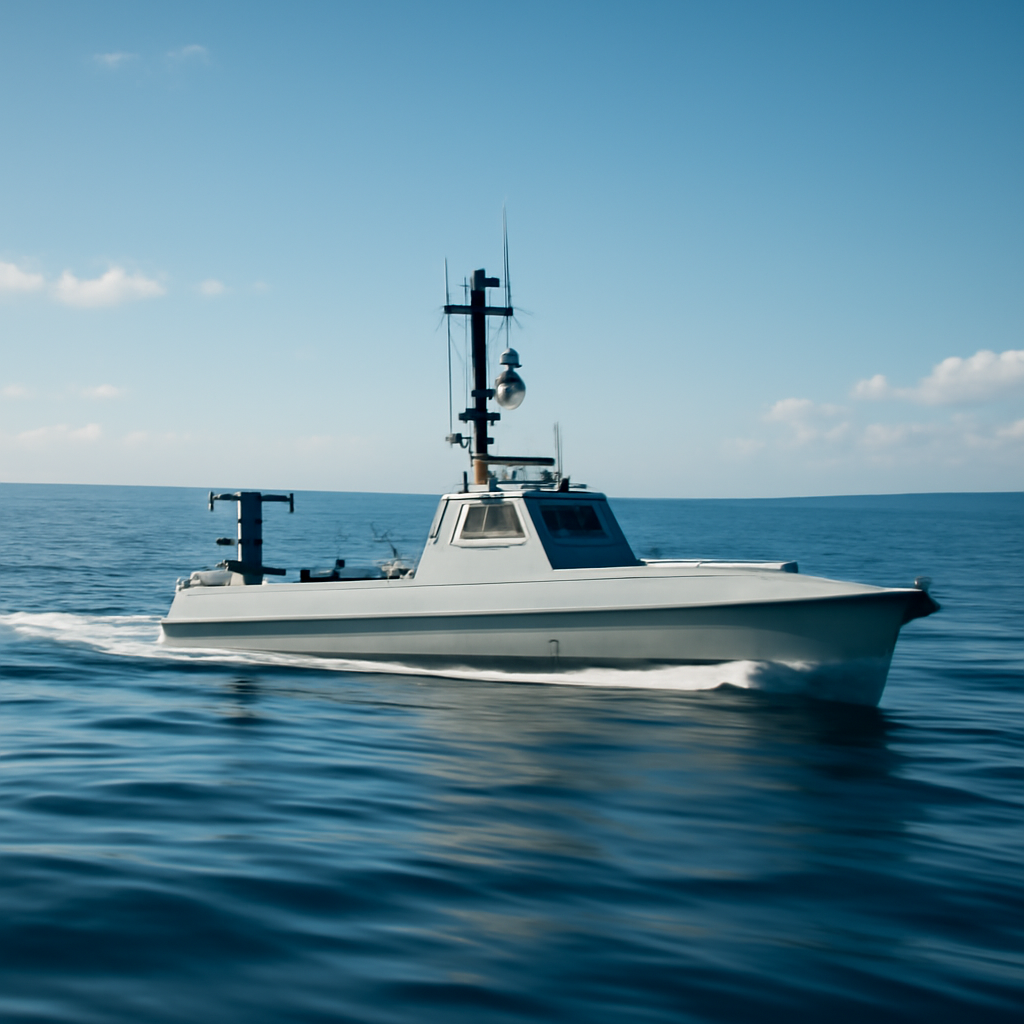
The platform at the center of the encounter is the Lightfish uncrewed surface vessel (USV) owned by Seasats. The company describes Lightfish as a 12-foot-long, 305-pound craft that prioritizes endurance: solar panels paired with a hybrid powertrain allow it to operate for up to six months. Seasats and its CEO, Mike Flanigan, say the Lightfish can cover very long distances — Flanigan has stated a range of “8,000+ nm” — but it is not designed for speed or high-speed maneuvers.
The June 15 encounter northeast of Luzon
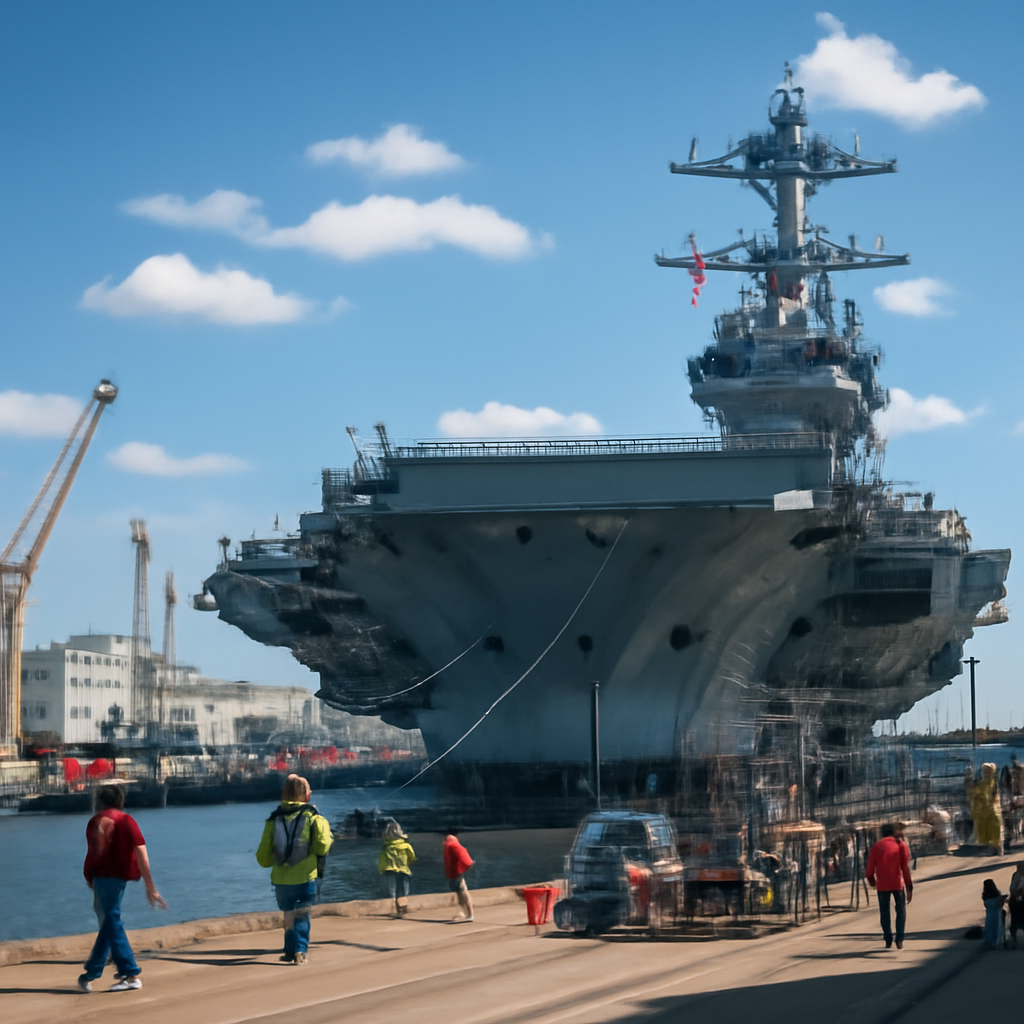
Seasats reported that the Lightfish encountered a Chinese Type 052D guided missile destroyer in the evening Pacific time on June 15. The company gave slightly different distance estimates in public comments: Flanigan told TWZ the contact took place “about 73 miles northeast of the Philippine island of Luzon,” while Seasats material referenced “about 75 miles northeast of Luzon.” According to Seasats, the Lightfish tracked the destroyer on radar from roughly 10 nm and had visual contact down to “a minimum range of several hundred meters.” The destroyer was observed altering course and “generally observing the Lightfish USV,” and Seasats says the ship took evasive action. Seasats shared two videos showing the Lightfish’s view of the destroyer; the footage shows the warship moving very slowly, if at all.

This site is the portfolio.
OSINTSights runs on Cloudflare Workers, D1, R2, and Vectorize, with an AI pipeline on Hetzner ARM. Nubivance designed, built, and operates it. We do the same for clients.
See what we buildUSVs in recent combat and exercises
The Lightfish encounter comes as uncrewed surface vessels have moved from experimentation to operational use in several theaters. TWZ’s reporting ties earlier operational use to non-state and state proxies — Houthi forces used explosive-laden, one-way USVs as early as 2017 after Iran developed small attack boats and transferred the capability — and credits Ukraine with demonstrating the “devastating potential” of small USVs against surface ships via systems such as the Magura family. On July 12, the U.S. military employed USVs as offensive strike weapons in combat for the first time, using Saronic-built Corsair USVs amid an exchange of attacks centered on the Strait of Hormuz; CENTCOM tweeted on July 13, 2026 that multiple one-way attack surface drones struck a submarine and a ship maintenance facility in Iran, and that “Three Corsair unmanned surface vessels hit the port at Bandar Abbas Naval Base.” Separately, the U.S. Navy used a Global Autonomous Reconnaissance Craft (GARC) USV during RIMPAC 2026 as a live-fire attacker in a sinking exercise against the ex-USS Peleliu.
Rules of engagement, navigational norms, and escalation dynamics
Seasats and Flanigan raised several normative and practical points about how sailors and navies might treat USVs encountered at sea. Flanigan offered two “rules of thought”: “robotic systems should all fall secondary to human-piloted vessels. Meaning USVs should always avoid human vessels, and safety at sea rules should also bias towards giving right of way and safety of navigation to a piloted vessel,” and “USVs should comply with COLREGs [International Regulations for Preventing Collisions at Sea] and general navigational policies wherever possible.”
But the company also stressed limits to signaling and identification: automated identification system (AIS) messages “are not proof of anything,” and “hanging a flag onboard and painting a service name on the drone boat’s hull is in no way a definitive signal.” Those realities complicate judgment at sea because “there is no way of knowing for certain if a curious USV belongs to a friend or foe.” The Lightfish’s frequent commercial encounters — “on a nearly daily basis,” according to Flanigan — mean many mariners treat such sightings with curiosity, but the presence of armed one-way USVs elsewhere raises a different tactical calculus for navies and warships operating in contested littorals.
TWZ’s reporting underscores an escalation dynamic: destroying a clearly uncrewed drone boat is “a much lower threshold of escalation than doing so with a manned vessel,” and in practice some actors will shoot at drones but not manned platforms during periods of tension but not outright war. That differential lowers the political cost of kinetic responses and could make strikes on USVs “commonplace,” particularly where the threat picture and technology proliferation make small craft more dangerous.
What this means for the U.S. military, commercial mariners, and navies
- U.S. military: The company reported it discussed the encounter with the U.S. military after the event, though Seasats “declined to offer any details.” The growing use of USVs in offensive roles — including the July strikes and the RIMPAC SINKEX employment — suggests military planners will need to refine rules of engagement for uncrewed contacts in chokepoints like the Luzon Strait.
- Commercial mariners and fishing vessels: Flanigan says commercial shipping encounters with Lightfish-type USVs occur “nearly daily,” and that mariners often notice with curiosity. Seasats recommends treating USVs with caution and privileging human-piloted vessels’ right of way; however, the company cautions that standard visual or AIS signals are not definitive identifiers.
- Navies operating in contested littorals: The encounter shows that even small, slow, long-endurance USVs can close to within several hundred meters of major surface combatants. Given the demonstrated lethality of small attack USVs elsewhere, navies will face complex decisions about identification, warning, and potential use of force.
The video-recorded encounter on June 15 is a narrow, concrete episode but one that connects to wider shifts: long-endurance commercial USVs are now routinely traversing strategic sea lanes, and militaries have begun to incorporate one-way and other kinetic USVs into combat. Seasats’ outreach to the U.S. military and its public assessments — from compliance with COLREGs to the limits of AIS and visual identifiers — point to the practical and legal headache ahead: how to distinguish benign autonomy from threat at sea, and what measured responses should look like when contact occurs.