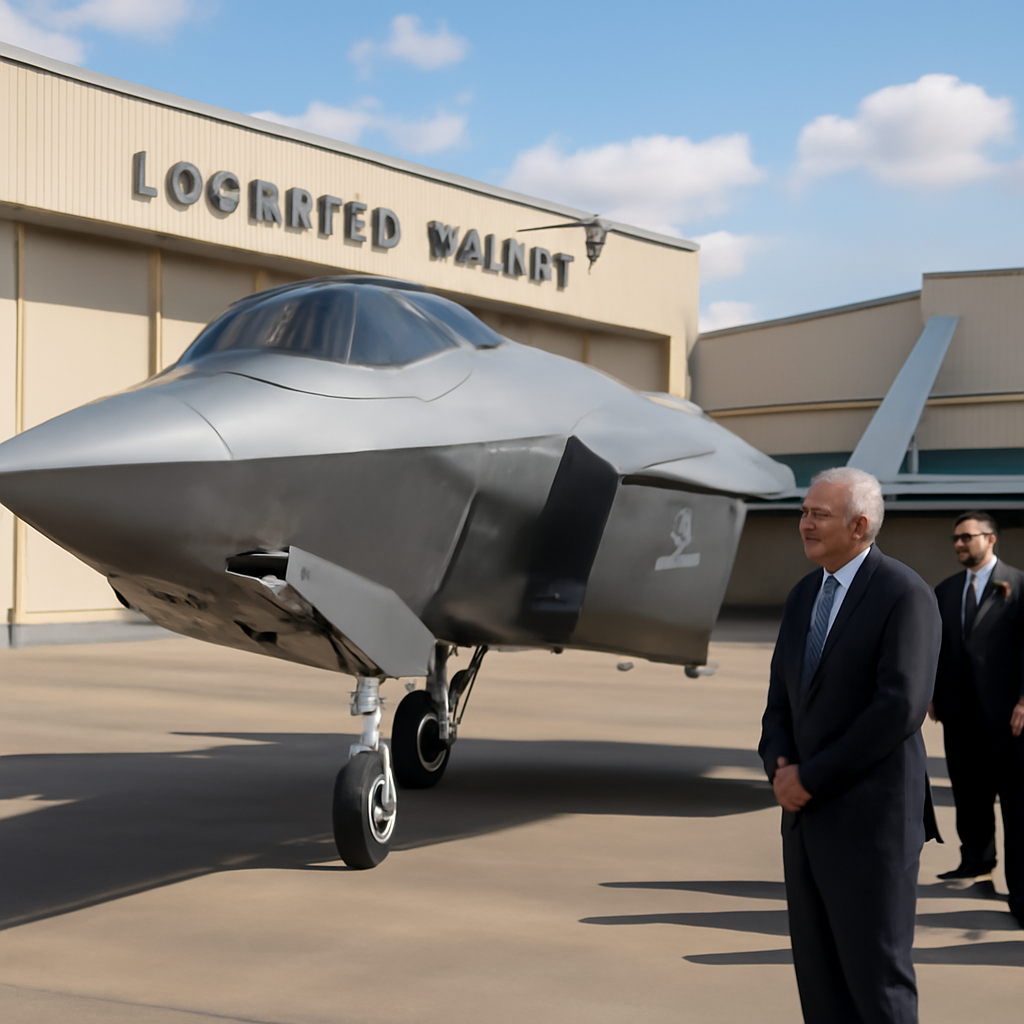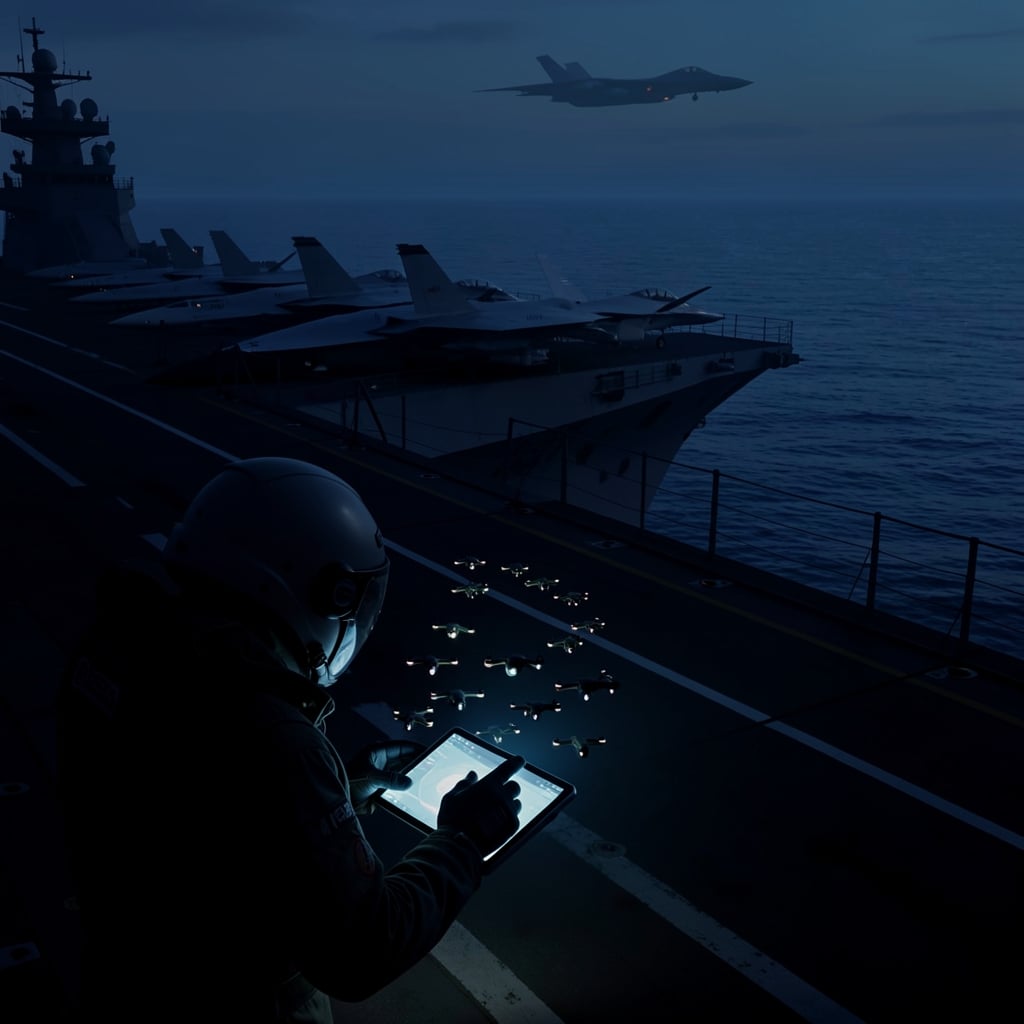
Can an existing aircraft and its ability to coordinate unmanned systems become the stepping stone to an entirely new family of Marine Corps airpower? A recent report suggests that the answer may be yes.
What the reporting found
The War Zone reports that F-35s acting as quarterback platforms for drones are being seen as a potential pathway to the U.S. Marine Corps’ next-generation fighter. The article says Collaborative Combat Aircraft will "bridge" the Marines to a family of new capabilities that could include a new stealth fighter based on F/A-XX.
Background and immediate context
According to the reporting, the idea centers on linking current and near-term systems — exemplified by F-35s controlling or coordinating unmanned assets — with future platforms and concepts. The phrase "bridge" is presented by The War Zone to describe the role that Collaborative Combat Aircraft are expected to play in connecting present forces to a broader set of capabilities, one of which might be a stealth fighter derived from F/A-XX.

This site is the portfolio.
OSINTSights runs on Cloudflare Workers, D1, R2, and Vectorize, with an AI pipeline on Hetzner ARM. Nubivance designed, built, and operates it. We do the same for clients.
See what we buildWhy this matters
- Operational transition: If Collaborative Combat Aircraft do serve as a bridge, that implies a deliberate path from today's mixed manned-unmanned operations toward an integrated family of systems centered on new airframes and capabilities.
- Conceptual evolution: Casting the linking role in the term "bridge" signals an emphasis on continuity — not an abrupt replacement — where existing assets and tactics help enable the adoption of future platforms.
- Design lineage: The reporting flags the possibility that one element of the future capability set could be a stealth fighter "based on F/A-XX," suggesting the potential for evolutionary design choices rather than wholly disconnected development paths.
Different perspectives
Technologists will likely focus on the technical challenge implicit in a bridging concept: ensuring interoperability between current platforms, collaborative unmanned systems, and any new fighter derived from F/A-XX. Policymakers and planners will watch for how a bridge strategy shapes procurement and force-structure decisions, favoring incremental integration over wholesale replacement. Operators and end users must contemplate new tactics and training to exploit coordinated manned-unmanned effects. Potential adversaries would need to assess how a linked family of systems alters deterrence, survivability, and operational tempo.
Conclusion
The War Zone frames the use of F-35s as drone quarterback platforms and the role of Collaborative Combat Aircraft as a bridge toward a family of capabilities — possibly including an F/A-XX–based stealth fighter — as a consequential path for Marine Corps aviation. The formulation raises an unavoidable strategic question: will incremental integration through a bridging approach accelerate operational capability, or will it complicate the transition to a coherent next-generation force? The answer will shape where — and how — future investment and training are concentrated.
Read the original report: The War Zone — F-35s Quarterbacking Drones Seen As Gateway To USMC’s 6th Gen Fighter