"The MV-22B didn’t just join our fleet; it fundamentally changed the way the Marine Air-Ground Task Force generates combat power," said Lt. Gen. William Swan, Deputy Commandant for Aviation, as the U.S. Marine Corps accepted the service's final MV-22B Osprey.
Final delivery: fleet size and timeline
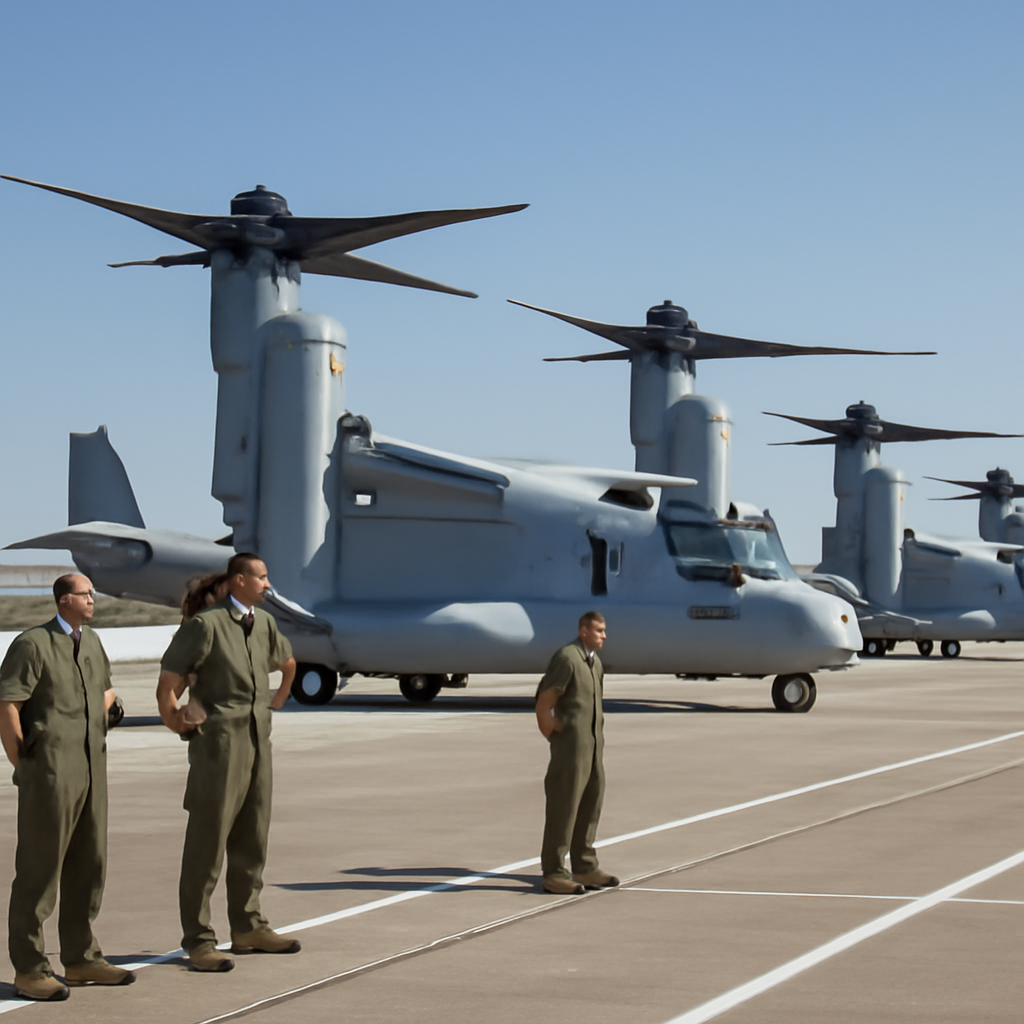
The Marine Corps on Tuesday received its final delivery of MV-22B Ospreys, closing its acquisition at 359 aircraft. The service says the Osprey fleet will continue flying through 2055, transitioning now from fielding to long-term sustainment and incremental evolution. Fewer than a dozen Ospreys remain in production overall, and the Navy expects to complete its own CMV-22 deliveries with a final aircraft in Fiscal Year 2028; NAVAIR told TWZ the Navy will receive 53 CMV-22s in total and has already taken delivery of 42.
Operational record: hours, deployments, and mission set
The Marine Corps reports the MV-22B fleet "has flown more than 686,500 hours across 114 operational deployments." The service framed the tiltrotor as a foundational capability: the MV-22B combines vertical takeoff and landing with fixed-wing speed and range, and it became the backbone of Marine combat air assault after first entering service in 2007—primarily replacing the CH-46 Phrog. According to the Corps, Ospreys now source 75% of all Marine Corps rotary‑wing assault support and support roles ranging from contested logistics to medical evacuation and humanitarian assistance.

Audit-ready is a season. It shouldn't be.
Evidence in spreadsheets, controls drifting between audits, frameworks multiplying on flat headcount. Nubivance runs continuous compliance on Rapid7 Cyber GRC - SOC 2, HIPAA, ISO 27001, PCI, CMMC.
End the scrambleSafety record, mishaps, and operational pauses
The Osprey’s operational success has been accompanied by a sobering safety record. As of July 2025, the Congressional Research Service counted 65 military and civilian fatalities tied to V-22 mishaps: 30 before 2007 and 35 after 2007. Since 2022, V-22s experienced four fatal mishaps that killed 20 servicemembers and injured another 20. The fleet has faced sporadic operational limitations and a notable three‑month grounding in 2024 after a fatal U.S. Air Force CV-22 crash off the coast of Japan on Nov. 29, 2023.
Sustainment and modernization to 2055
With deliveries complete, the Marine Corps is focusing on engineering and logistics work intended to keep MV-22Bs operational through midcentury. Planned efforts cited in the Corps’ 2026 Aviation Plan include improving nacelle wiring to reduce maintenance hours; pursuing improved prop‑rotor gearboxes using triple‑melted, refined steel components; standardizing aircraft configurations across the fleet; and redesigning key components to enhance safety and sustainability. The Corps noted these concurrent modifications are guided in part by the Center for Naval Analysis “Renewed V‑22 Aircraft Modernization Plan (ReVAMP)” study and will both extend platform relevance and help inform requirements for the Next Generation Assault Support (NGAS) aircraft.
How the Marine Corps, NAVAIR, and Bell‑Boeing will respond
- Marine Corps: The Corps is shifting its posture from buying aircraft to sustaining and evolving them—standardizing configurations, redesigning parts, and pursuing modifications intended to lower maintenance hours and improve reliability while keeping the MV‑22B central to assault support operations through 2055.
- NAVAIR and the V‑22 Joint Program Office (JPO): NAVAIR, which manages major aviation programs and leads the V‑22 JPO, is overseeing remaining Navy CMV‑22 deliveries and supports foreign partners. NAVAIR has limited public scheduling details for remaining Navy deliveries, citing operational security.
- Bell‑Boeing and the Amarillo production line: TWZ reached out to Bell‑Boeing about the future of the Amarillo, Texas, plant where Ospreys are manufactured. The reporting notes that, as interest from foreign buyers has faded and production is ending, the plant’s future is a subject of inquiry—but the source does not supply a company response.
Development of the Next Generation Assault Support aircraft remains in an informational phase in the public record. The aviation plan offers limited detail, but it signals that increased range and greater speed—particularly to bridge Pacific distances and address aerial refueling challenges—will be major considerations for NGAS, with special attention to potential operations in a high‑end Pacific environment.
The delivery of the last MV‑22B closes a procurement chapter and opens a sustainment one: the Marine Corps will balance continuous improvements to a platform that transformed its operational concepts with work to define and field a successor tailored for longer range, faster transit, and the contested environments the Corps anticipates facing. TWZ has reached out to the Marines, NAVAIR, and Bell‑Boeing for further comment.
https://www.twz.com/air/usmc-just-took-delivery-of-its-last-mv-22-osprey