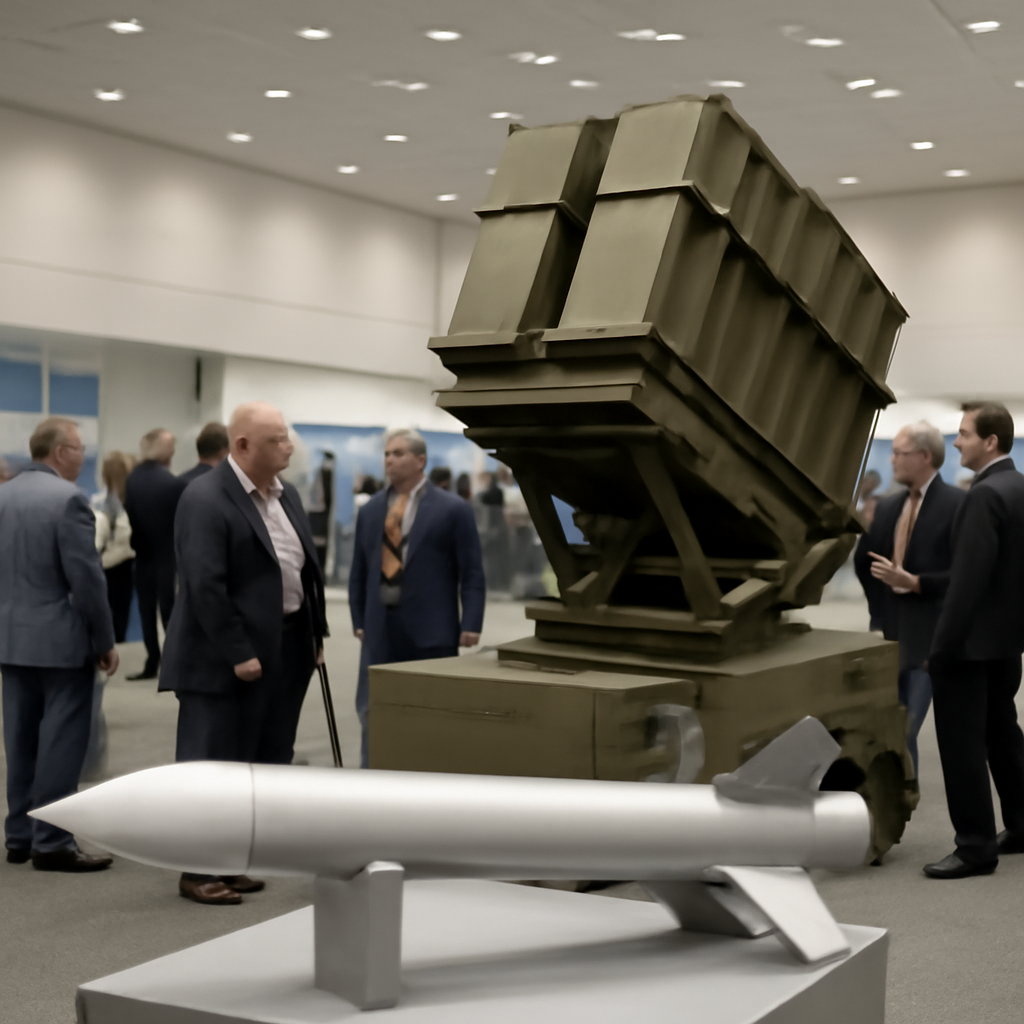
"That process has just started," Tom Laliberty told reporters at the Farnborough Airshow, summing up Raytheon’s immediate posture after a U.S. decision to license Patriot production in Ukraine.
Tom Laliberty on licensing, feasibility and the U.S. government role
At the Farnborough Airshow on the outskirts of London, Tom Laliberty, Raytheon’s president of land and air defense systems, said Raytheon is beginning a structured review of how to proceed after President Donald Trump announced the United States would grant a license for building Patriot interceptors in Ukraine. Laliberty emphasized that the company will "of course be following the United States government’s lead" on licensing and described the effort as having just started.
He outlined three parallel lines of work Raytheon is pursuing: feasibility studies of production in Ukraine, engagement across the company’s global supply chain, and the licensing process with the U.S. government. Laliberty noted that Raytheon has partners worldwide that produce components, operate maintenance facilities and in some cases produce fully assembled missiles — a complex, multi-national set of industrial relationships that the company must consider as it assesses what is "feasible and what is best for Ukraine."
Lockheed’s Tim Cahill: discussions with the Army are 'early'
In a separate briefing the same day, Tim Cahill, who leads Lockheed Martin’s missiles and fire control division, framed the company’s posture similarly: cautious and preparatory. Cahill told reporters “it’s early,” adding that Lockheed is engaged in discussions with the U.S. Army. He said Lockheed will "support the US Army and the [Trump] administration on what they want to go do" and will back the options the Army and administration evaluate.
Lockheed’s comments underline that any transfer of production capacity to Ukraine or changes in interceptor output will depend on decisions by the Army and executive branch authorities as much as on industry plans.

This site is the portfolio.
OSINTSights runs on Cloudflare Workers, D1, R2, and Vectorize, with an AI pipeline on Hetzner ARM. Nubivance designed, built, and operates it. We do the same for clients.
See what we buildHow the Patriot system and interceptors are split between RTX and Lockheed
The Patriot air-defense system, as described by company executives, includes an RTX radar and other subsystems, while interceptors are built by both RTX and Lockheed Martin. RTX supplies the GEM‑T interceptor; Lockheed produces the PAC‑3. Both types of interceptors are used to defeat air and missile threats, which is why the question of expanding production — and where that production can take place — has strategic consequences.
Laliberty stressed that missiles for the Patriot system involve "different levels of engagement of our supply chain," pointing to the layered nature of component production, maintenance and final assembly across partners in multiple countries. That fragmentation drives the technical and legal complexity of any plan to assemble interceptors in Ukraine.
How Ukraine, the U.S. Army, and European partners are positioned
- Ukraine: Any increase in local production is framed as a way to give Ukraine "the right level of support that they desire for increased Patriot production," according to Laliberty; feasibility studies will determine what form that support can take.
- The U.S. Army: Lockheed explicitly tied its posture to Army direction, with Cahill saying the company will support the Army and the administration on evaluated options — signaling that Army assessments will be central to any shift in supply or production arrangements.
- European industry and customers: Raytheon noted its global partner network already includes European suppliers; separately, Lockheed said it plans to partner with European industry on a new, lower‑cost interceptor variant, highlighting ongoing transatlantic industrial ties.
Lockheed’s Adapted Capability Effector and timing
Lockheed used the Farnborough briefings to introduce a new, lower‑cost version of its PAC‑3 interceptor called the Adapted Capability Effector. The company said it plans to partner with European industry on the effort and expects to carry out a first test in 2028. That timetable provides a concrete near‑term milestone for changes in interceptor offerings, even as broader questions about production locations and licensing remain under study.
Executives from both companies framed the matter as technical and procedural rather than immediate: feasibility studies and licensing talks are underway, but "it’s early," in Cahill’s words. The course ahead will be determined by the outcome of those studies and by U.S. government licensing decisions — the specific levers Raytheon and Lockheed say they will follow.
Source: Breaking Defense — Lockheed, RTX in ‘early’ talks for Ukraine Patriot production, execs say