"clever ways to get the job done more efficiently," said John Foster, the former head of a U.S. nuclear weapons lab.
That judgment, lifted from conversations with current and former officials and experts, frames a less-discussed argument: the U.S.-U.K. nuclear relationship is not a one-way subsidy. For more than 65 years London has relied on Washington — most visibly through Trident missiles that arm British submarines — but Washington has also accumulated tangible technical, operational, and strategic advantages from that cooperation. As Britain prepares for a new prime minister by the end of the summer, both capitals face a decision about whether to preserve a partnership that the source argues serves U.S. interests as much as British ones.
How Washington gains from U.K. scientific and technical expertise
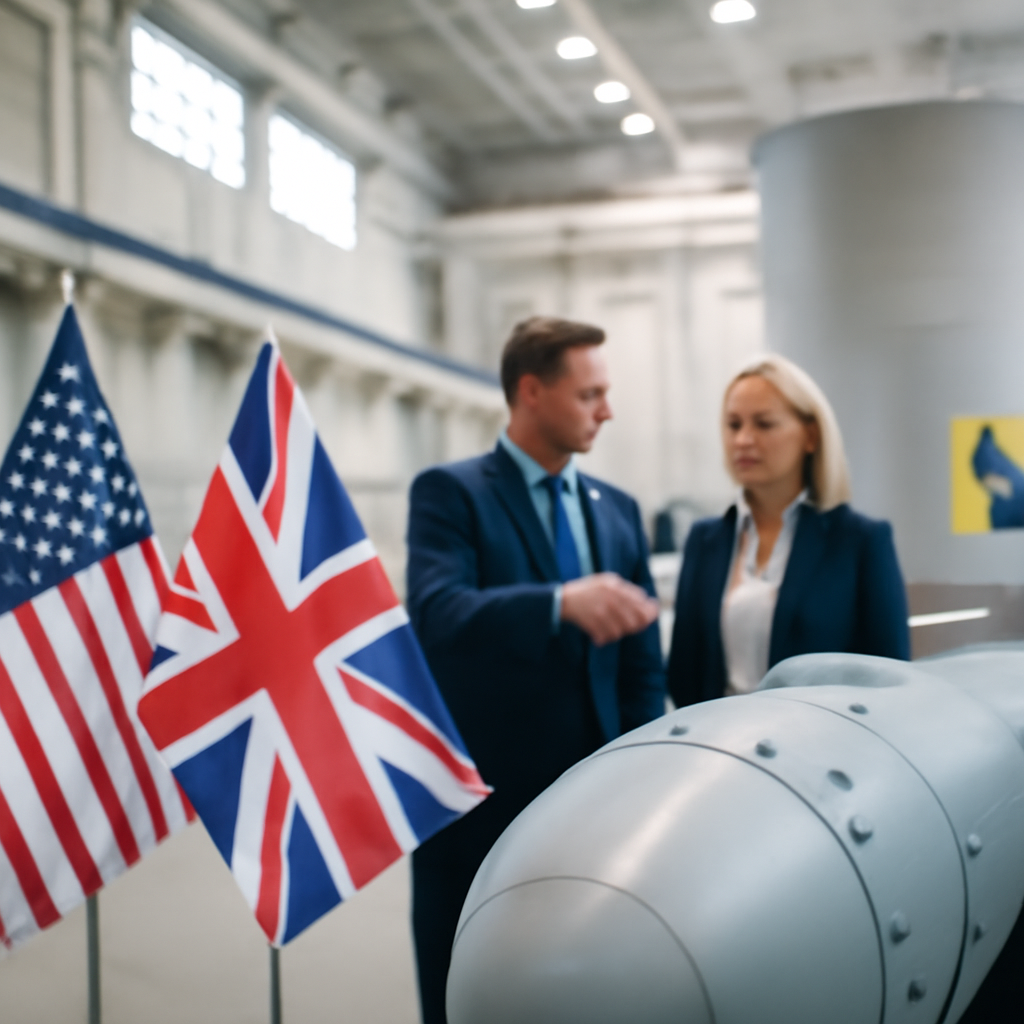
The benefits the United States derives, the source makes clear, are largely technical and operational rather than financial. British nuclear scientists and engineers participate in regular exchanges with U.S. counterparts, offering peer review, systematic red‑teaming, and other inputs that improve work at U.S. nuclear laboratories. Those exchanges have historically helped American programs solve problems, in part because U.K. teams have sometimes approached constraints with "clever" efficiencies — an attribute John Foster singled out.
Those technical ties matter at a moment when the United States faces "growing technical challenges" in its own nuclear weapons modernization programs and contends with aging systems and atrophied infrastructure. The bilateral flow of ideas and criticism is presented in the source as an insurance policy against programmatic failure: London’s expertise is a resource Washington would miss if cooperation frayed.
Trident: British financial contributions and their limits
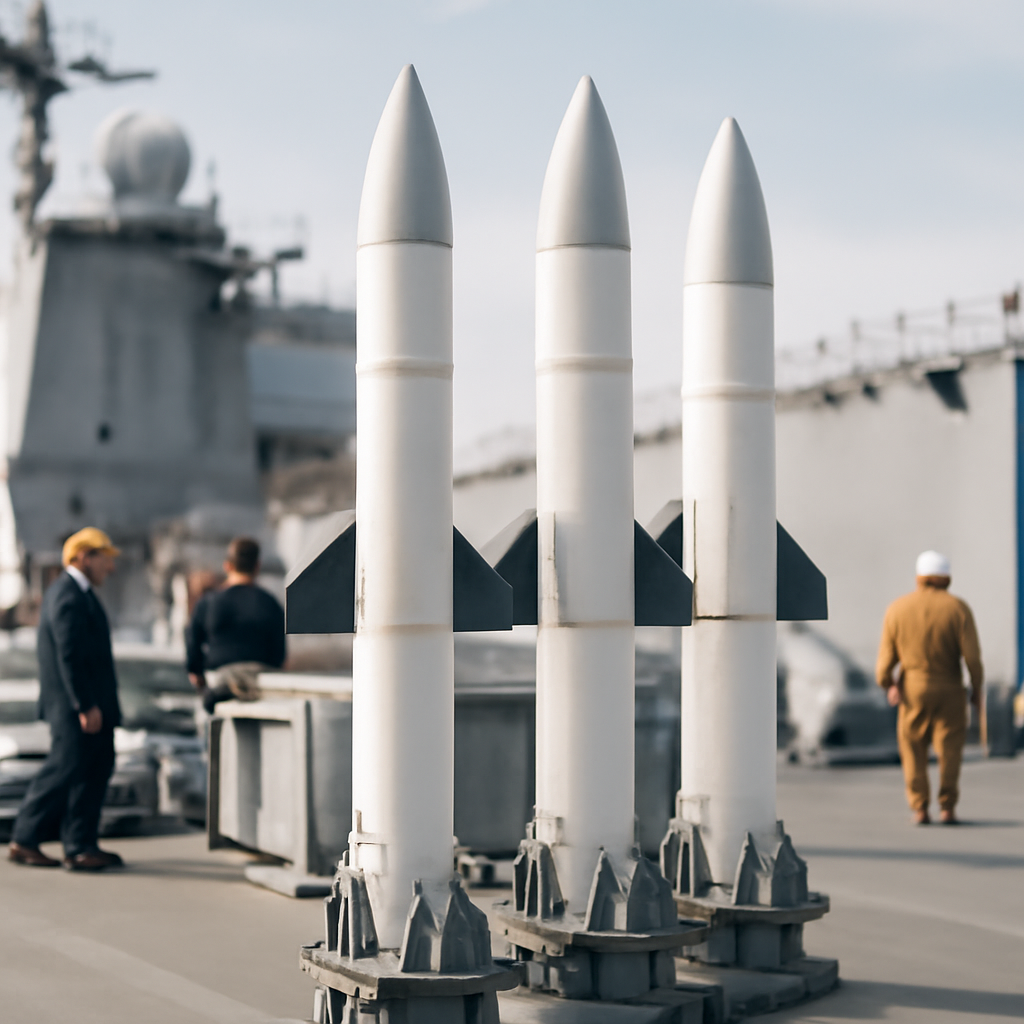
Britain does shoulder significant costs for access to U.S. technology. For Trident specifically, the U.K. government paid initial procurement fees, makes annual maintenance contributions, and contributes to life‑extension costs — expenses the source says run "well into the many billions of dollars." Yet the article stresses that these payments do not capture the full value of the relationship to the United States, because Washington’s gains are less about direct revenue than about technical exchange and reciprocal capability.

Audit-ready is a season. It shouldn't be.
Evidence in spreadsheets, controls drifting between audits, frameworks multiplying on flat headcount. Nubivance runs continuous compliance on Rapid7 Cyber GRC - SOC 2, HIPAA, ISO 27001, PCI, CMMC.
End the scrambleThe U.K. deterrent’s operational independence and NATO implications
The source underscores an enduring, deliberate tension in the alliance: the U.K. deterrent is described as "technically dependent on the United States" even as the British prime minister maintains "operational independence" over its use. That duality is central to NATO nuclear doctrine and to American calculations. Historically, the original U.S.-U.K. missile sales agreement was negotiated on the premise that Britain would assign these weapons to the defense of NATO, and Washington judged that Britain’s forces "strengthen the nuclear defense of the Western Alliance."
Operational independence gives Britain a separate center of decision‑making — a complication for Moscow’s threat calculus. The source reports there are "some doubts" about whether Russia actually believes London would carry out a nuclear strike without U.S. involvement, yet it also notes that Russia appears to perceive the U.K. deterrent as credible. That perception, the source argues, contributes to deterrence on the Euro‑Atlantic flank.
Mutual Defense Agreement (2024 amendment) and naval propulsion cooperation
The partnership has expanded in recent years. A 2024 amendment to the Mutual Defense Agreement now permits two‑way exchanges on naval nuclear propulsion, including the enriched uranium needed to fuel seagoing reactors. The change opens room for broader U.K. technical contributions to the U.S. nuclear navy — a concrete example of reciprocity that the article highlights as a growth area in cooperation.
What this means for U.S. policymakers, the incoming U.K. prime minister, and nuclear labs
- U.S. policymakers: As U.S. defense priorities "increasingly shift away from Europe," Washington will have to weigh the strategic value of a close European nuclear partner that can help shoulder assurance tasks and consensus‑building within NATO. The source argues the United States should remember that it, too, gains from the relationship.
- The incoming U.K. prime minister: The new leader will face difficult choices about whether to remain technically dependent on U.S. Trident missiles or to explore alternative or supplementary arrangements. That debate is posed as both political and fiscal: reducing reliance would carry "significantly greater, and plausibly unsustainable, costs" for Britain.
- Nuclear laboratories and technical teams: U.S. labs currently benefit from British peer review and red‑teaming. The 2024 amendment on naval propulsion suggests areas where technical cooperation can deepen, offering both sides operational dividends as modernization programs press forward.
The article also warns of the strategic downside of a rupture: were ties to fray, Britain might limit or cut defense support, including access to bases "such as Fairford or Diego Garcia, which have played important roles in the Iran conflict," and reduce its high degree of support for U.S. foreign policy. That possibility, the source argues, strengthens the case that preserving the nuclear partnership serves both capitals.
Jamie Kwong, the author of the piece and a fellow in the Nuclear Policy Program at the Carnegie Endowment for International Peace, presents these points as preliminary findings from a project examining how a changing security environment shapes U.K.–U.S. nuclear deterrence collaboration. The central takeaway: London may depend on Washington more, but Washington also gains meaningful technical, operational, and alliance advantages — facts that U.S. and U.K. leaders will confront as they reassess the future of a relationship more than six decades old.