“Atlantic Thunder demonstrates the unmatched lethality and interoperability of the United States and United Kingdom,” US Navy Capt. Kelechi Ndukwe said, summarizing a multiday live-fire sinking exercise that tested long-range maritime strike concepts and allied communications in the North Atlantic.
Exercise Atlantic Thunder 2026 and the Klakring SINKEX
The sinking exercise — part of Exercise Atlantic Thunder 2026 and conducted Sept. 14–25 in the North Atlantic — used the decommissioned guided‑missile frigate Klakring as a live target. The US Navy described the event as intended to bolster skills in live‑firing against a surface target at sea and to “foster interoperability between the US and the UK for long‑range maritime sinking operations,” Capt. Ndukwe told reporters.
SM-6 fired from USS Paul Ignatius; range intentionally tested
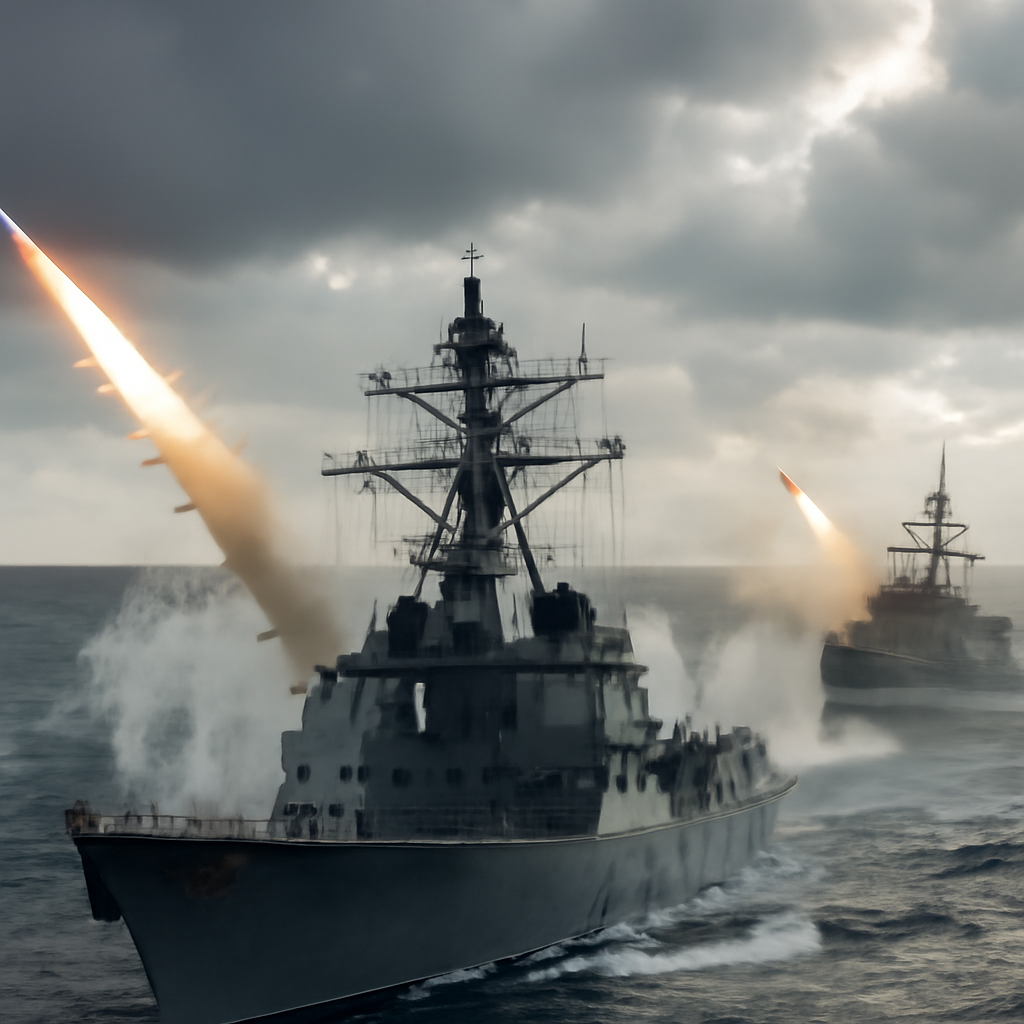
As part of the drill, the destroyer USS Paul Ignatius fired the SM-6 missile. “We were testing the surface‑to‑surface engagement ability at the furthest range that we could,” Ndukwe said, adding plainly: “We were just testing that range.” He did not disclose exact distances; the Center for Strategic and International Studies lists the SM‑6’s range at nearly 230 miles.

This site is the portfolio.
OSINTSights runs on Cloudflare Workers, D1, R2, and Vectorize, with an AI pipeline on Hetzner ARM. Nubivance designed, built, and operates it. We do the same for clients.
See what we buildUK contributions: Wildcat, Sea Venom and Naval Strike Missile
The United Kingdom contributed air and sea munitions to the exercise. Ndukwe confirmed that a Royal Navy Wildcat helicopter launched the Sea Venom missile and that the Royal Navy also employed its Naval Strike Missile during the SINKEX. US and UK maritime patrol P‑8 aircraft and the Royal Navy frigate HMS Portland were among additional units involved.
Sensors, data collection and future weapons design
Before the strike sequence, engineers from Naval Surface Warfare Center Carderock and Naval Information Warfare Center Pacific installed embedded sensors aboard Klakring to collect impact and performance data. Ndukwe said the sensors will “analyze the data and the impact zones” and that the information will be processed over the “next few months.” He framed that work as intended to “really push the envelope on what we’re able to do with future weapons designs.”
Final strike: Mk 48 Advanced Capability Torpedo from USS Massachusetts
Although longer‑range munitions initiated the sequence, the final blow to Klakring came from an Mk 48 Advanced Capability Torpedo fired from the Virginia‑class submarine Massachusetts. Ndukwe described a deliberate sequence that “started with the longest‑range ordinance... and then moved into shorter range.” Units from the US Air Force — including F‑15E Strike Eagles — also participated in the broader exercise.
What this means for the US Navy, naval weapons developers, and allied operational planners
- US Navy and Royal Navy operational planners: Validated communications and a “shared battle damage assessment” were highlighted by Capt. Ndukwe as a principal takeaway, reinforcing the allied ability to coordinate long‑range and multi‑domain sinking operations.
- Naval weapons developers and engineers: Data from embedded sensors on Klakring will be analyzed over coming months to inform “future weapons designs,” according to Ndukwe — a direct input loop from live‑fire testing to technical evaluation.
- Allied operational planners and commanders: The exercise demonstrated an end‑to‑end sequence from longest‑range surface engagements to close‑in effects, offering a live example of integrating missiles, helicopters, maritime patrol aircraft, surface ships and submarines.
Atlantic Thunder 2026 combined allied ordnance, multi‑platform coordination, and instrumented measurement in a single live‑fire event. The exercise validated communications and shared assessment procedures while generating a trove of sensor data that the Navy says will be mined over the coming months to inform future weapons design and employment. At least one concrete detail remains internal to the services: the exact SM‑6 engagement distance was not disclosed publicly, even as the Center for Strategic and International Studies places the missile’s range at nearly 230 miles—leaving analysts to watch the forthcoming data releases and technical assessments for the specifics of how far those systems were pushed.