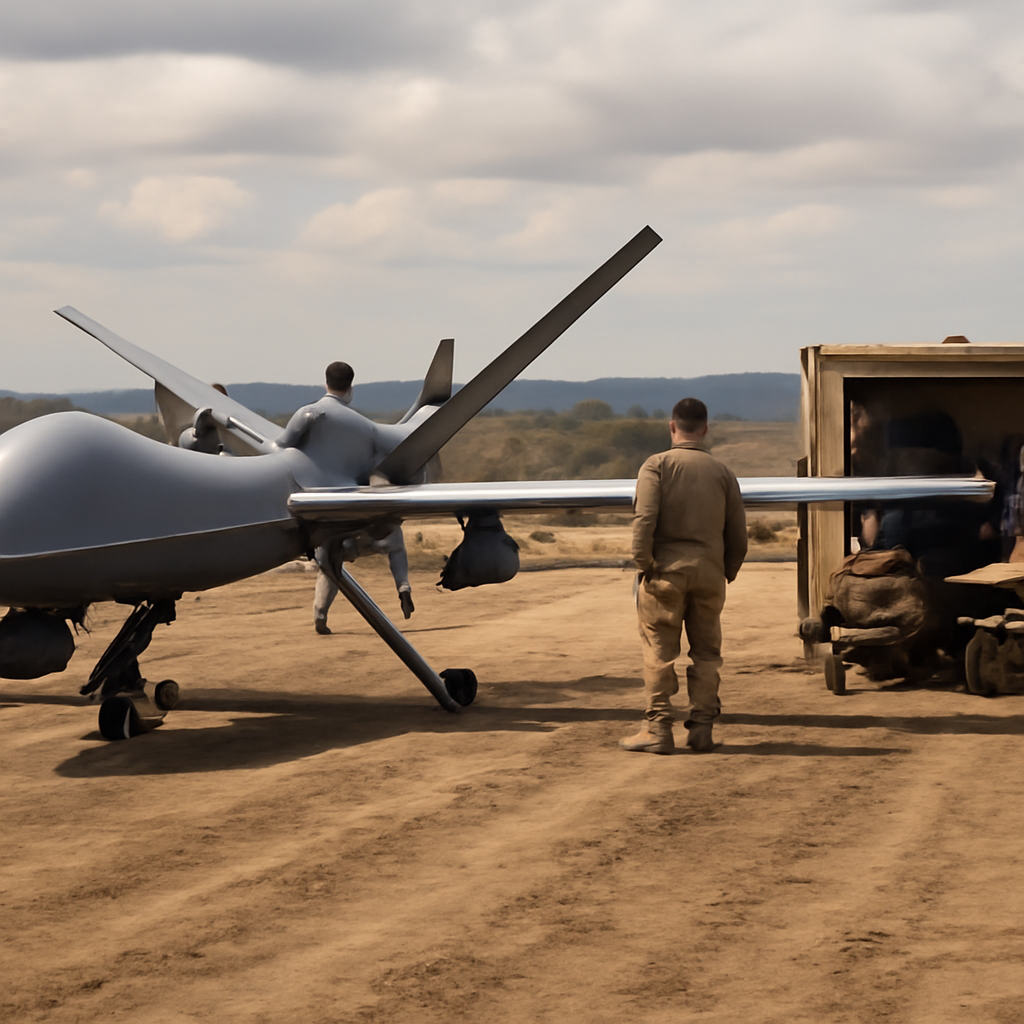
“We all saw the events in January, and incredible capability demonstrated, but it took immense numbers of aircraft and layered effects,” PEO Rotary Wing Steve Smith said, framing the problem for future special operations aviation.
Operation Absolute Resolve framed the requirement
Speaking at the SOF Week expo in Tampa, Fla., Smith tied today's procurement and integration priorities directly to Operation Absolute Resolve, the January operation in which the U.S. captured Nicolas Maduro in Venezuela. He said that operation showed extraordinary capability but also exposed a reliance on “immense numbers of aircraft and layered effects.” The result, he said, is a clear requirement: special operations helicopters must be able to operate quieter and with fewer aircraft through “holistic systems” that can generate those layered effects on board.
Which platforms are in play: MH-60M, MH-47G, and the MV-75 Cheyenne
Smith identified Special Operations Command’s current fleet of MH-60Ms and MH-47Gs — flown by the 160th Nightstalkers Special Operations Aviation Regiment (SOAR) — as beneficiaries of technology drawn from the Army’s forthcoming MV-75 Cheyenne. The MV-75, Smith said, is due to enter service with SOF in the mid-2030s and has informed much of the early risk reduction work for SOF-peculiar integration.
He added that the Army reviewed PEO Rotary Wing’s work and “accepted those into the baseline,” meaning structural requirements from the SOF integration work are now part of the MV-75 baseline. Smith called that “good news for everybody,” noting the MV-75 baseline includes “a lot of modularity, a lot of room for growth.”

The cyber insurance questionnaire just landed. Now what?
SOC 2, HIPAA, insurance renewals - someone has to own security strategy. Nubivance provides fractional CISO leadership without the full-time salary.
Get a security leadDigital integration: a backbone and the Silent Knight radar
Smith stressed that much of current special mission equipment is not built to plug into a digital backbone or time-sensitive networks — a shortcoming PEO Rotary Wing is addressing with Lockheed Martin Systems Integration‑Owego. “How do we get the information on, how do we get information off those pieces of equipment? So far we’ve been very successful with the pieces that we’re putting in there,” he said.
He confirmed plans to begin integrating the Silent Knight terrain avoidance radar on the MV-75 later in the year, supported by Lockheed’s systems integration lab so the work can proceed “without getting in the Army’s way at all.” Smith said the intent is to bring “that entire digital ecosystem” into the SOF fleet and to “take some of the systems off that aircraft and proliferate that across the enduring fleet,” potentially extending the MV-75’s digital backbone to MH-60s and MH-47s.
Common cockpit ambitions and the prospect for MH-47 Block III
One tangible objective Smith highlighted is a common cockpit across platforms. “This is truly getting to something that we’ve been after for a long time, which is a common cockpit … and that’s truly something that’s special, because now I pay for integration once,” he said, framing commonality as a procurement and integration efficiency.
Smith also hinted that the MH-47 could be considered for a Block III variant modeled on the MV-75’s modular approach — potentially allowing modular pushes of equipment and expanded capabilities such as aerial refueling flexibility to enable forward deployment and mission reconfiguration. He was explicit about fiscal constraints: “But I want to be clear. There’s no funding that’s been appropriated for that,” he concluded.
Launched effects modelling slated for 2027 and air-defence concerns
Looking beyond platform upgrades, Smith disclosed that PEO Rotary Wing will begin modelling to integrate launched effects on helicopter fleets in 2027. That modelling, he said, will be “speed, range, payload-specific for 160th [SOAR] penetration missions.” He framed the modelling as part of preparing to confront the “full-up stack of integrated air defense” and “the full range of enemy threats,” scenarios where he suggested the Army’s needs might differ from SOF’s.
What this means for PEO Rotary Wing, 160th SOAR, and the Army
- PEO Rotary Wing: Will continue systems-integration work with Lockheed Martin Systems Integration‑Owego and the Lockheed systems integration lab to create a MV-75-centered digital ecosystem that can be proliferated across the SOF fleet, and will lead modelling for launched effects beginning in 2027.
- 160th Nightstalkers (SOAR): Stands to gain quieter, more modular aircraft and mission-specific launched-effect profiles tailored to penetration missions, but will have to wait on platform fielding timelines tied to the MV-75 and on any funded MH-47 Block III effort.
- The Army: Has accepted SOF structural requirements into the MV-75 baseline, creating a common foundation for growth and modularity across Army and SOF platforms; the Army’s broader integration schedule remains a coordination point as PEO conducts SOF-peculiar integration without “getting in the Army’s way.”
Steve Smith’s remarks lay out a pragmatic engineering and procurement agenda: move digital ecosystems and modular systems from the MV-75 into the enduring SOF fleet, begin modelling the use of launched effects in 2027, and pursue cockpit commonality to reduce integration cost. The timeline and the question of funding — particularly for an MH-47 Block III variant — remain the key constraints that will determine how quickly those plans change the way SOF flies.