“We can talk about the captain of industry who owns a banking conglomerate and they want to make sure they have precise timing for their ATMs,” Space Force Col. Stephen Hobbs said. “On the military side, we talk about an Army captain on the ground wanting to make sure that he or she can get from point A to point B in order to achieve their objective.”
SV-10 (“Hedy Lamarr”) completes the GPS III line
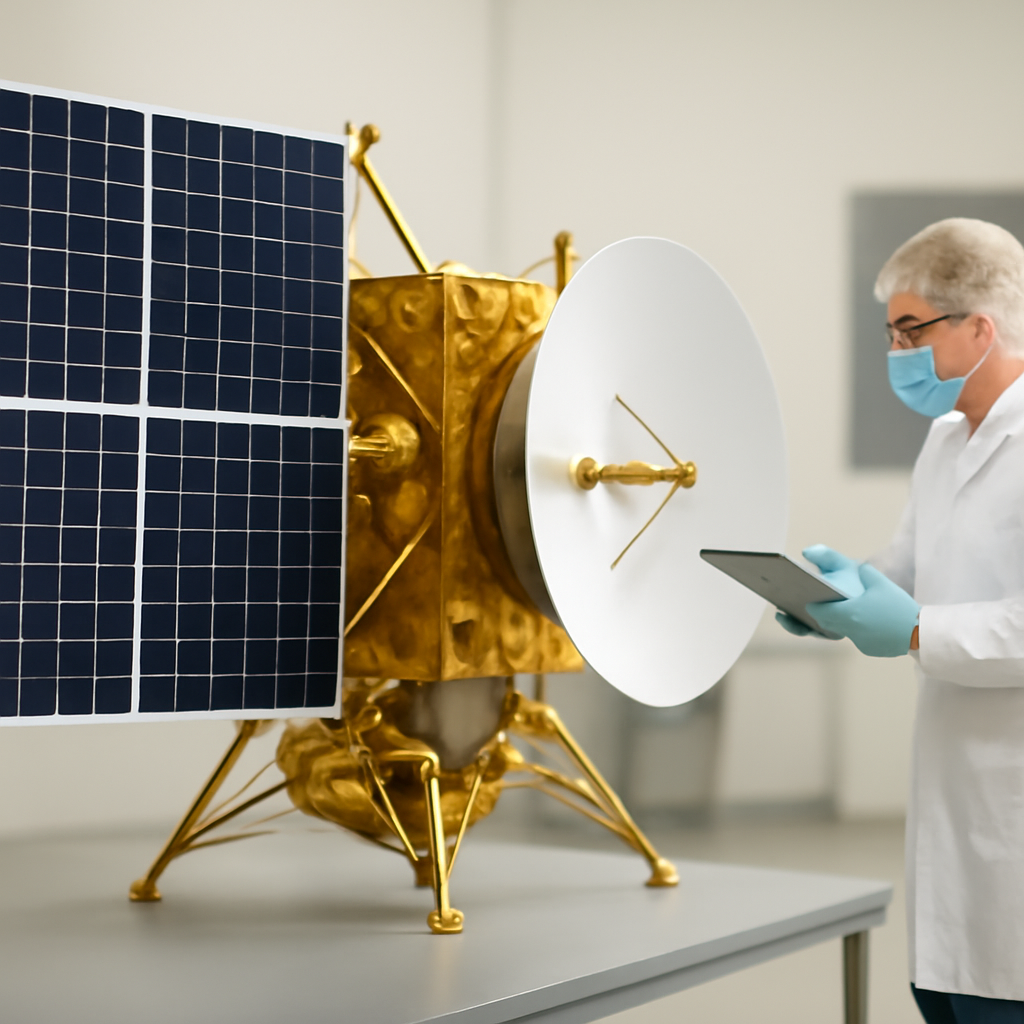
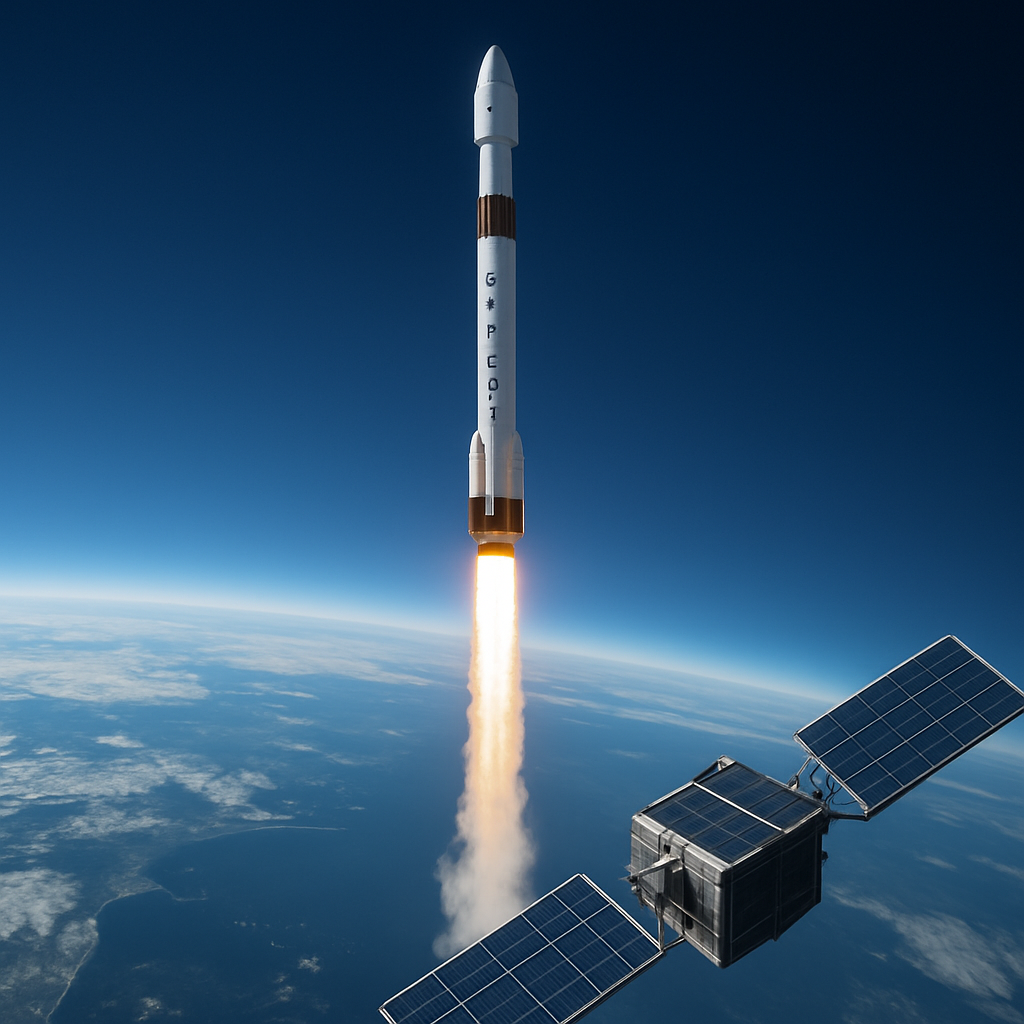
The final GPS III space vehicle, SV-10 — nicknamed “Hedy Lamarr” — reached orbit in late April aboard a SpaceX Falcon 9 rocket, closing a development program that has stretched for decades. The Space Force says the GPS III satellites deliver position data three times more accurate and eight times more jam‑resistant than earlier spacecraft. For everyday users that translates into more precise road directions and improved delivery logistics; for military users it promises more demanding applications such as sophisticated targeting and higher‑security communications in austere environments.
Rapid response and a last‑minute launch provider swap
The SV-10 mission was not without turbulence. In late February the Space Force paused national‑security launches on United Launch Alliance’s Vulcan rocket after an anomaly was found on a solid rocket motor; that investigation is still ongoing. SV-10 was among the missions affected and, in a matter of weeks, guardians switched the launch to SpaceX’s Falcon 9. Bad weather then pushed the planned April 20 launch back another day.
The switch and compressed timeline were enabled in part by a 2024 protocol called “Rapid Response Trailblazer,” developed to shorten the time between mission start and launch. “The asked us, ‘Hey, if we were to switch to a different launch provider, how fast can we get moving?’” Capt. Austin Guerrero, chief of GPS III/IIIF launch operations, told Defense One. “So our team moved out, and we did that in about four months. The typical timeline for our launch processing is six. So we got that down on our first shot down to four months.” Guerrero added that each iteration of recent launches incorporated lessons learned, establishing a faster, more streamlined rhythm.

The cyber insurance questionnaire just landed. Now what?
SOC 2, HIPAA, insurance renewals - someone has to own security strategy. Nubivance provides fractional CISO leadership without the full-time salary.
Get a security leadGround system shakeup: OCX canceled; AEP extended
A day before SV-10’s ascent, the Space Force announced the cancellation of OCX — the Global Positioning System Next Generation Operational Control System — after more than 15 years of development and roughly $6.3 billion in costs. The service had formally accepted OCX from Raytheon in July, but said persistent problems across a broad range of capability areas would put current GPS military and civilian capabilities at risk. “Despite repeated collaborative approaches by the entire government and contractor team, the challenges of onboarding the system in an operationally relevant timeline proved insurmountable,” Hobbs said in the service news release.
Rather than leave a capability gap, the Space Force plans additional upgrades to its existing ground system, the Architecture Evolution Plan (AEP). A Space Force spokesperson noted that AEP already supports GPS III’s upgraded capabilities such as M‑Code, and that AEP upgrades have made the system “far more cyber resilient than in the past.” The spokesperson said the service is developing plans to increase competition in the mission area longer term.
GPS IIIF, Regional Military Protection, and the 2027 budget request
The GPS III family already has a successor in development. The first GPS IIIF, or Follow‑On, launch is slated for May 2027 and is advertised by the service as providing “over 60 times more anti‑jam capabilities than legacy space vehicles.” GPS IIIF will also introduce Regional Military Protection, which will permit allied militaries to use the U.S. military’s upgraded satellite communications.
On the day SV-10 launched, Pentagon officials unveiled the 2027 budget request calling for 31 space launches, two new GPS satellites and their supporting infrastructure, and nearly $6 billion for satellite communications systems. The Space Force has said that, if Congress approves the request, guardians at Cape Canaveral are ready to execute those missions.
What this means for civilians, warfighters, allied militaries, and procurement teams
- Civilians and commercial users: Expect more precise navigation and timing services as GPS III capacity comes online — the Space Force highlights everyday benefits such as more accurate road directions and improved delivery logistics.
- Warfighters: The M‑Code capability and higher anti‑jamming performance are intended to support “sophisticated targeting and higher‑security communications in austere environments,” and leaders emphasize the importance of maintaining satellites on orbit and extending their service lives.
- Allied militaries: GPS IIIF’s Regional Military Protection is designed to allow allied forces to leverage U.S. military upgraded satellite communications.
- Procurement and ground‑system managers: The cancellation of OCX after a long, costly effort shifts focus to AEP upgrades and to plans the Space Force says will increase competition for ground‑system work going forward.
The final GPS III launch is a milestone, but Space Force leaders framed it as only one step in a continuing cycle: keep satellites on orbit, modernize ground nodes where feasible, and prepare the next generation for a 2027 debut that depends on congressional funding. “Now that we’ve launched all the IIIs that we’re going to have, are there ways that we can extend the life of that capability to make sure it’s there for the warfighter when he or she needs it?” Col. Hobbs asked, underscoring a persistent operational focus on both delivering new capabilities and keeping them functioning for decades to come.