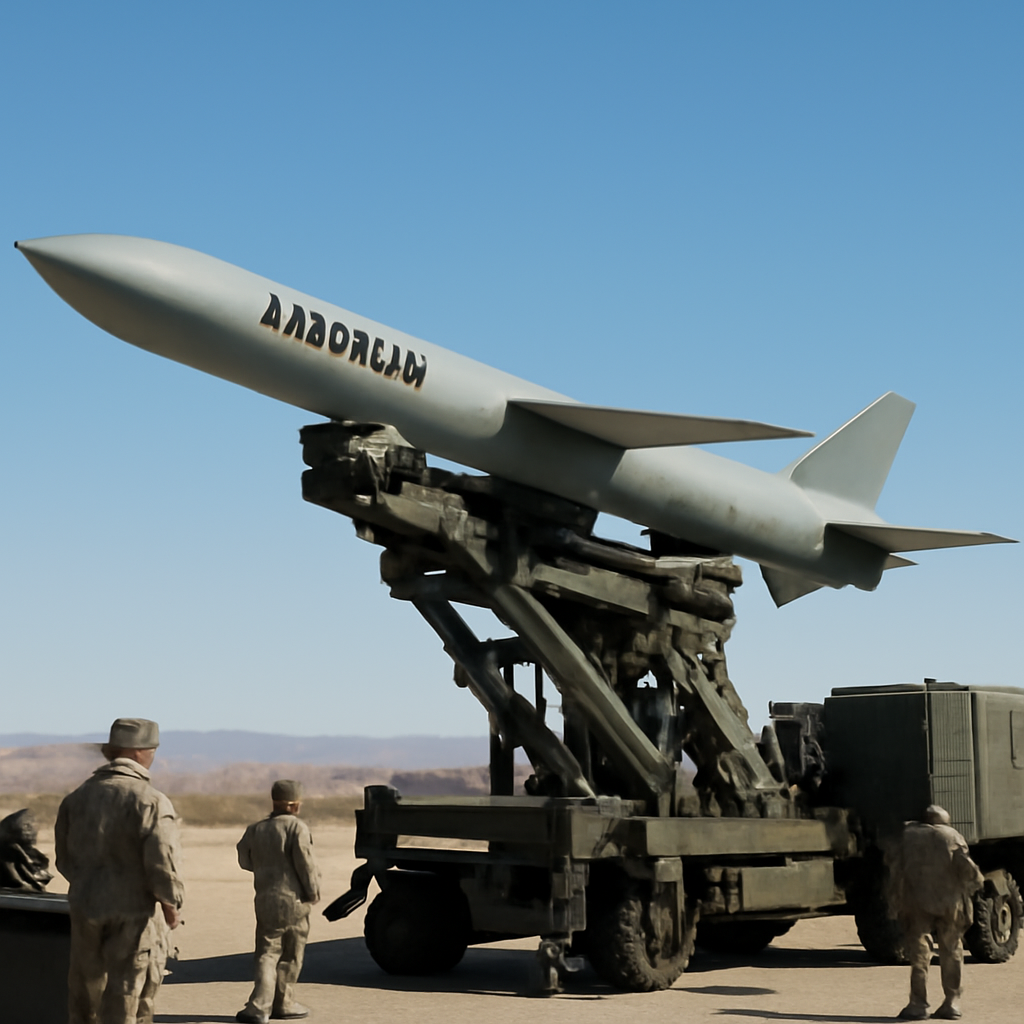
"The Dark Eagle...boasts a range of over 3,500 kilometers (2,175 miles)." According to the U.S. Army, that single fact — combined with a glide trajectory that exceeds Mach 15 at altitudes of roughly 30 to 50 kilometers — is what makes the weapon a fundamentally different kind of instrument for deterrence on the Korean Peninsula.
The Dark Eagle and the Multi-Domain Task Force
The article frames the Multi-Domain Task Force (MDTF) as a theater-level ensemble, not merely another missile system. Its stated purpose is to operate across space, cyberspace, and the electromagnetic spectrum to “blind an adversary’s radars, sever their communications, and seize control of the battlefield almost instantly.” The Dark Eagle is presented as the MDTF’s marquee capability: a hypersonic glide vehicle that, the U.S. Army says, skims the upper atmosphere at 30 to 50 kilometers and travels faster than Mach 15. By flying low and fast instead of following a predictable ballistic arc, the weapon is described as able to “slip beneath the sightlines of ground-based early warning radars” and bypass legacy air defenses.
North Korea’s launch posture and the timing problem
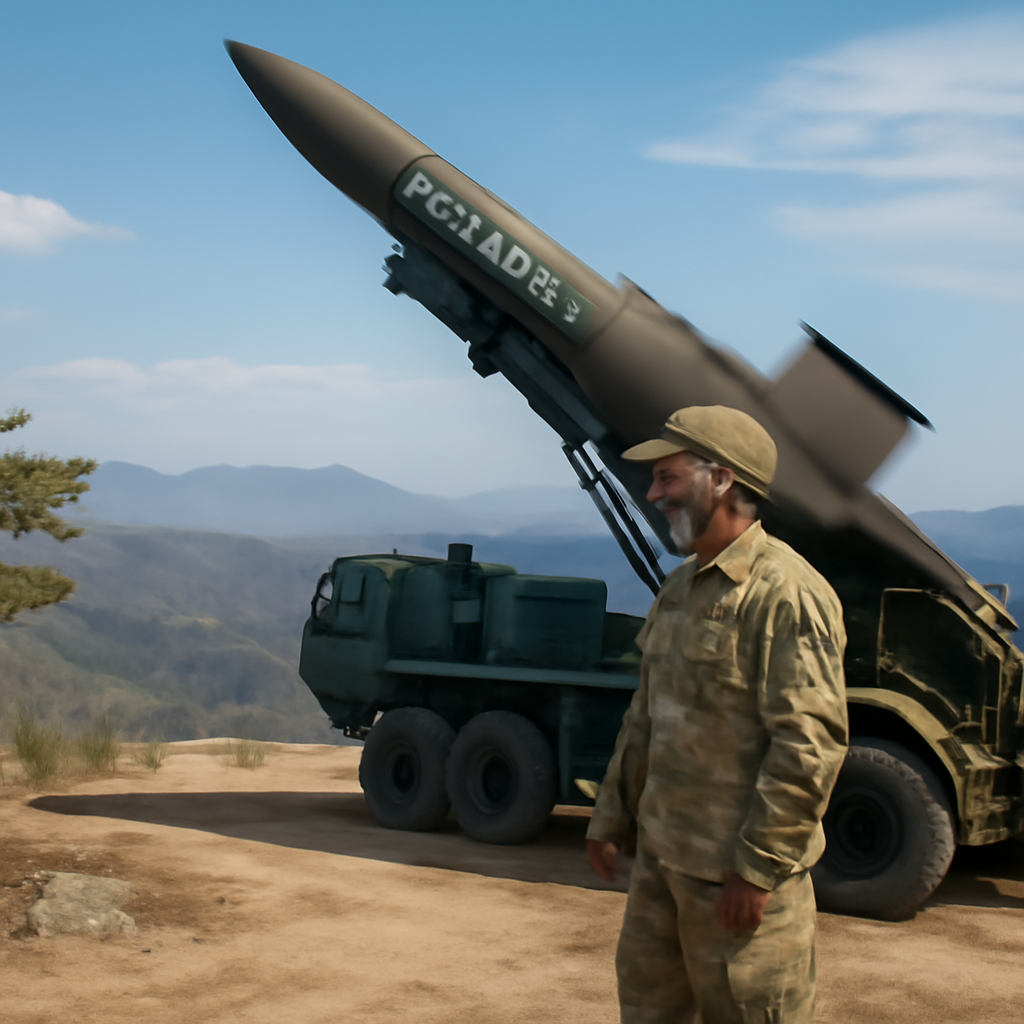
The article emphasizes a changing operational reality on the peninsula: North Korea’s turn toward solid-fuel ballistic missiles and mobile launchers. Those systems, the piece reports, can be rolled out and fired from concealed positions in roughly 10 to 15 minutes. That speed creates a timing gap for slower strike options; cruise missiles such as Tomahawk “simply fly too slowly to eliminate these targets before they launch.” By contrast, the Dark Eagle — whether based in South Korea or fired from farther afield — is described as closing that window. If stationed in South Korea it could hit command bunkers or missile sites “in minutes,” and even launches from bases in Guam or Japan would reach targets “in roughly 10 minutes.” The net effect, the article argues, is to undercut the logic of a surprise strike by making deep bunkers and mobile launchers much more vulnerable.

Audit-ready is a season. It shouldn't be.
Evidence in spreadsheets, controls drifting between audits, frameworks multiplying on flat headcount. Nubivance runs continuous compliance on Rapid7 Cyber GRC - SOC 2, HIPAA, ISO 27001, PCI, CMMC.
End the scramblePolitics in Seoul, Beijing anxieties, and the THAAD precedent
The piece acknowledges the diplomatic sensitivities involved. It recalls the fierce economic and political backlash South Korea faced after hosting the Terminal High Altitude Area Defense (THAAD) system in 2016 as a cautionary example. Critics, the article notes, warn that placing offensive hypersonic weapons in South Korea could make Seoul a pawn in the China–U.S. rivalry and risk regional escalation. The author contrasts THAAD — described as a “shield” in the public debate — with the Dark Eagle, which the piece characterizes as “undoubtedly a spear.” Against that backdrop, the article argues Seoul should not forgo precise, asymmetric deterrence simply because of diplomatic friction with neighbors.
A phased plan: joint working group and rotational deployments
The article advances a concrete, staged approach designed to balance military need and diplomatic management. Rather than immediate permanent basing, it recommends creating a joint working group of experts and military officials from Washington and Seoul to map logistics and political implications. As a practical first step, the piece suggests limited, rotational deployments of the MDTF during upcoming combined military exercises so both militaries can test integration of the Dark Eagle into existing networks without committing to permanence. The proposed “phased, transparent” pathway is pitched as a way to build public consensus in South Korea while offering diplomatic space to reassure regional neighbors that the capability is intended to stabilize — not upend — the security environment.
What this means for Seoul, Washington, and Pyongyang
- Seoul — Faces a dual task: weigh enhanced asymmetric deterrence against likely domestic and economic pushback; needs public consensus and diplomatic messaging if MDTF rotations or permanent basing are considered.
- Washington — The article argues a committed MDTF presence would be “ironclad proof” that the United States is prepared to project its next-generation capabilities to defend South Korea and would quiet recurring political talk in Washington about drawing down U.S. Forces Korea.
- Pyongyang — The combination of mobile, quickly launchable weapons and a counter that can strike origin points in minutes would, according to the article, make deeply buried bunkers and missile sites more vulnerable and reduce the plausibility of a successful surprise launch.
The debate over the Dark Eagle, as the article frames it, is less about a single platform than about how the alliance adapts to “unpredictable, multidomain threats.” The practical path it lays out — establish a joint working group, trial rotational MDTF deployments during combined exercises, and adopt a phased, transparent timetable — furnishes a specific next step that both sides can test without precipitating the permanence that has previously driven regional backlash. Whether Seoul and Washington take those steps will be the measure of how the alliance chooses to translate new capabilities into stable deterrence on the peninsula.
https://thediplomat.com/2026/09/why-the-south-korea-us-alliance-needs-the-dark-eagle/