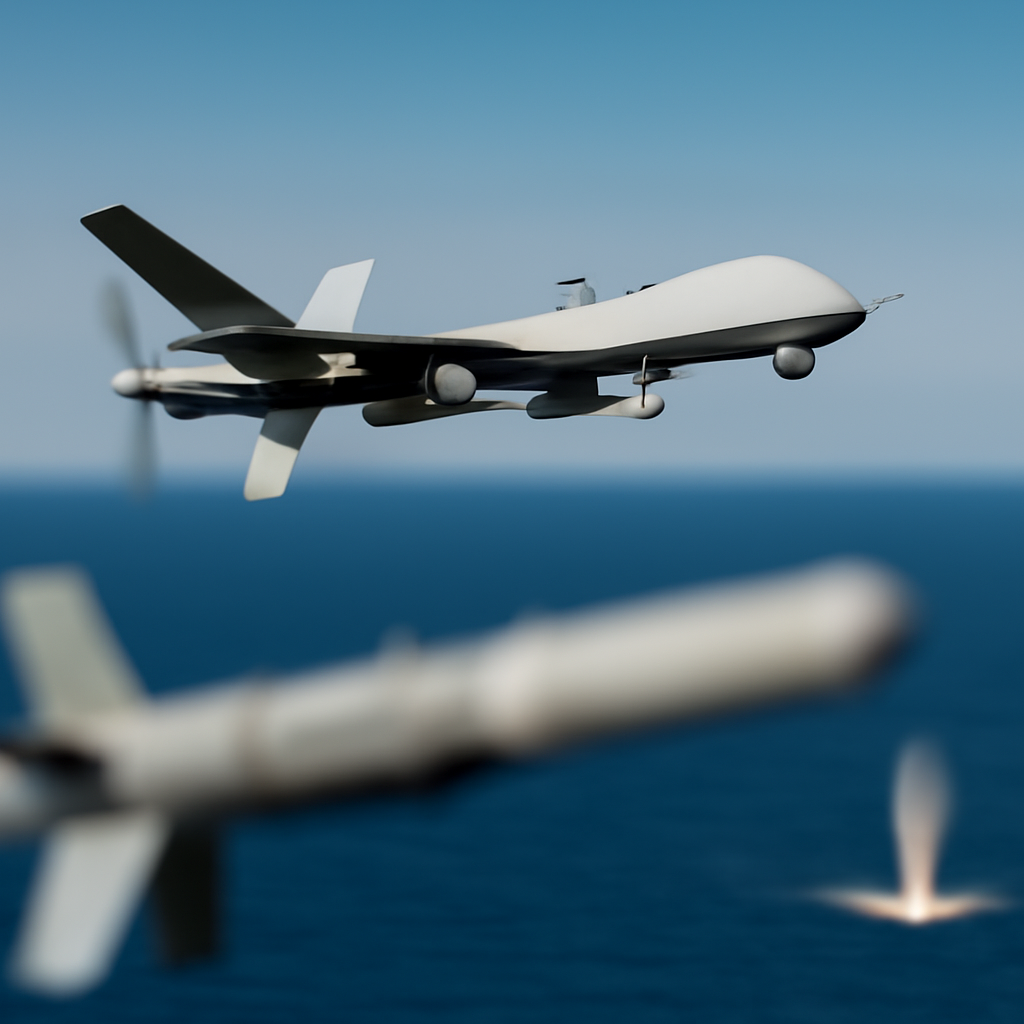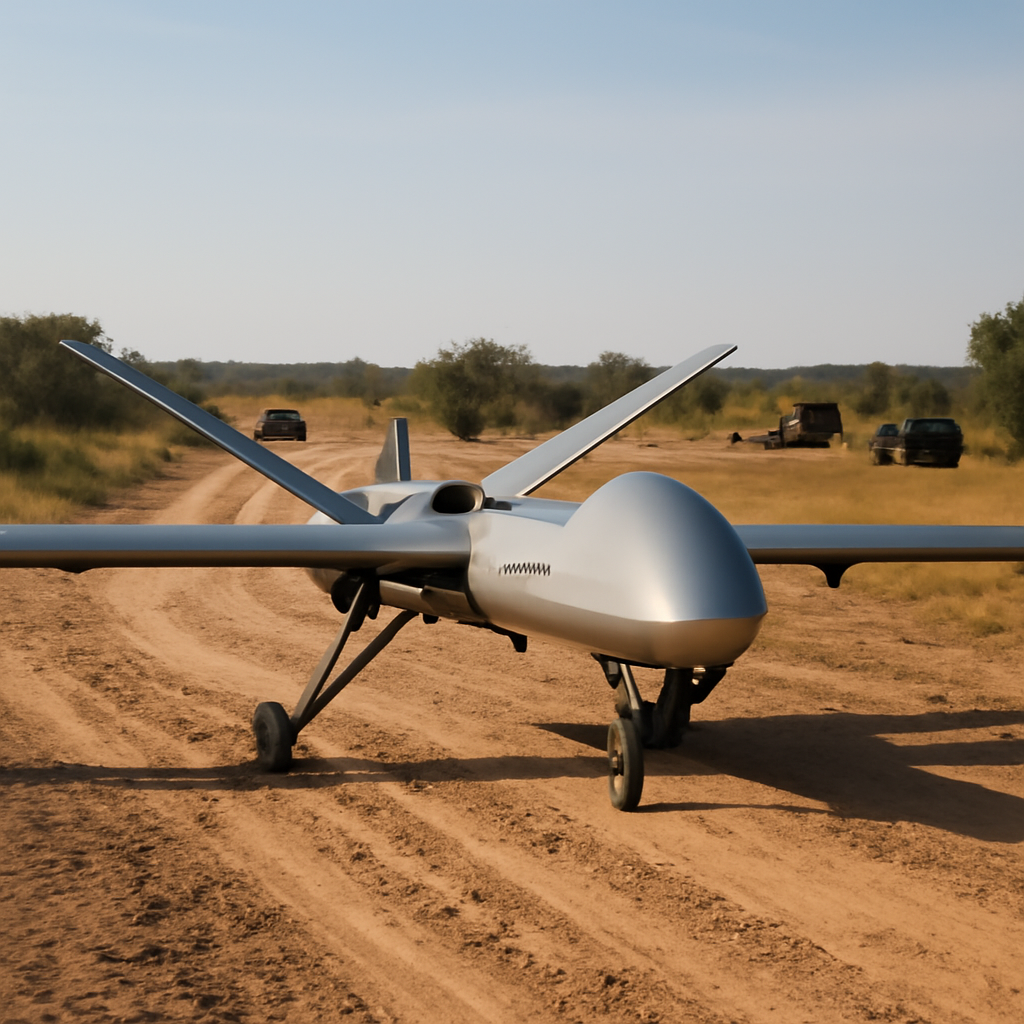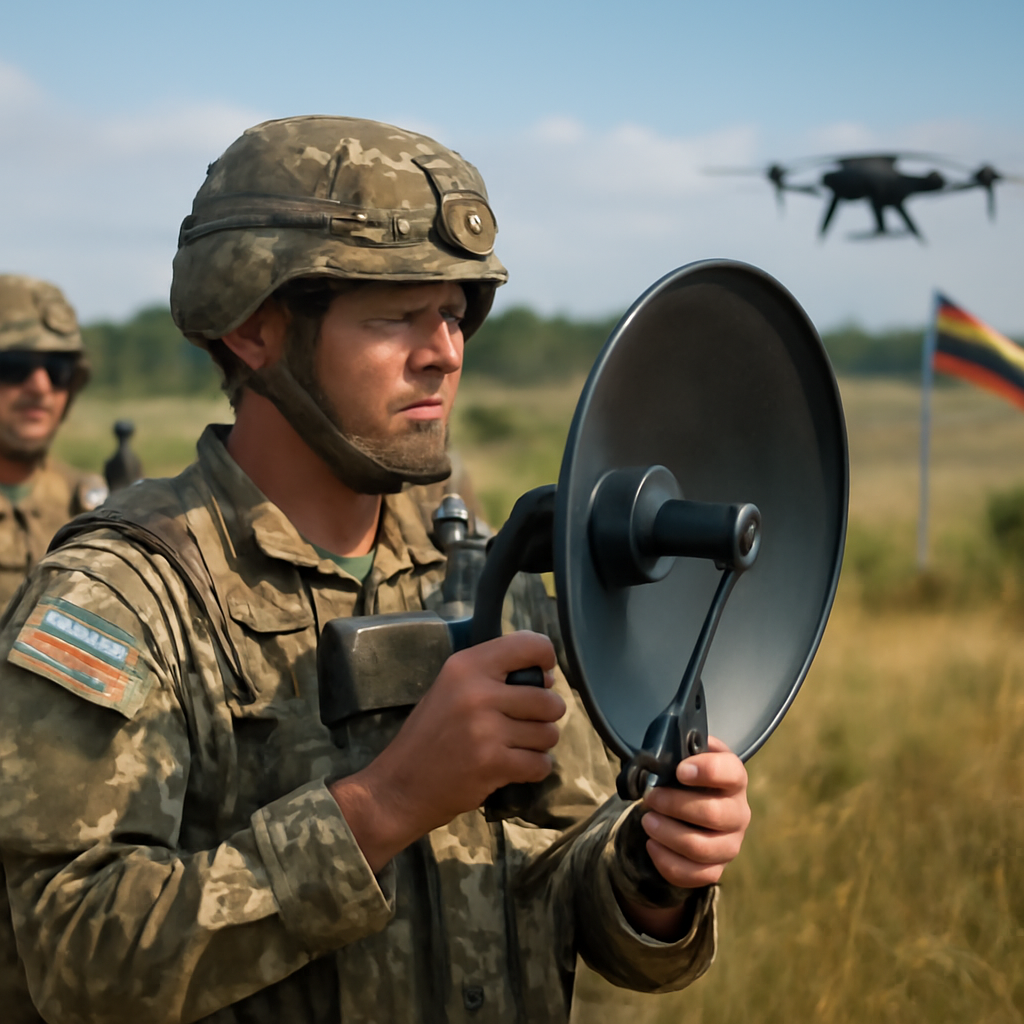
"No longer am I just scanning to my 12:00 and around me at ground level — we’ve incorporated this warfare to where we have to scan up and out as well … you have to now learn the sounds of the drones. Does it sound like one of the one-way attack ones coming in our potential direction?" — Sgt. 1st Class Tyler Harrington.
Project FlyTrap 5.0 in Lithuania
The recent US-led Project FlyTrap 5.0 exercise, held in Lithuania and running from the first two weeks of May, concentrated on low-cost unmanned aerial systems (UAS): detecting, tracking and defeating them. Counter-drone tactics, including visual identification and new emphasis on acoustic recognition, were central training objectives, officials involved in the exercise told reporters during a virtual media roundtable on May 14.
Sgt. 1st Class Tyler Harrington on audio recognition
Sgt. 1st Class Tyler Harrington, a platoon sergeant for Eagle Troop, 2nd Cavalry Regiment who led counter-drone tactics during Project FlyTrap, described how soldiers are being taught to pair sight with sound. Harrington said some one-way attack drones “have a higher buzz sound; they sound faster and more rapidly versus your enemy reconnaissance assets — they’re flying at a higher level, they’re up in the sky, hovering more of a flatter platform that is more easily detected.”
Harrington also noted the US Army has not yet formally introduced audio drone training into its curriculum, but that the field experience at FlyTrap can serve as a basic introduction to the concept.

Audit-ready is a season. It shouldn't be.
Evidence in spreadsheets, controls drifting between audits, frameworks multiplying on flat headcount. Nubivance runs continuous compliance on Rapid7 Cyber GRC - SOC 2, HIPAA, ISO 27001, PCI, CMMC.
End the scrambleUkrainian battlefield lessons: identification, drills, and acoustics
The emphasis on sound as a sensor draws directly from experiences on the Ukrainian battlefield. In May 2025, the Ukrainian-English outlet New Voice of Ukraine reported Ukrainian forces were able to identify Russian Shahed drones and decoys by sound, citing Ukrainian Air Force spokesman Yurii Ihnat during a national telethon program.
A separate investigation by the Ukraine-based non-governmental think tank CBA Initiatives Center examined Ukrainian troops who trained in six European countries between 2022 and 2025. The report said battlefield saturation of surveillance and combat drones has shifted basic training prerequisites: “Ukrainian recruits need to build muscle memory for the sound of approaching drones, and if someone shouts ‘air!’ everyone has to immediately fall on the ground, point their rifles in the sky and aim at a drone,” the research report said.
Passive acoustic sensor networks and the US Center for Army Lessons Learned
A paper published April 30 by the US Center for Army Lessons Learned described how Ukraine combines acoustic and other detection systems into networks with a common architecture. According to that paper, components include low-cost directional microphones, local computers for classification, time-synchronized timestamps, and compressed detection messages. The architecture, the paper said, allows cuing of the closest shooters or small air defense teams to neutralize first-person-view drones and provides early warning.
The Lessons Learned piece recommended that US leadership adopt and develop a similar approach, particularly along NATO’s eastern flank.
What this means for US soldiers, US leadership, and technologists
- US soldiers: Small-unit leaders at Project FlyTrap emphasized new sensory drills—looking up as well as down, and learning audible cues—to speed recognition and response against one-way attack drones and hovering reconnaissance UAS.
- US leadership and NATO planners: The Center for Army Lessons Learned explicitly recommends adopting acoustic-network architectures and related practices along NATO’s eastern flank, signaling a possible shift from ad hoc field experimentation toward doctrinal or procurement discussions.
- Technologists and procurement teams: The Ukraine examples described low-cost directional microphones, local classifiers and compressed messaging as practical components; those are concrete design elements that could be replicated, tested, and scaled if leadership elects to follow the Lessons Learned recommendation.
Project FlyTrap 5.0 tied frontline observations to training practice: combat experience in Ukraine has not only suggested new tools but also new instincts—soldiers learning to rely on sound as a cue to act. The US Army’s next steps remain visible in the record: trials and informal training at exercises like FlyTrap, a Center for Army Lessons Learned paper that endorses acoustic architectures, and an admitted gap between field practice and formal curriculum. Whether that gap will be closed by directive, procurement, or doctrine is the specific question the facts leave open.