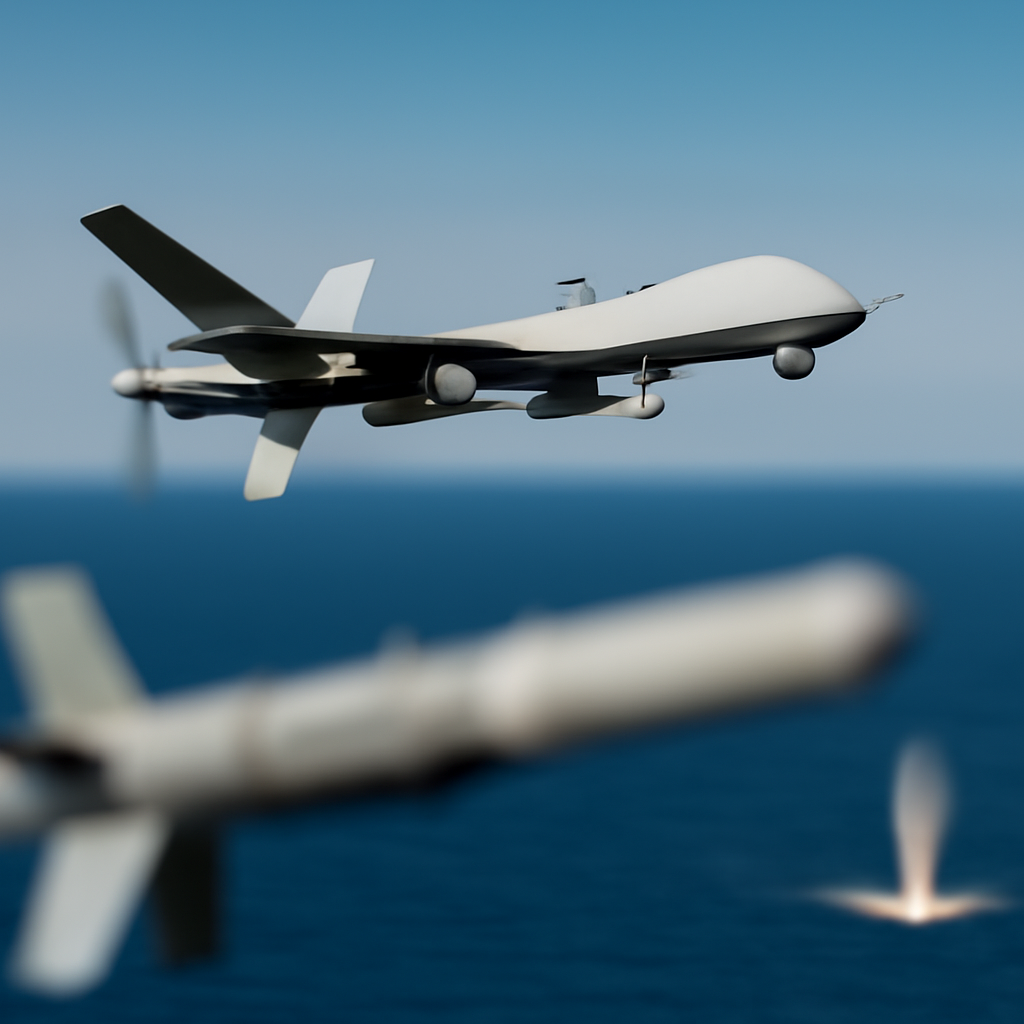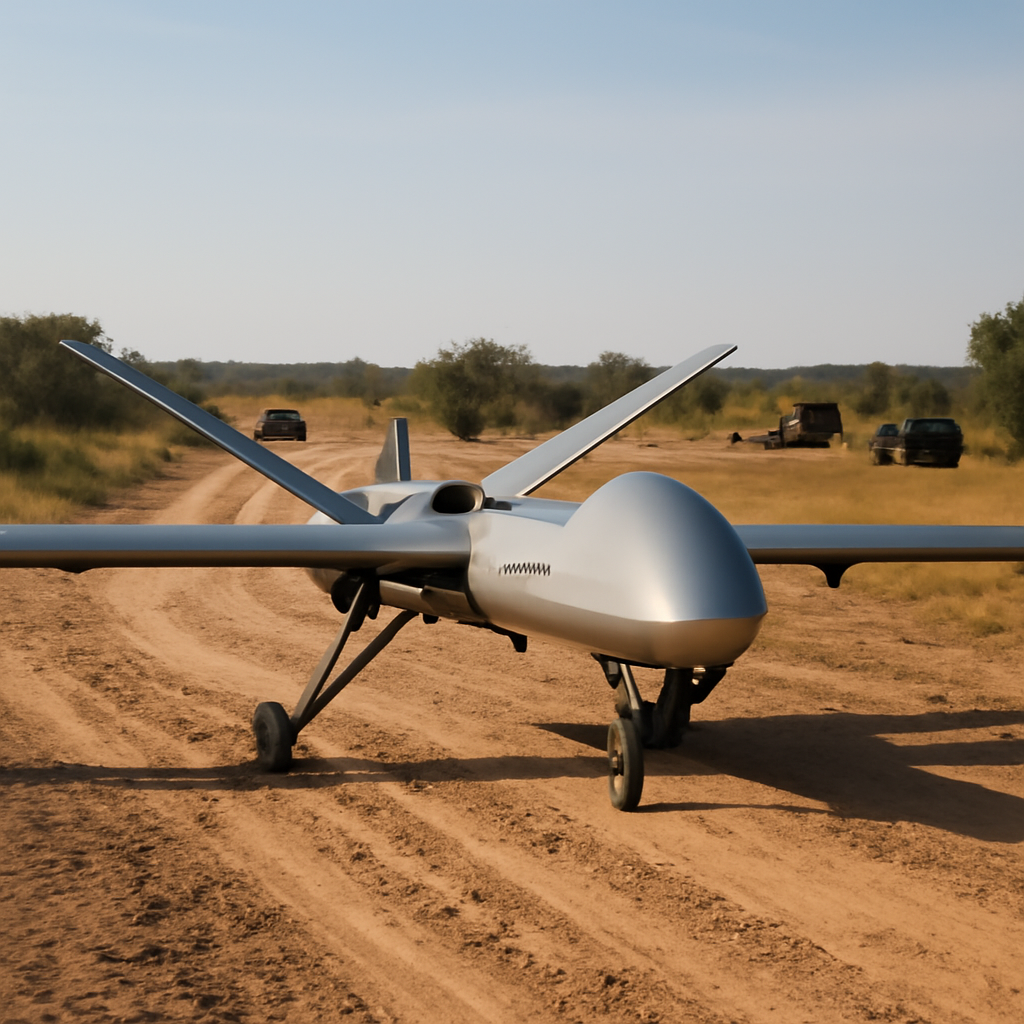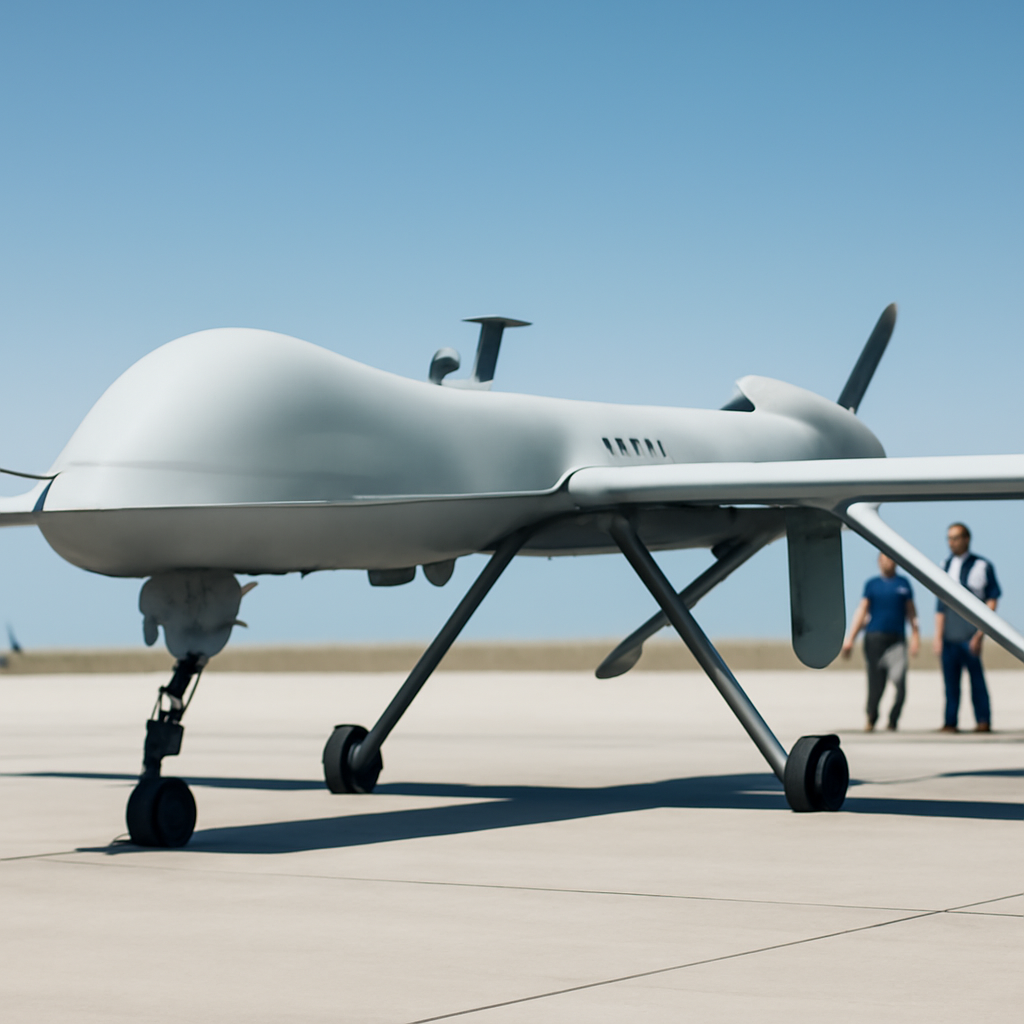
"In 2019, Naval Air Warfare Center Weapons Division (NAWCWD) received 20 MQ-1 aircraft from the U.S. Air Force," a NAWCWD spokesperson confirmed to TWZ.
NAWCWD took custody of 20 former MQ-1 Predators and calls them NMQ-1B
The U.S. Air Force officially retired the MQ-1 Predator in 2018, yet not every airframe was retired to the desert. TWZ reports that NAWCWD, part of the Navy’s Naval Air Systems Command (NAVAIR), received 20 MQ-1s from the Air Force in 2019 and redesignated them NMQ-1B. The Air Force had previously left dozens of Predators in its inventory when it retired the type, cannibalizing more than 50 for parts and placing several demilitarized examples on public display. Fifteen MQ-1s remain in storage at the boneyard at Davis‑Monthan Air Force Base in Arizona and are technically the property of the National Museum of the U.S. Air Force.
What the N-prefix means in NMQ-1B
The change in nomenclature is deliberate. Under the U.S. military’s joint service designation system the prefix "N" denotes platforms that have been modified in ways that are not readily reversible, typically for testing purposes. TWZ cites a well-known parallel: the NT‑43A, a heavily modified Boeing 737‑200 used as a radar cross‑section measurement platform. NAWCWD’s new designation therefore signals that the transferred Predators have been altered from their stock MQ‑1B configuration for specialized missions.

The cyber insurance questionnaire just landed. Now what?
SOC 2, HIPAA, insurance renewals - someone has to own security strategy. Nubivance provides fractional CISO leadership without the full-time salary.
Get a security leadHow NAWCWD describes the NMQ-1B fleet and its missions
NAWCWD told TWZ that the NMQ‑1B aircraft "are being used for test and training" and that NAWCWD is "an RDT&E [research, development, test and evaluation] command and the platforms were acquired to support our targets department." The command added that the platforms "support our mission" but declined to provide further details.
TWZ also reports the Air Force confirmed the transfer of the Predators to the Navy. The broader context for continued use includes recent battlefield and regional events that have sharpened attention on aerial threats; TWZ specifically notes heightened concern about long‑range kamikaze drones following recent clashes with Iran and ongoing conflict in Ukraine.
Plausible modifications and the roles the NMQ-1Bs could fill
- Signature mimicry: TWZ discusses the possibility that NMQ‑1Bs have been modified to replicate an array of radar, infrared, and other signatures, yielding a lower‑cost, long‑endurance surrogate to represent diverse aerial threats in tests and training.
- Sensor and seeker testing: The Predators could serve as flying platforms for evaluating missile seekers and podded sensor systems; the article notes that some seeker testing can be done without destroying the target, for example by removing warheads or using proximity fuzes to confirm simulated kills.
- Payload flexibility: The MQ‑1B baseline includes two underwing hardpoints capable of carrying countermeasures or small stores; NAWCWD could exploit those hardpoints or alter internal systems and software to change a sortie’s role from one mission to the next.
- Surveillance, relay, and test monitoring: Before armed variants, RQ‑1 Predators flew surveillance missions with infrared and electro‑optical turrets and could be fitted with small synthetic aperture radars. Depending on their configuration, NMQ‑1Bs could therefore monitor test activities or act as signal relays.
How NAWCWD, the National Museum of the U.S. Air Force, and U.S. test communities are affected
- NAWCWD / NAVAIR: Gains a fleet of long‑endurance, low‑cost platforms explicitly designated for RDT&E use to support the targets department and wider test and training needs.
- National Museum of the U.S. Air Force: Retains formal ownership of 15 MQ‑1s in storage at Davis‑Monthan, even as a separate group of Predators was transferred to the Navy for active test duty.
- U.S. military test communities: Benefit from additional surrogate aircraft available amid a surge in flight testing tied to next‑generation aircraft and missile development, while also inheriting the operational and maintenance work of adapting older airframes for modern test roles.
For now, the record is specific on numbers and labels but sparse on configurations. NAWCWD confirms 20 former MQ‑1s now fly under the NMQ‑1B name and that they support test and training in the command’s targets department; how exactly they are altered, and how long the Navy will keep them flying, remains a matter for the service to disclose. The Predator has thus been granted nearly a decade of extra life—quiet, specialized, and largely out of public view—at a moment when affordable, flexible test assets are in high demand.