“If I'm sitting at 31 today, the only way for me to realistically increase that inventory is for me to build new ships and do a service-life extension on some of the ships that I currently have in the inventory,” Shon Brodie, the Marine Corps’s deputy director of Maritime Expeditionary Warfare, told reporters Wednesday.
The plan in numbers: from 31 to roughly 40 amphibious ships
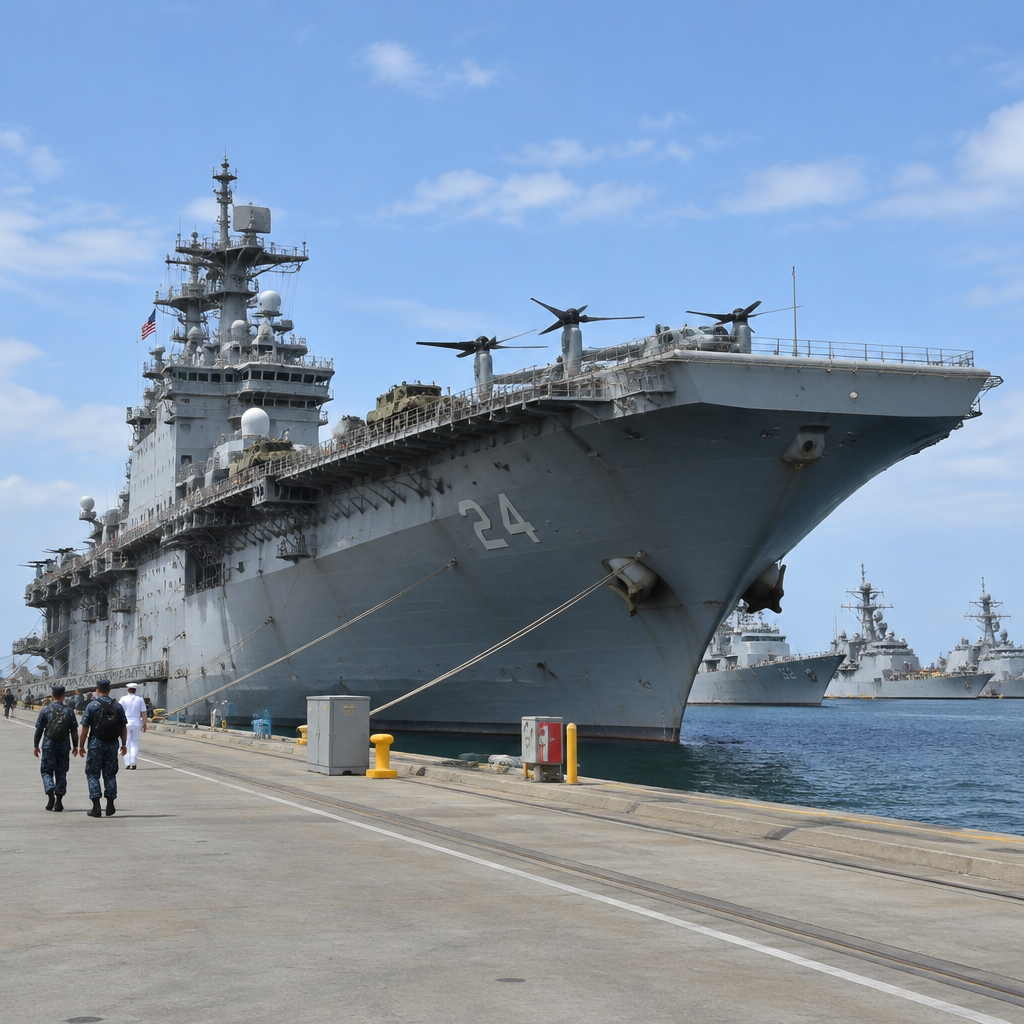
The Navy and Marine Corps leaders have sketched a concrete numerical response to persistent readiness shortfalls: increase the amphibious fleet from the current 31 ships to about 40 — roughly a 25 percent rise. That larger inventory would be composed of 13 big-deck amphibious assault ships and 27 smaller dock ships, up from today’s nine big-deck ships and 22 dock ships, Shon Brodie said.
The services intend that expanded fleet to fill a readiness gap while individual ship availability remains below the Navy’s stated metric: the goal that warships be ready 80 percent of the time. The immediate operational intent is to enable three Amphibious Ready Groups (ARGs) with their embarked Marine Expeditionary Units (MEUs) to be kept deployed simultaneously.
Readiness realities: ships sidelined and maintenance struggles
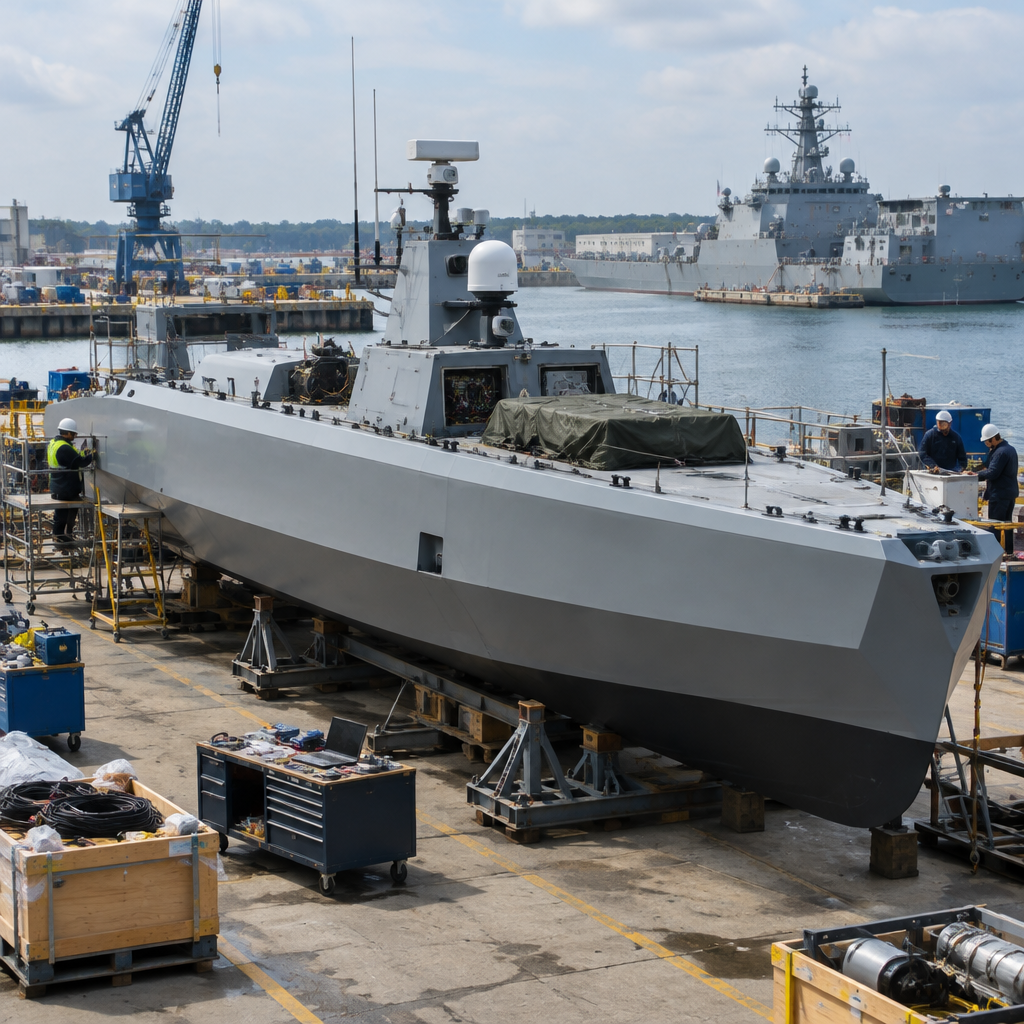
The services say the calculation stems from a stark maintenance reality: on average, amphibious ships are out of service more often than not, with the average amphib sidelined more than half the time. Few U.S. warships reach the Navy’s 80 percent readiness goal, and prolonged or deferred maintenance is a recurring problem.
Brodie acknowledged modest recent improvement — “We're marginally better than we were before” — but he warned that progress depends on execution over several maintenance cycles and on avoiding further deployment-driven wear. “So you've got to bring the ship back on time, get it in maintenance on time,” he said, describing a tight sequence of timing that must hold for the expansion plan to work.

This site is the portfolio.
OSINTSights runs on Cloudflare Workers, D1, R2, and Vectorize, with an AI pipeline on Hetzner ARM. Nubivance designed, built, and operates it. We do the same for clients.
See what we buildCosts, sustainment and strategic judgment: critiques from the Hudson Institute
Not everyone agrees that sheer numbers solve the problem. Bryan Clark, a senior fellow at the Hudson Institute, warned that operating and maintaining a fleet of 40 amphibs would be “massive” and could fuel a “readiness spiral” as maintenance is deferred and costs grow. Clark said maintenance shortfalls can cascade: “Because maintenance costs grow, the Navy can't do all the work it needs to do on a ship, some of which is also deferred to a future availability. The result is a readiness spiral where ships decline in material condition.”
The Hudson Institute’s recent fleet-design work also proposes a different numerical target: 35 amphibious ships. That study factors in vulnerability to a near-peer adversary and concludes amphibious ships are unlikely to be a self-contained solution in high-end conflict, implying larger surface combatants and carriers would also be needed for defense and strike.
Operational constraints: deployments, maintenance timing, and mission demands
Operational tempo complicates the plan. The services have frequently extended ARG deployments, which increases wear-and-tear and compresses already-delayed maintenance windows. The result, Brodie cautioned, is a simple arithmetic problem: extended deployments mean less time in maintenance, which in turn worsens material condition and reduces availability.
Marine Corps leadership has argued that a persistent three-ARG/MEU posture is the minimum to keep global pressure and provide scalable options to combatant commanders. In a 2025 op-ed in Defense One, Commandant Gen. Eric Smith said national security required “one from the East Coast, one from the West, and one patrolling from Okinawa, Japan,” adding that “3.0 is the minimum required to provide our nation and the Joint Force with a capability that can serve as both a warfighting formation and a cross-service integrator.”
What this means for the Marine Corps, Congress, and the Navy
- Marine Corps: Seeks an inventory large enough to sustain a continuous three-ARG/MEU presence and has elevated the requirement to policy discussions; will press for new ship procurement and selected service-life extensions to bridge gaps.
- Congress: Will be asked this month to fund the expanded amphibious program; lawmakers face a choice between paying for more hulls plus their operating costs or accepting a smaller fleet with higher maintenance investment per ship.
- Navy acquisition and maintenance communities: Face practical constraints — shipyard capacity, maintenance scheduling, and rising sustainment costs — that will determine whether increased procurement or improved depot throughput is the better lever for availability.
The services have a clear arithmetic problem and a clear political one: buy more hulls and extend some lifetimes while trying to squeeze faster, more effective maintenance from shipyards and yardside teams. The coming discussions with lawmakers over funding will show whether the Navy and Marines can translate a numbers plan into a sustainable posture or whether cost, maintenance capacity, and operational tempo will again force compromises.