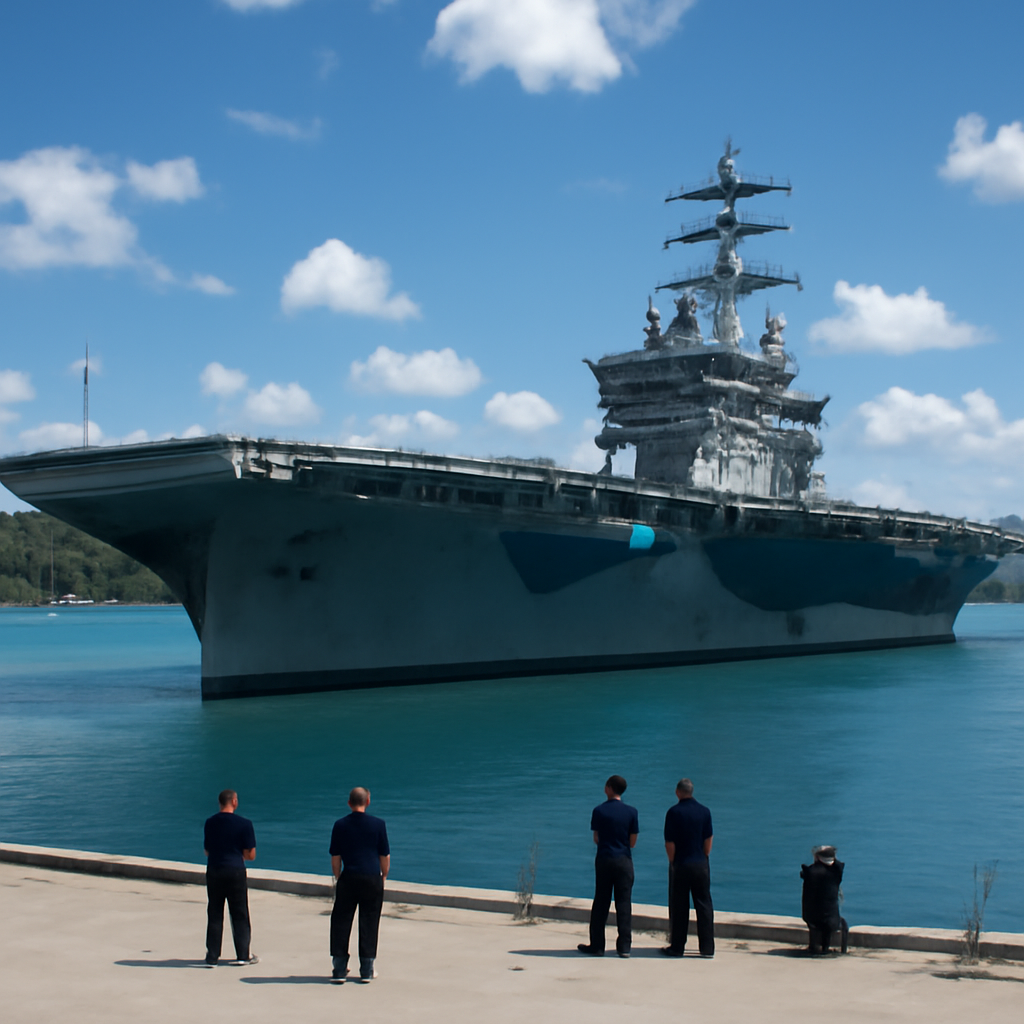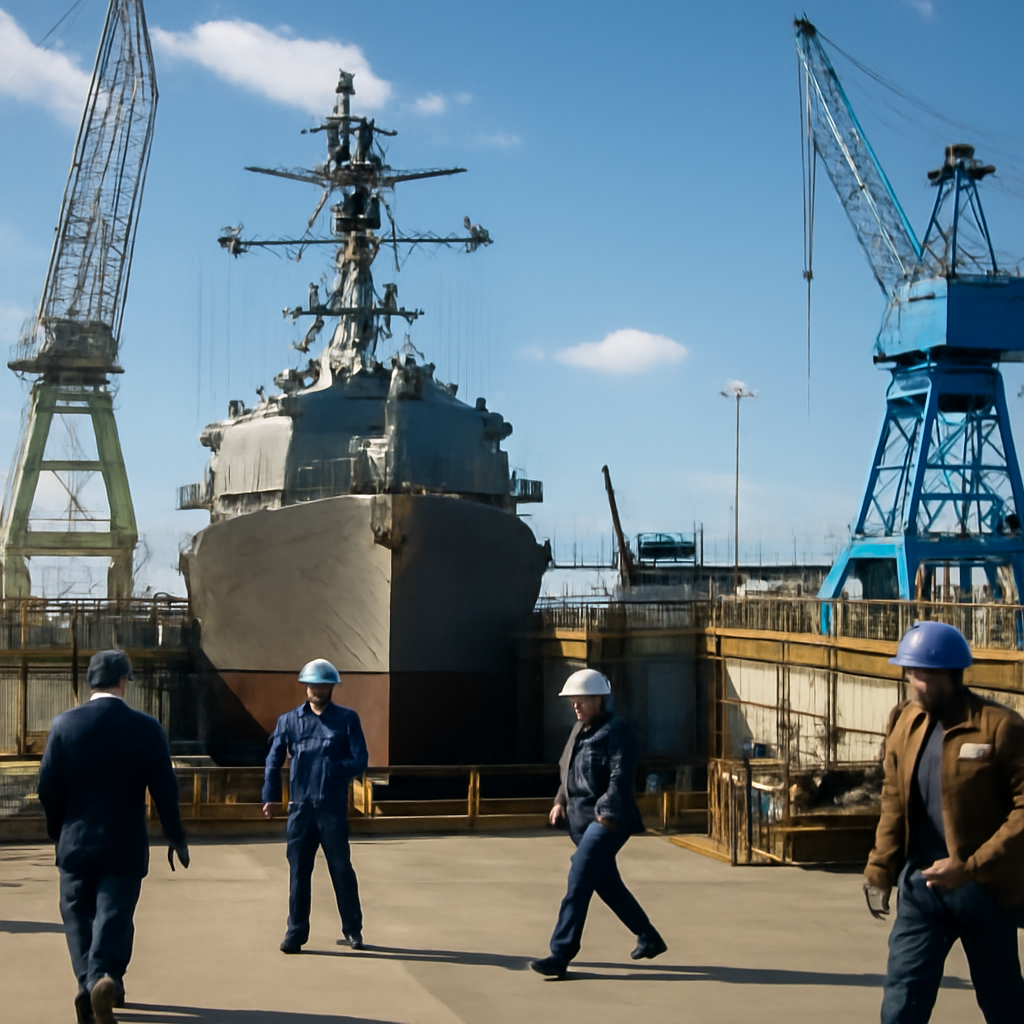
“If we’re going to spend a one-and-a-half trillion dollars, or have the types of direct foreign investment that’s coming in, we want to make sure that we have the ability to have enough public shipyards to do maintenance,” OMB Director Russell Vought said at the Washington Times’ IndoPac 2026 event Wednesday.
Russell Vought makes the case for a fifth public shipyard
At a public event in Washington this week, Russell Vought framed the push for an additional public shipyard as a practical response to an administration plan to expand the Navy’s inventory dramatically. Vought said the administration is “pushing hard for an additional public shipyard,” arguing that larger fleet size will require maintenance performed “at scale” by public shipyard workers whose “main mission in life is to repair Navy ships.”
Budget numbers: $65.8 billion for shipbuilding and a 450-ship target
The Trump administration’s fiscal 2027 budget request, the source reports, includes $65.8 billion dedicated solely to shipbuilding and sets a goal of growing the Navy’s inventory to 450 ships by 2031. The 450-ship figure is described to include battle force ships, auxiliary ships, and unmanned vessels. Those targets are the financial and quantitative backdrop Vought used to argue for increased public maintenance capacity.

Audit-ready is a season. It shouldn't be.
Evidence in spreadsheets, controls drifting between audits, frameworks multiplying on flat headcount. Nubivance runs continuous compliance on Rapid7 Cyber GRC - SOC 2, HIPAA, ISO 27001, PCI, CMMC.
End the scrambleStudy of foreign construction and $1.85 billion reconciliation funding
The budget request also contains $1.85 billion in reconciliation funding to study whether foreign shipyards could be used to build U.S. warships. The administration, the article notes, has designs on possibly procuring the first vessel from South Korea or Japan, a point previously reported by Breaking Defense. Vought tied the maintenance argument to the potential for “direct foreign investment,” saying the United States needs assurance it will have sufficient public shipyard capacity to keep an expanded fleet operational.
Recent maintenance failures: the mothballing of the submarine Boise
Vought pointed to an April decision to mothball the Los Angeles-class attack submarine Boise. According to his remarks, Boise “hadn’t operated at sea in over a decade and suffered a series of maintenance delays.” Vought argued that the decision “had come after 10, 15 years of bad management, and we need to fix that,” using Boise as an example of the consequences he said flow from insufficient or mismanaged maintenance capacity.
What this means for the Navy, public shipyard workers, and private shipyards
- The Navy: The source shows the service is already studying the question. Chief of Naval Operations Adm. Daryl Caudle told reporters in April that a fifth public yard is under study, and he raised two practical constraints — whether a suitable workforce exists to staff a new yard and how long it would take to grow that force. Caudle asked directly, “A new yard is expensive, and so is that infrastructure worth it if I can’t get the workforce there?”
- Public shipyard workers: Vought’s comments signal a policy emphasis on expanding the cadre of workers whose “main mission in life is to repair Navy ships.” If a fifth yard is approved, the administration’s stated view is that public yards and their specialized workforce will be central to executing maintenance at the scale implied by a 450-ship inventory.
- Private shipyards: Vought acknowledged that private yards “are doing maintenance” and that will “continue,” but he argued private capacity alone would not meet the needs of a dramatically larger fleet. The budget’s study of foreign construction and the administration’s procurement design choices will also affect the volume and type of maintenance work that accrues to private yards.
The Navy is already in the midst of upgrading its existing public shipyards, the article notes. The service launched the Shipyard Infrastructure Optimization Program (SIOP) program office in 2018 as part of a more than 20-year effort to modernize dry docks and standard equipment at the four public yards named in an update: Norfolk Naval Shipyard, Portsmouth Naval Shipyard, Puget Sound Naval Shipyard and Intermediate Maintenance Facility, and Pearl Harbor Naval Shipyard and Intermediate Maintenance Facility.
Taken together, the administration’s budget numbers, the foreign-construction study, and the public rhetoric from OMB and Navy leaders lay out a concrete set of tradeoffs: grow public maintenance capacity and workforce to match an enlarged fleet, or lean more heavily on private and potentially foreign yards while accepting different risks and management challenges. The next steps are operational and political — whether the reconciliation study leads to foreign-built hulls, whether Congress funds the programspan and infrastructure Vought envisions, and how quickly a workforce can be expanded to staff any new public facility.
Original story: https://breakingdefense.com/2026/06/white-house-budget-director-calls-for-fifth-public-shipyard-amid-push-to-expand-fleet/