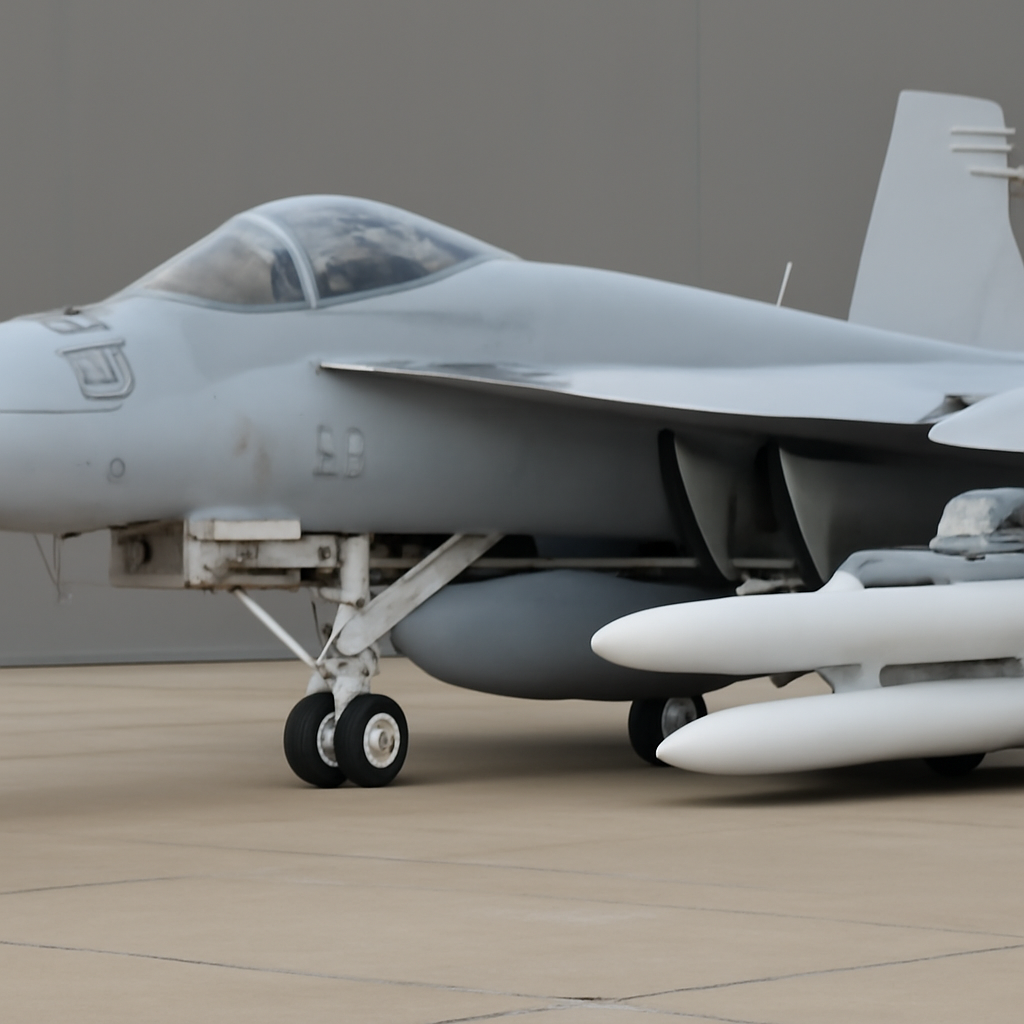
The air-launched version of Castelion’s Blackbeard hypersonic strike missile for the U.S. Navy has now at least been test‑loaded onto an F/A-18E/F Super Hornet.
What the Tailhook images show
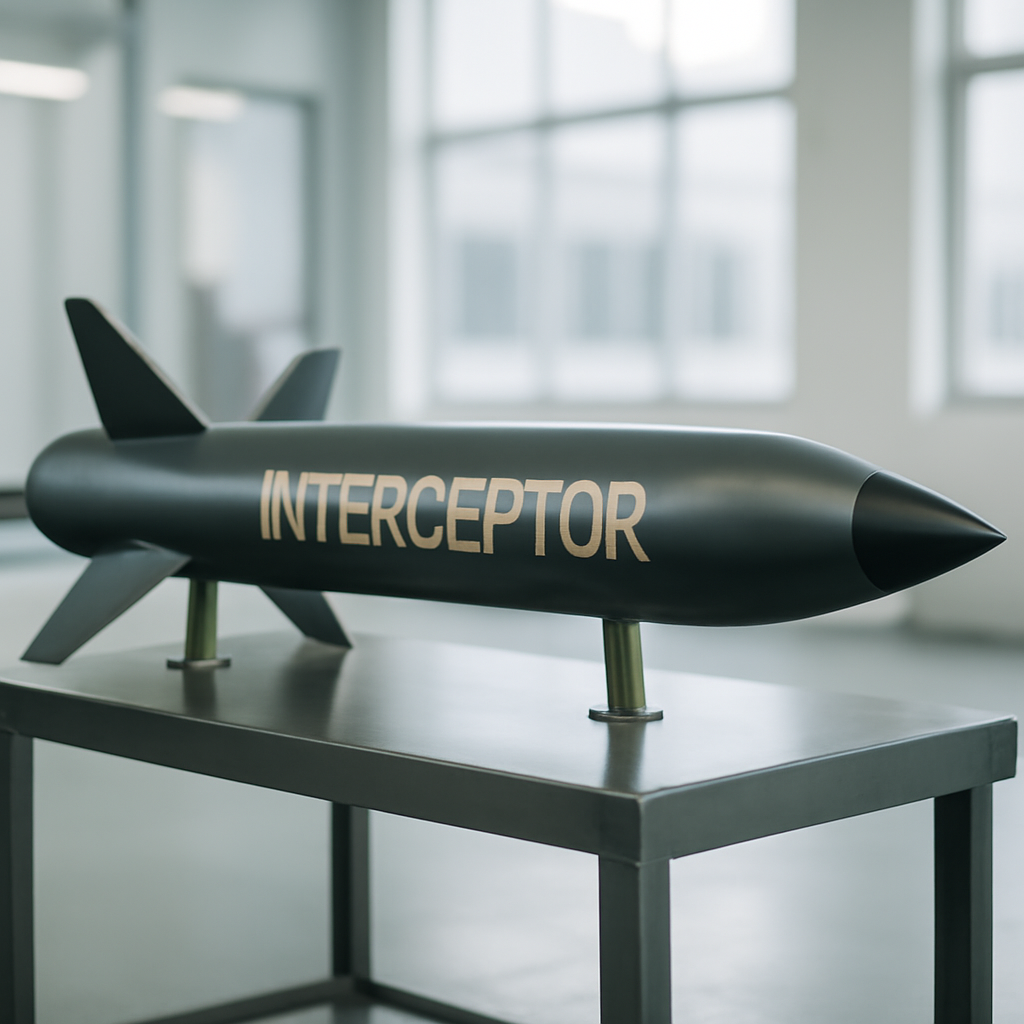
Attendees at the Tailhook Association’s annual convention were shown a photograph depicting a pair of Blackbeard test articles mounted beneath the right wing of an F/A-18E/F Super Hornet. That image was displayed alongside a side‑profile photo of the weapon that Castelion released publicly last week. Where or when the Super Hornet photo was taken is unknown, and TWZ said it has reached out to the Navy to obtain the full image and more information. A separate recording of a new episode of The Mover and Gonky Show podcast, posted online Tuesday, briefly shows a slide from the Navy briefing that included MACE and Project Alpha references.
Visible design details and plausible seeker layout
The new photographs offer a closer look at Blackbeard’s forward profile. The nose appears wedge‑shaped with what look like apertures on one side; in the image those apertures are pointed upward. The story notes that many air‑launched munitions flip after release, and that a downward‑angled aperture at the nose for a seeker would make sense for a weapon the Navy is pursuing primarily to target ships. The article points out that existing anti‑ship and land‑attack missiles commonly use shaped apertures for imaging infrared seekers, and highlights imaging infrared’s advantages such as immunity to radio‑frequency jamming and its passive nature.

This site is the portfolio.
OSINTSights runs on Cloudflare Workers, D1, R2, and Vectorize, with an AI pipeline on Hetzner ARM. Nubivance designed, built, and operates it. We do the same for clients.
See what we buildTwo‑stage form, inert indicators, and propulsion possibilities
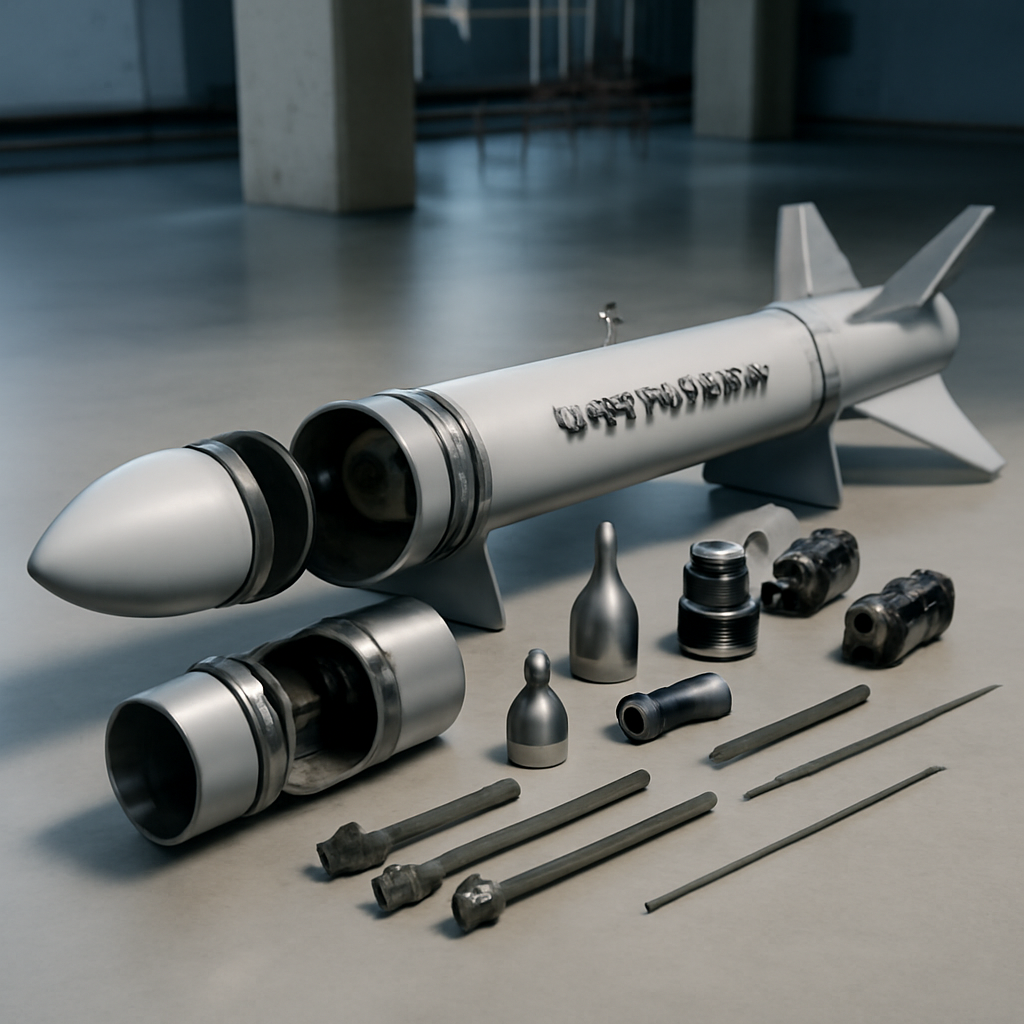
A separate company profile photo shows a two‑stage layout: a booster with a ballistic‑missile–like shape beneath an upper body that could be an unpowered hypersonic glide vehicle (HGV) or a second stage with its own motor. Both stages have cruciform fins; the upper stage features a prominent chine line and a slightly beaklike nose. The missile sits on a trolley that provides scale cues, and blue stripes on each stage normally signify an inert, non‑explosive round used for training or tracking—suggesting the pictured rounds are real unarmed missiles rather than mockups.
MACE, Project Alpha, test claims, and schedule
Blackbeard is being acquired by the Navy under the Multi‑mission Affordable Capacity Effector (MACE) program; the weapon was shown in the same briefing that revealed the new AIM‑424 Malice Long‑Range Air‑to‑Air Missile. A slide on MACE links the program with Project Alpha and carries a bullet reading “Project Alpha – Hypersonic missile shot in 2026,” but the briefing does not explicitly state whether that shot has already occurred. Castelion and the Navy have been pushing for an early operational capability (EOC): Castelion’s April press release said EOC was being targeted for 2027, and the company announced yesterday a new nearly $90 million contract from the Navy covering work through August 2028, with the hope that at least 50 missiles will have been delivered by that date. Earlier, Castelion announced a $105 million contract award from the Navy that would help “complete the hardware and software integration of Blackbeard onto the F/A‑18E/F airframe.”
Procurement scale, the Army’s role, and cost objectives
The U.S. Army is separately funding a surface‑launched version of Blackbeard, and in May the Pentagon outlined plans for the acquisition of 12,000 Blackbeard missiles over the next three years—though the Pentagon did not specify whether that total covers air‑launched versions, surface‑launched versions, or a mix. The May announcement also included a framework for purchases of 10,000 lower‑cost surface‑launched cruise missiles in the same timeframe. Castelion and the Pentagon are pursuing Blackbeard as a lower‑cost, relatively easy‑to‑produce hypersonic option that could be exportable; expanding sales and production scale are explicitly cited as ways to drive down unit prices and address shortfalls in munition stockpiles highlighted by recent conflicts in the Middle East and Ukraine.
How the Navy, the Army, and procurement leaders are positioned
- Navy carrier air wings: The missile is presented as giving Super Hornets and potentially other aircraft greater stand‑off range and speed, increasing survivability against ships and time‑sensitive targets and reducing dependence on persistent kill chains—if development and integration schedules hold.
- U.S. Army: The Army’s funding of a surface‑launched Blackbeard places the service in parallel development, but the ultimate mix of air‑ and surface‑launched purchases remains unspecified in Pentagon planning documents.
- Procurement and industrial planners: The program’s emphasis on lower cost and exportability, plus the recent contract awards and the Pentagon’s multi‑thousand‑unit planning figures, make unit price and production ramp rates key metrics to watch through August 2028.
Blackbeard’s appearance on a Super Hornet wing marks a visible testing milestone, but key questions remain: whether a Project Alpha hypersonic shot occurred in 2026, whether flight tests from the Super Hornet have been flown, and whether Castelion can meet the delivery and cost goals tied to the August 2028 contract period. If the development schedule holds, the Navy could field its first operational air‑launched hypersonic weapon within roughly two years—an outcome the program’s recent photos and contract activity make plausible but not yet proven.