“One-way attack drones, ballistic missiles, cruise missiles, hypersonic weapons… our military and our allies’ militaries are struggling with a set of legacy interceptors that are not scalable, and are not able to match the volume of the threat that they’re facing,” Chris Brose, Anduril’s president and chief strategy officer, told reporters.
Anduril’s pitch: a cheaper, modular interceptor
Anduril unveiled its Steelfin interceptor on Oct. 12, 2026, positioning the weapon as a lower-cost alternative to the Patriot’s current PAC-3 missile segment enhancement (MSE). Company executives told reporters they are aiming to price Steelfin at roughly a third of the cost of the PAC-3 MSE. Brose said Anduril has “been working on Steefin for a couple of years,” driven by a belief that the market would seek less expensive interceptors as the volume of threats rises.
Modularity and platform compatibility
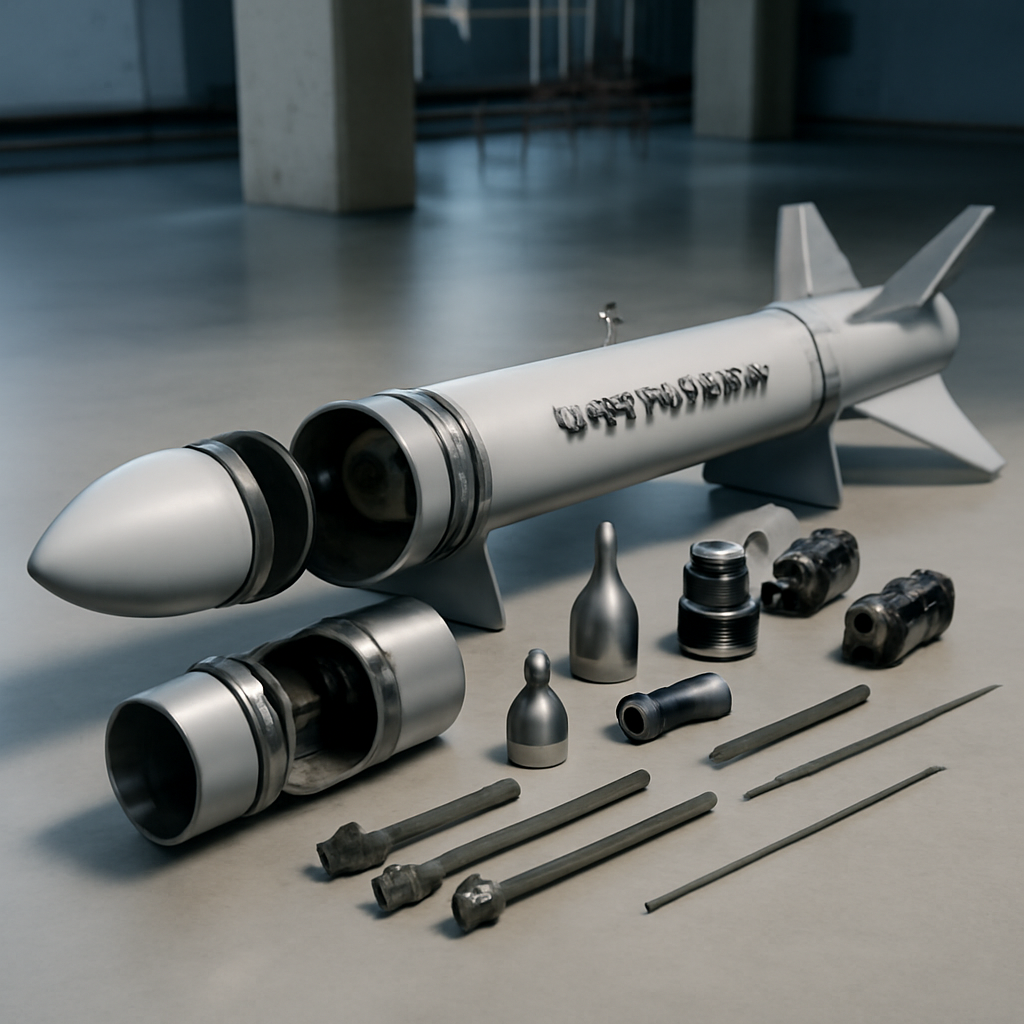
Anduril describes Steelfin as a “modular” interceptor that can be configured with different rocket motors and seekers. The company says the missile can be launched from multiple platforms, including PAC-3, the Common Autonomous Multi Domain Launcher (CAML), Typhoon systems and containerized munitions canisters. Brose said Steelfin can be “reconfigured” across a range of targets, from low-cost systems such as the Iranian Shaheds to more “exquisite systems” including ballistic cruise missiles and hypersonic weapons.

The cyber insurance questionnaire just landed. Now what?
SOC 2, HIPAA, insurance renewals - someone has to own security strategy. Nubivance provides fractional CISO leadership without the full-time salary.
Get a security leadWhere Steelfin sits in U.S. Army competitions
Anduril is pursuing at least one Army competition with Steelfin: the service’s low cost interceptor effort that followed the xTech Apex Intercept competition. The company was among many vendors selected to move forward with testing and demonstrations after that event. Separately, Breaking Defense reported that Lockheed Martin and one other undisclosed company were selected for a previously unannounced Army Future Interceptor program that seeks a next-generation PAC-3 MSE-sized solution.
Anduril executives declined to confirm whether Steelfin was selected for the Future Interceptor work. Steve Milano, Anduril’s senior director of missiles, nevertheless described Steelfin as a “natural fit in that domain space.” Milano said the Army’s stated requirements under that program—seeking a seven- to 10-inch terminal storage interceptor with a 10- to 13-inch booster to fit into the existing Patriot launcher and CAML—are well matched by Steelfin, which “fits very well” with those dimensions.
Production plans and supply approach
On production timelines, Milano told reporters he expects Anduril to reach full-rate production of Steelfin at the end of 2028 or the beginning of 2029. He said the company’s low-end annual target is “multiple thousands” of Steelfins, with a higher-end capacity of “closer to hundreds of thousands” per year depending on the demand signal from the U.S. and foreign customers.
Milano said Anduril intends to build most of Steelfin’s subassemblies at the company’s Arsenal-1 facility in Ohio, then perform final integration with a “handful of our partners.” About solid rocket motors, Milano said some motors will be produced by Anduril and some by other companies. He emphasized that Steelfin’s mounting was “intentionally designed” to accept new providers as well as Anduril’s internal rocket motor systems.
What this means for the Army, allied militaries, and missile suppliers
- The Army: procurement decisions will weigh Steelfin’s claimed cost advantage and form-factor compatibility with Patriot and CAML against outcomes of the low cost interceptor tests and the Future Interceptor selections.
- Allied militaries: a containerized and modular interceptor that can be adapted to existing launchers or canisters could present an affordable option if Steelfin’s cost and integration claims hold up in demonstrations and production.
- Missile suppliers and partners: Anduril’s plan to produce subassemblies at Arsenal-1 and to mix internal and external rocket motors creates opportunities and competition for firms that supply motors and integration services, especially if demand reaches the higher production targets Milano outlined.
Anduril’s Steelfin announcement places three clear facts on the table: the company is marketing a modular interceptor it says can be produced far cheaper than the PAC-3 MSE, it has designed the weapon to fit existing Patriot and CAML constraints, and it plans to scale production beginning in late 2028 or early 2029 depending on demand. What remains unresolved in public remarks is whether Steelfin has secured a slot in the Army’s Future Interceptor effort; Anduril declined to say, even as company officials called the missile a “natural fit” for that program.