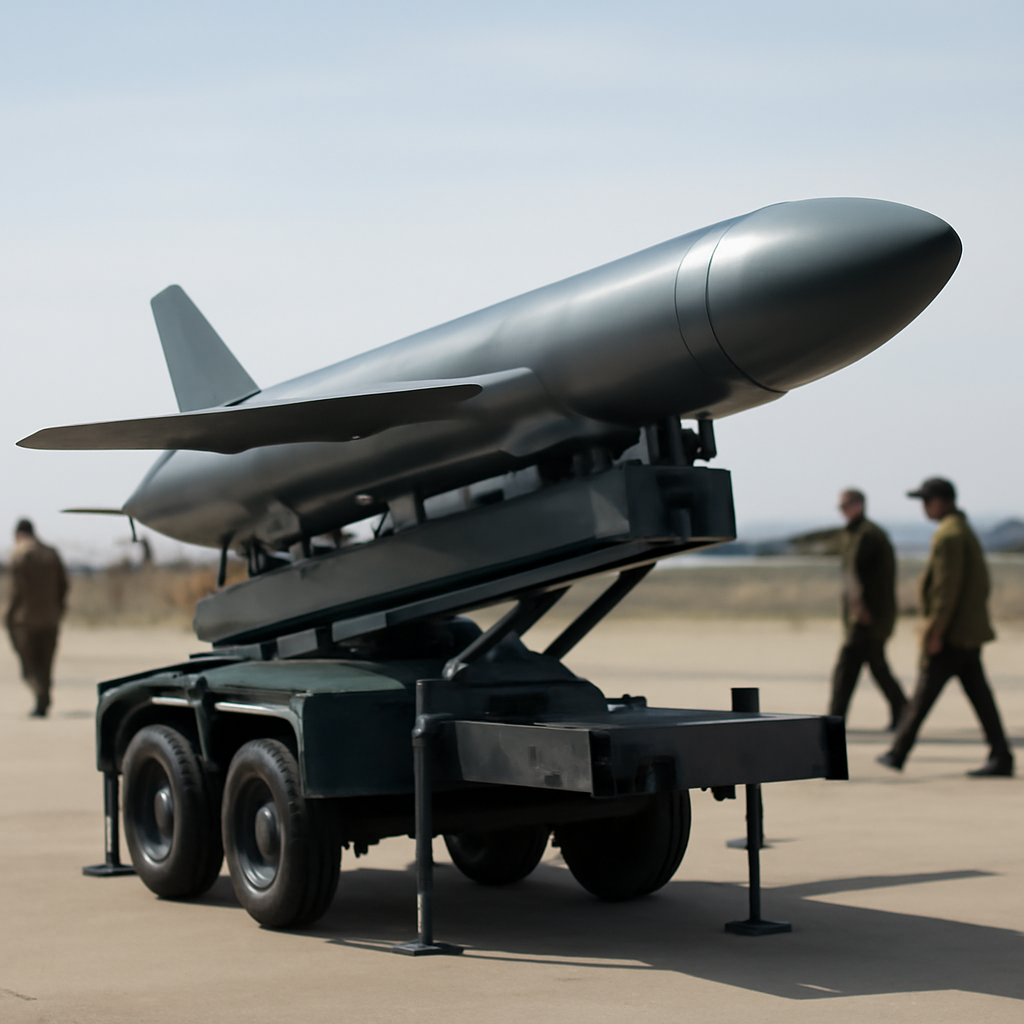
The Navy’s $70 million OTA and CHAOS
On July 17 the U.S. Navy awarded an Other Transaction Authority agreement to CoAspire covering Phases 1 and 2 of the Coalition Heterogenous Affordable Offensive Strike (CHAOS) prototype effort, the Navy told TWZ. The OTA mechanism is being used to accelerate prototype development outside traditional contracting tracks. The Navy described the award as “a significant milestone in developing an affordable maritime strike capability for security assistance partners while expanding the defense industrial base through competition and accelerating a new entrant into the Navy’s precision strike portfolio.”
The Navy added that it “has requested appropriated funds to begin integration of this low-cost maritime capability on Navy platforms as part of the FY27 budget request,” and that PAE Munitions expects at least one more industry agreement on CHAOS as part of its competitive strategy. The CoAspire OTA routes through CMG Networks on behalf of the Naval Aviation Systems Consortium.
RAACM-ER: airframe, propulsion and guidance
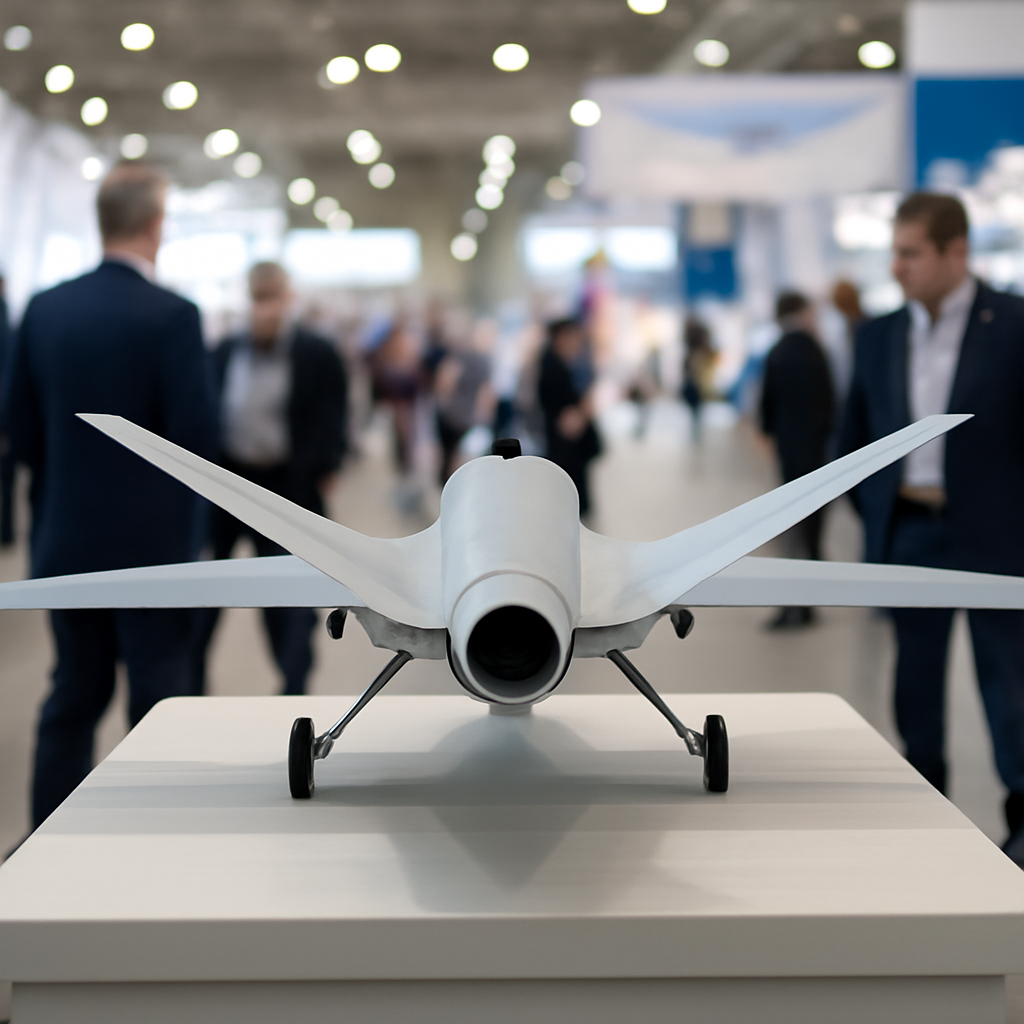
CoAspire’s Rapidly Adaptable Affordable Cruise Missile-Extended Range (RAACM-ER) is a turbojet-powered cruise missile with a trapezoidal body shape. Doug Denneny, CoAspire’s founder, CEO, and owner, acknowledged visual similarity to other standoff designs but emphasized differences “inside” the missile, saying engineers optimized fuel volume, survivability features and sensors for extended reach.
The missile integrates GPS-assisted navigation and a long-wave infrared (LWIR) seeker in the nose. CoAspire notes that passive infrared seekers are “immune to radiofrequency countermeasures, such as jammers or decoys” and “do not pump out signals that could alert a target to the incoming danger,” advantages the company highlights for terminal homing against both moving maritime and fixed land targets.
When configured for surface launch, RAACM-ER requires a rocket booster attached to the tail that separates after launch; CoAspire displayed an air-launched variant publicly but has said the design can be launched from ground, ship, or aircraft. Separately, CoAspire is developing a distinct surface-launched iteration called GHOST for the U.S. military’s Low-Cost Containerized Missiles (LCCM) program.

Audit-ready is a season. It shouldn't be.
Evidence in spreadsheets, controls drifting between audits, frameworks multiplying on flat headcount. Nubivance runs continuous compliance on Rapid7 Cyber GRC - SOC 2, HIPAA, ISO 27001, PCI, CMMC.
End the scrambleRange, warhead trade-offs, and capability comparisons
Exact range and warhead metrics for RAACM-ER remain unspecified. At the Navy League’s Sea-Air-Space exhibition, Denneny told TWZ that RAACM-ER had about twice the reach of CoAspire’s earlier RAACM. TWZ notes that estimate would equate to roughly 485 nautical miles (900 kilometers) if measured against previously stated ERAM program requirements for the original RAACM; CoAspire declined to detail range, saying assumptions would be speculation.
Range matters because it expands how far a launch platform can hold targets at risk while staying farther from threats. For context drawn in the reporting: extended-range variants of the Harpoon are reported in the roughly 150-mile range, current-generation Naval Strike Missile (NSM) variants state at least 162 miles, and Family of Affordable Mass Missiles-Beyond Adversary’s Reach (FAMM-BAR) seeks lower-cost designs with maximum ranges of 1,000 nautical miles or more—roughly comparable to some Tomahawk variants.
Warhead size is likewise unresolved. TWZ reported that exchanging warhead mass for fuel could extend range, while a smaller warhead would affect lethality; CoAspire and the Navy have not published an estimated unit price for RAACM-ER, though the company prioritizes an “affordable mass” approach using commercial off-the-shelf parts and additive manufacturing to lower costs and accelerate variant development.
Program context: CHAOS, LCCM, ERAM and FAMM-BAR
CHAOS is explicitly oriented toward delivering lower-cost maritime strike options to allies and partners. The reporting places RAACM-ER within a broader U.S. effort to field inexpensive standoff munitions: CoAspire’s GHOST ties into the Army’s LCCM program; the earlier RAACM was developed under the Air Force’s Extended Range Attack Munition (ERAM) program; and ERAM and other efforts feed into the FAMM family for air-launched mass munitions. TWZ notes these parallel tracks are all aimed at expanding lower-cost options for coalition security assistance.
What this means for allies, the U.S. military, and small defense firms
- Allies and coalition partners: CHAOS is framed to supply an “affordable yet highly effective maritime strike weapon” that can be manufactured at scale, according to CoAspire, giving partners a new option for engaging moving maritime targets and fixed land targets with a standoff capability.
- The U.S. military and PAE Munitions: The Navy’s FY27 budget request seeks funds to begin platform integration work, and the service said distributing capability to partners can reduce reliance on U.S. high-end munitions by widening the pool of forces able to deliver standoff effects.
- Small and non-traditional firms: The OTA award and CoAspire’s prior LCCM framework participation underscore the Pentagon’s intent to leverage smaller firms and additive manufacturing to lower unit costs and speed variants—advantages the company promotes in its statements.
Today’s award makes RAACM-ER a visible contender in the push for cheaper, mass-producible standoff strike weapons. Key facts remain open: the missile’s certified range in operational configurations, the warhead size and lethality trade-offs, an estimated unit cost, and which other companies will receive CHAOS agreements. The Navy says at least one more industry agreement is expected; until those details are released, RAACM-ER’s promise will be measured against the unanswered technical and fiscal specifics the Navy and CoAspire have not yet disclosed.
Source: TWZ — "Navy Picks RAACM-ER Low-Cost Cruise Missile For Program To Help Arm Allies"