"In March 2026, the USS Theodore Roosevelt (CVN 71) UAWC became the first fully operational/deployable MQ-25 capable aircraft carrier," according to the Pentagon's Modernized Selected Acquisition Report dated April 21, 2026. That single line signals a concrete step in a program that has been defined as much by technical promise as by calendar slippage.
What the MSAR records about the Theodore Roosevelt and sister ships
The recently released Modernized Selected Acquisition Report (MSAR) states the USS Theodore Roosevelt is the first Nimitz-class carrier with an Unmanned Air Warfare Center (UAWC) fully capable of supporting MQ-25 Stingray operations. The MSAR also reports the USS Ronald Reagan (CVN 76) UAWC is "planned to be operational/deployable at the end of Aug 2026" and notes that a first test UAWC was installed and tested aboard USS George H.W. Bush (CVN 77) in August 2024.
Where the MQ-25 program stands: timeline, flights, and fleet size
The report reiterates long-standing schedule adjustments: the Navy originally sought initial operational capability in 2024, later moved the target to July 2027, and the MSAR now sets IOC for February 2029. The first production-representative MQ-25 flew for the first time in April 2026; an earlier demonstrator called the T1 has been flying since 2019. The Navy plans to acquire a total of 76 MQ-25 aircraft, which the MSAR describes as intended to provide range extension for carrier air wings and to eliminate the need for crewed F/A-18E/F Super Hornets to perform the tanker role.

Audit-ready is a season. It shouldn't be.
Evidence in spreadsheets, controls drifting between audits, frameworks multiplying on flat headcount. Nubivance runs continuous compliance on Rapid7 Cyber GRC - SOC 2, HIPAA, ISO 27001, PCI, CMMC.
End the scrambleThe UMCS, MD-5E GCS and MDCX: how control and autonomy fit together
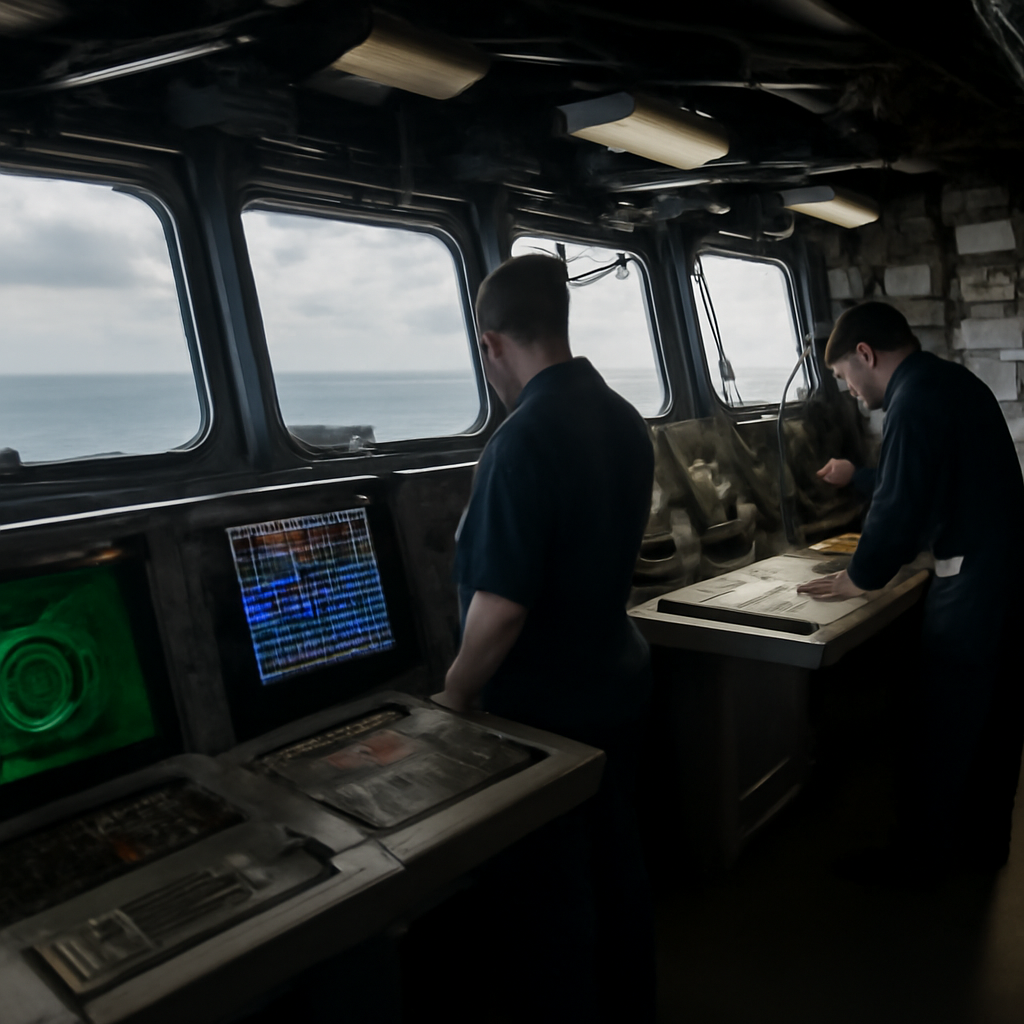
The MSAR explains the MQ-25 Air System "is integrating a Ground Control Station (GCS) managed by the Unmanned Carrier Aviation Mission Control System (UMCS) program within UCA [the Navy’s Unmanned Carrier Aviation program]." Boeing is identified as the MQ-25 prime contractor; Lockheed Martin leads UMCS work and calls the program a "system of systems." The central element described is the MD-5E GCS — operator stations with monitor arrays and tablet-like devices — and the UMCS also includes the Multi Domain Combat System (MDCX), an autonomy platform developed by Lockheed Martin's Skunk Works.
The MSAR records a critical integration milestone: "In October 2025, MQ-25A and the UMCS connected for the first time during air vehicle and Ground Control Station (GCS) Integration Checkout testing," allowing Lockheed Martin's GCS to establish command and control of the aircraft, which the report links to achieving first flight. The report also cites a first C4I Operational Network Evaluation with USS Abraham Lincoln (CVN 72) that transmitted representative network traffic via satellite and the Navy’s primary tactical wide area network between an at-sea-configured carrier and a remote MQ-25 surrogate.
Carrier launch, recovery and deck handling: operational work still to do
The MSAR and related reporting stress important operational gaps before routine service: carriers must demonstrate safe launch and recovery of MQ-25s and integrate them into the constrained, hectic environment of a flight deck. The report recalls earlier X-47B demonstrator testing under the Unmanned Carrier-Launched Airborne Surveillance and Strike (UCLASS) program and notes that UCLASS later evolved through CBARS into what became the MQ-25 program. During past tests, a wearable glove-like system and portable control devices were trialed for deck handling; the MSAR says it remains unclear what the Navy will use in operational service to move and manage MQ-25 aircraft on carrier decks.
What this means for naval aviators, program managers, and platform suppliers
- Naval aviators and carrier crews: They will need new procedures and deck-handling tools to operate unmanned tankers alongside crewed aircraft. The MSAR ties MQ-25 operations to existing air wing structures, noting close integration with E-2 Hawkeye airborne early warning and control assets.
- Procurement and program managers: The program's shifting IOC dates and the MSAR’s timeline crystallize a new planning horizon — February 2029 — and reinforce the need to synchronize MQ-25 aircraft deliveries with UMCS fielding across carriers such as Theodore Roosevelt and Ronald Reagan.
- Platform integrators and contractors (Boeing, Lockheed Martin, General Atomics, Anduril, Northrop Grumman): The MSAR documents recent technical milestones — MD-5E GCS hardware, MDCX autonomy integration, and the October 2025 GCS-air vehicle connection — but also highlights remaining systems-integration work, particularly the at-sea networking and carrier-centric operational tests.
The Theodore Roosevelt’s certification as the first fully deployable MQ-25-capable carrier is a measurable advance recorded in the MSAR. Yet the report itself and related details make plain that technical integration, carrier flight-deck choreography, and a widely deployed Unmanned Carrier Aviation Mission Control System remain necessary follow-ons before the Stingray becomes routine at sea. The MSAR also notes an unresolved detail in public reporting: it is "unclear why Theodore Roosevelt's UAWC has now become the first to be fully certified to support MQ-25 operations." That concrete question — and the pending carrier launch-and-recovery demonstrations — are the next specific milestones to watch as the program tracks toward IOC in February 2029.