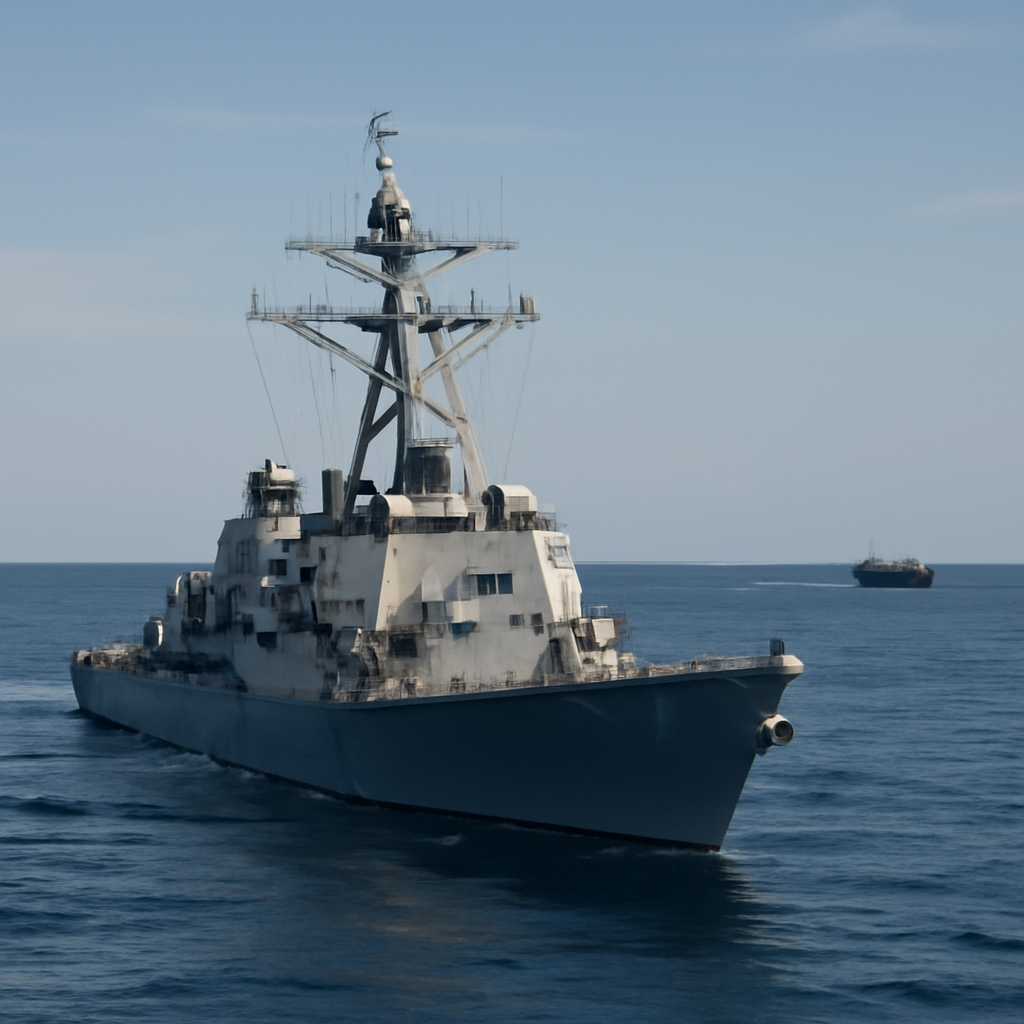
The U.S. naval blockade of Iranian ports remains in full effect, and CENTCOM says operations have now disabled nine commercial vessels that tried to skirt it after two were put out of service last week, NAVCENT said in a notice released today.
NAVCENT notice: blockade to stay until Geneva signing
NAVCENT’s notice makes the immediate operational posture clear: the blockade will remain in place pending the execution of a ceasefire agreement scheduled to be formally signed on Friday in Geneva. The notice was released today and reiterates that U.S. forces will continue operations until the agreement is executed.
CENTCOM strikes and vessel interdictions after Apache shootdown
U.S. Central Command (CENTCOM) forces launched multiple waves of strikes last week against Iran following the shootdown of a U.S. Army Apache helicopter, CENTCOM reporting that strikes continued to support “self defense” and blockade operations. CENTCOM also disabled an additional two commercial vessels that attempted to evade the blockade, bringing the total number of disabled commercial vessels to nine, the notice said.

The cyber insurance questionnaire just landed. Now what?
SOC 2, HIPAA, insurance renewals - someone has to own security strategy. Nubivance provides fractional CISO leadership without the full-time salary.
Get a security leadCarrier strike groups and embarked air power
Two aircraft carriers, USS Abraham Lincoln and USS George H.W. Bush, remain embarked in CENTCOM-area operations to support the blockade and “self defense” strikes. Together they report a combined air wing posture of seven squadrons of F/A-18E/F Super Hornets, two squadrons of EA-18G Growlers, and one squadron of F-35C Lightning IIs. The Lincoln Carrier Strike Group has been deployed for nearly seven months and would likely be among the first naval assets to rotate out of the theater if the blockade winds down, the report notes.
More than 20 U.S. Navy surface combatants have been operating in the region to support these activities, according to the tracking compiled in this update.
Fleet movements: Nimitz, Roosevelt, Vinson and Pacific patrols
USS Nimitz entered the final leg of her homeport shift to Norfolk and was operating off the U.S. east coast in the 2nd Fleet area of responsibility after a monthslong circumnavigation of South America. Flight tracking data and public AIS showed Nimitz conducted operations northwest of Cuba and the Bahamas last week. On Thursday, six Super Hornets attached to the “Kestrels” of Strike Fighter Squadron (VFA) 137 conducted an air power demonstration, dropping MK-82/BLU-111 bombs on a simulated target in the Gulf of America.
On the U.S. west coast, USS Theodore Roosevelt is working up for a future deployment: the ship got underway on June 10 for INSURV inspections to verify readiness and returned to San Diego on June 11, and was observed conducting a live fire exercise with the Mk 38 25mm machine gun. USS Carl Vinson got underway for sea trials after a nine-month Planned Incremental Availability and moored in San Diego on June 13.
Western Pacific posture: George Washington, Shoup, and two ARG-MEUs
The USS George Washington Carrier Strike Group is on a summer patrol in the Philippine Sea. The group conducted a replenishment-at-sea with USNS Earl Warren and helicopter operations while underway in the vicinity of Guam; destroyer USS Shoup, part of the CSG, pulled into Apra Harbor early this morning, according to AIS data cited in the report. Visual reporting included an MH-60S Sea Hawk assigned to Helicopter Sea Combat Squadron (HSC) 12 operating above USS George Washington while underway in the Philippine Sea.
Two amphibious ready groups with Marine Expeditionary Units are also deployed: forward-deployed USS Tripoli continues operations in the CENTCOM AOR, and USS Boxer is underway in the INDOPACOM AOR operating in the South China Sea. The report includes imagery and notes Marines and sailors with the 31st Marine Expeditionary Unit participating in rappel training aboard forward-deployed America-class assault ship USS Tripoli in the CENTCOM area of responsibility.
What this means for CENTCOM, carrier crews, and commercial shipping
- CENTCOM: Will maintain a blockade posture until the ceasefire agreement is formally executed in Geneva on Friday and continue “self defense” strikes and interdiction operations in the near term, per NAVCENT and CENTCOM statements.
- Carrier strike group crews and maintenance commands: The Lincoln CSG’s nearly seven-month deployment makes it a likely candidate for early rotation if and when force reductions begin, while other carriers are completing homeport moves, sea trials, and pre-deployment workups that affect near-term operational availability.
- Commercial shipping operators: Nine commercial vessels have been disabled attempting to evade the blockade; ship operators and insurers will monitor enforcement activity closely as the blockade remains in force until the Geneva signing is completed.
The immediate hinge point is the formal signing of the memorandum of understanding in Geneva on Friday and the subsequent, unspecified implementation steps. The NAVCENT notice and CENTCOM activity make clear the blockade will remain active until that signature, while the report also notes that the details and scale of any drawdown agreed in the MOU remain murky as of publication. How quickly forces shift posture after the signing—and whether surface and carrier assets leave in phased rotations or larger movements—remains the next concrete operational question.