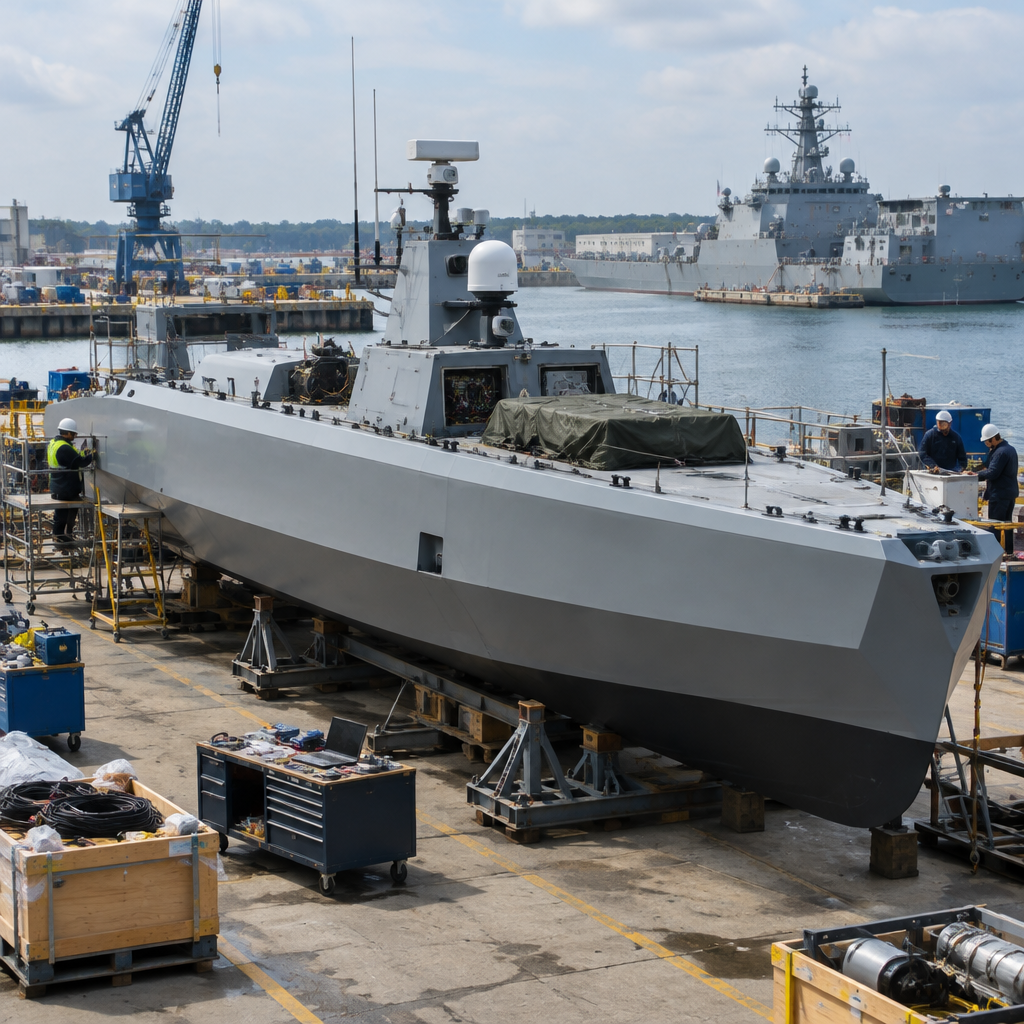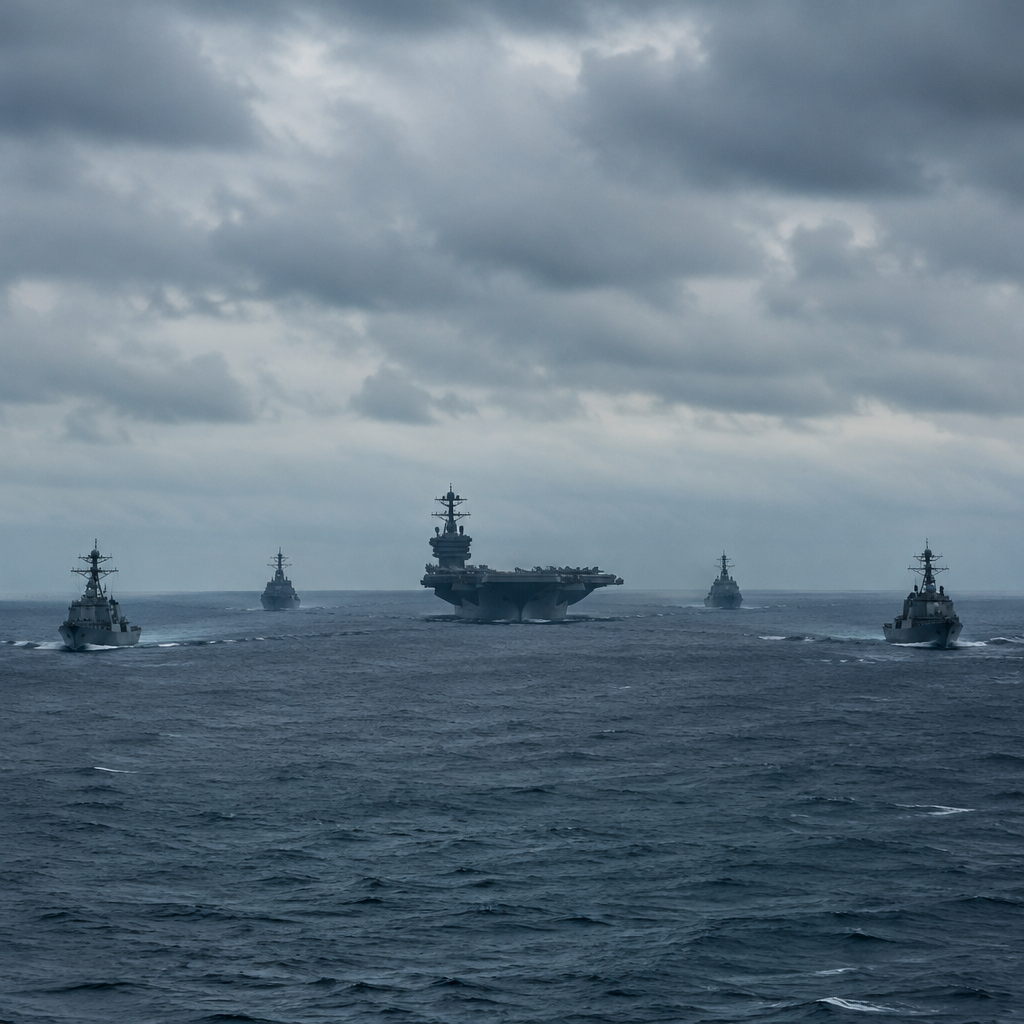
“It’s really a big problem. It’s a problem for credibility. It’s a problem for our allies in the Far East,” said Ralph Cossa, succinctly summing a dilemma that now has a tangible face: five of the 10 destroyers homeported in Yokosuka, Japan, along with the Yokosuka-based aircraft carrier George Washington, are operating in the U.S. Central Command area of responsibility in support of the war on Iran.
The scale: five destroyers and a carrier redeployed
The central fact driving the worry is simple and stark: half of the U.S. Navy’s Japan-based destroyer force — five of 10 guided‑missile destroyers — and the George Washington carrier are deployed to CENTCOM for operations tied to the war President Trump launched against Iran. Operation Epic Fury officially concluded in June, but the Pentagon has kept a "large force" in the region, continues to make occasional attacks, and is maintaining forces there while awaiting potential future orders.
Navy officials have informed the crews of at least some of the deployed destroyers that they will not return home until 2027, extending those ships well beyond traditional deployment patterns and creating a protracted absence from the western Pacific.
The official line from U.S. Pacific Command
Pacific Command (PACOM) has responded by emphasizing continuity of purpose. A PACOM spokesperson said, “Our commitment to the security of the Indo‑Pacific and to our allies and partners remains steadfast,” and added that the command “remains focused on deterring aggression and maintaining the readiness required to execute our assigned missions.”
PACOM highlighted ongoing training and exercises as evidence of continued attention to the theater, calling out the recent Keen Sword exercise, which included the California‑based Theodore Roosevelt carrier strike group, as an example that “continuous training and exercises across the Indo‑Pacific strengthen readiness and interoperability, while demonstrating our ability to respond to regional contingencies.”
At the TechNet Indo‑Pacific conference in Honolulu, PACOM’s deputy commander, Lt. Gen. George Rowell, framed the command’s priorities in a keynote: “Our mandate at U.S. Pacific Command is very clear: deterrence is our highest duty, and our guiding framework is to establish denial defense in the first island chain. We aim to prove that military aggressions will be infeasible, escalation will be catastrophic, and the costs of conflict far outweigh any gains.”

Audit-ready is a season. It shouldn't be.
Evidence in spreadsheets, controls drifting between audits, frameworks multiplying on flat headcount. Nubivance runs continuous compliance on Rapid7 Cyber GRC - SOC 2, HIPAA, ISO 27001, PCI, CMMC.
End the scrambleAnalysts: credibility and strategy appear mismatched
The deployment mix has prompted direct criticism from analysts who point to a gap between doctrine and practice. The National Security Strategy released less than a year ago states, “Preventing conflict requires a vigilant posture in the Indo‑Pacific,” and adds, “The days in which the Middle East dominated American foreign policy in both long‑term planning and day‑to‑day execution are thankfully over.” The National Defense Strategy likewise declared that its top priorities were the U.S. homeland and deterring China.
Katherine Kuzminski, vice president of studies at the Center for a New American Security, said sending Pacific‑earmarked warships to the Middle East — and holding them there for longer than traditional deployments — “indicates that our operations currently are not aligning with the administration’s stated national security strategy and national defense strategy,” making it difficult to determine future requirements at the service and combatant command levels.
Ralph Cossa warned the absence of these assets subtracts from the normal “showing the flag” presence that reassures allies. He noted carriers deploy with several types of ships, and their absence removes multiple assets “that normally would be in the Pacific, that normally would be showing the flag, that normally would be reminding our allies of our commitment. And they’re nowhere to be found.”
Operational strain and morale in the 7th Fleet
An unnamed Navy officer and Pacific‑security expert speaking to Defense One described real operational and personnel consequences. Keeping 7th Fleet sailors in the CENTCOM region “for a year is going to be really poor for morale aboard ship and at home,” the officer said, adding that pulling the fleet away from home harms the ability to participate in Pacific exercises and “creates its own hangover of damaged credibility.”
The same officer reported hearing that the fleet “has been told to expect a 17 DDG requirement [in the Middle East] until 2029,” a figure the source called “insane.” That extended demand raises questions about availability of destroyers for routine Pacific patrols and for any escalation that might require rapid reconstitution of forces in the western Pacific.
What this means for U.S. allies in the Far East, 7th Fleet sailors, and U.S. Pacific Command
- U.S. allies in the Far East: Many allies plan months in advance for carrier visits and battle group presence; five absent destroyers and a missing carrier reduce visible commitments and complicate allied planning and reassurance, sources say.
- 7th Fleet sailors and crews: Extended deployments and delayed homeport returns — with some ships told not to expect return until 2027 — are likely to depress morale and strain families and retention, according to a Navy officer quoted in reporting.
- U.S. Pacific Command planners: PACOM publicly reaffirms deterrence priorities, but analysts argue operational realities — large, long‑term deployments to CENTCOM — are forcing a mismatch between stated strategy and force posture, complicating decisions about readiness and resource allocation.
The juxtaposition is clear in the record: strategy documents name the Indo‑Pacific as a priority, PACOM reiterates deterrence goals, yet a substantial slice of the forward Pacific force is tied to a different theater for an extended period. Whether those ships will return in time to influence the calculations Pacific planners and allies worry about is now a question written into both policy texts and operational orders.