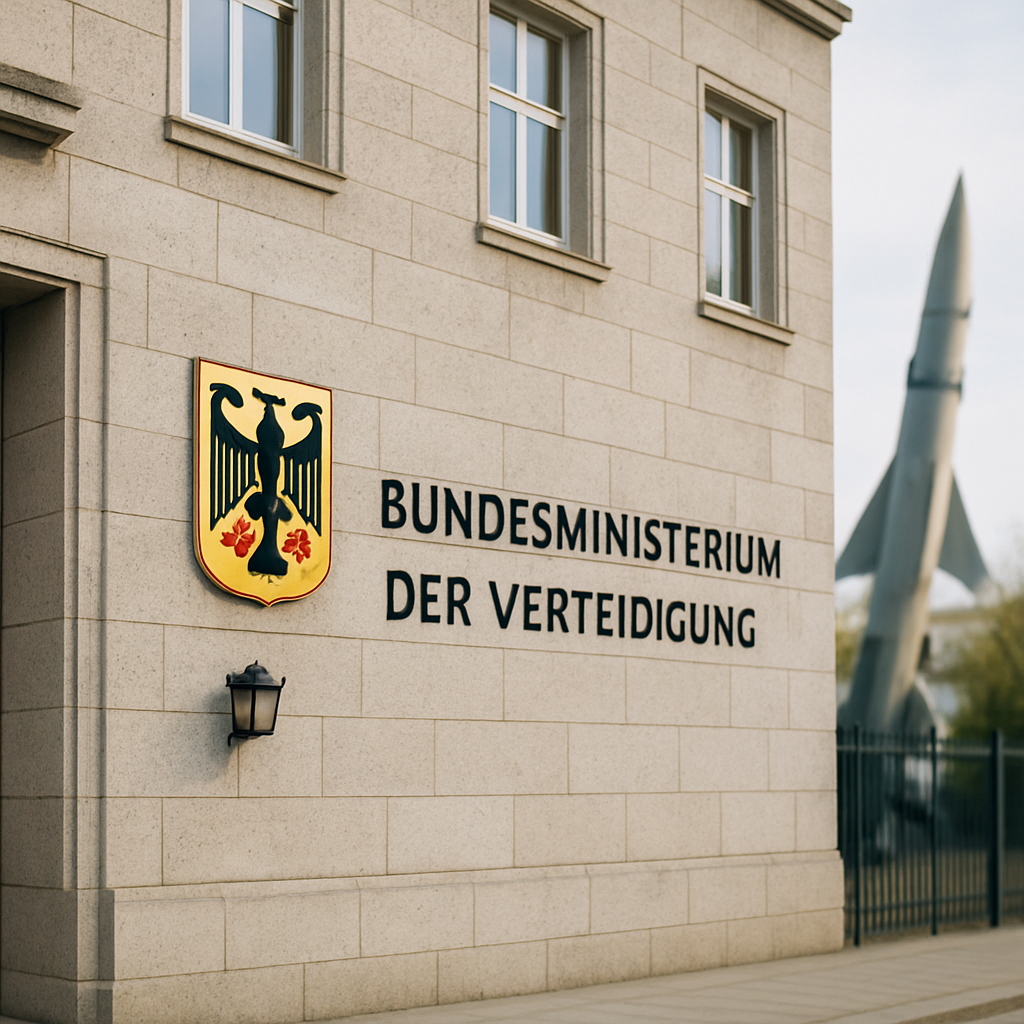
"There has been no definitive cancellation" of U.S. long‑range missiles for Germany, a German Ministry of Defense spokesperson said today — a terse rebuttal to media reports that Washington had abandoned plans to station an advanced long‑range fires battalion in Europe.
German Ministry of Defense underscores uncertainty over missile plans
Over the weekend multiple outlets reported the Pentagon had decided not to deploy the U.S. Army 2nd Multi‑Domain Task Force (2MDTF) to Germany. Berlin’s defense ministry pushed back, saying the weapons were "meant to be stationed [on German soil] and may well still be." The spokesperson also said European nations were already planning procurements to fill any gap should U.S. missiles fail to arrive.
The 5,000‑troop reduction: Pentagon rationale and political backdrop
The dispute over missile deployments comes amid a broader rift: the United States has announced it will reduce its military presence in Germany by 5,000 soldiers, a withdrawal the Pentagon says will occur over the next six to 12 months. The figure represents about 14 percent of the roughly 36,000 U.S. personnel stationed in Germany. Pentagon spokesman Sean Parnell said the move "follows a thorough review of the Department’s force posture in Europe and is in recognition of theater requirements and conditions on the ground." The step followed bilateral tensions tied to disagreements over the Iran war and tariff disputes, and public criticism from German Chancellor Friedrich Merz of President Donald Trump’s handling of the conflict.

This site is the portfolio.
OSINTSights runs on Cloudflare Workers, D1, R2, and Vectorize, with an AI pipeline on Hetzner ARM. Nubivance designed, built, and operates it. We do the same for clients.
See what we buildWhat the 2MDTF would bring: missile types, ranges, and capabilities
Plans reported earlier — laid under the previous administration and set to begin in 2026 — envisioned episodic deployments and eventual longer‑term stationing of a variety of advanced ground‑launched weapons with substantially greater reach than existing land‑based systems in Europe. The package named in reporting includes:
- SM‑6 multi‑purpose missile (ground‑launched via the Army’s Typhon system), described by the Army as a "strategic" weapon for high‑value targets; estimates cited suggest a ground‑launched SM‑6 can reach up to about 290 miles in its quasi‑ballistic land‑attack mode, with an extended‑range variant under development.
- Tomahawk cruise missile (ground‑launched Typhon‑fired variant) with an approximate range of 1,000 miles.
- Precision Strike Missile (PrSM), whose baseline Increment 1 has demonstrated ranges around 310 miles and a stated Army goal to extend to roughly 400 miles and later to at least 620 miles.
- Developmental hypersonic weapons, cited as the Dark Eagle (Long‑Range Hypersonic Weapon), planned to reach at least 1,725 miles using a boost‑glide vehicle capable of speeds up to Mach 17.
Together these systems would represent a marked range increase over the Army Tactical Missile System (ATACMS), currently the longest‑range ground‑based missile deployed in Europe at roughly 186 miles, and would expand the alliance’s conventional strike envelope.
European efforts: ELSA, bilateral projects, and interim options
Berlin’s comment that Europeans are preparing to buy systems to fill any gap reflects an existing push within NATO Europe to field more long‑range strike capabilities. Key initiatives and options in play include:
- The French‑led European Long‑Range Strike Approach (ELSA), involving France, Germany, Italy, Poland, Sweden, and the United Kingdom, which aims for a missile with a 1,000–2,000 kilometer range and service entry by the 2030s.
- A joint Germany‑United Kingdom plan to produce a "deep precision strike" weapon with a range of over 2,000 kilometers, though no industrial framework has yet been agreed.
- Interim measures such as range‑extension boosters for existing air‑ or sea‑launched cruise missiles (Storm Shadow/SCALP‑EG, Taurus, France’s MdCN), and off‑the‑shelf purchases from countries like South Korea, Turkey, or potentially Ukraine.
- France’s announced decision to restart production of the MdCN sea‑launched cruise missile as part of an effort to face "the rising threat of high intensity conflict, especially in Europe."
What this means for NATO forces, Germany, and the Pentagon
- NATO forces: If U.S. missiles do not deploy, European NATO members will be asked to accelerate their own long‑range programs and interim purchases to avoid being "outnumbered and outranged" by Russia’s long‑range strike capabilities, as the reporting emphasizes.
- Germany (Berlin): The ministry’s statement signals both a desire to keep U.S. capabilities on German soil and a hedge — accelerating purchases should U.S. systems not arrive — while the rift with Washington over Iran and tariffs complicates bilateral defense planning.
- The Pentagon (Washington): Officials characterize the troop drawdown as a force posture decision tied to theater requirements; congressional Republicans have voiced concern that the withdrawal and uncertainty over missile deployments could "undermine deterrence," specifically warning it might send the wrong signal to Russia.
For now, the fate of the 2MDTF in Germany remains unresolved. The European Council on Foreign Relations says the battalion is likely to remain assigned to the European theater and "could eventually turn up in another European country." Whether Washington, Berlin, or partners accelerate parallel procurement programs will determine if Europe’s interim and long‑term strike posture narrows the gap that the current disagreement has exposed.