“An island of stability in one of the more troubled regions of the world,” President Jimmy Carter said on New Year’s Eve 1977 of Iran — words that, within months, would look profoundly out of step with events on the ground.
How one presidential assessment missed what was unfolding
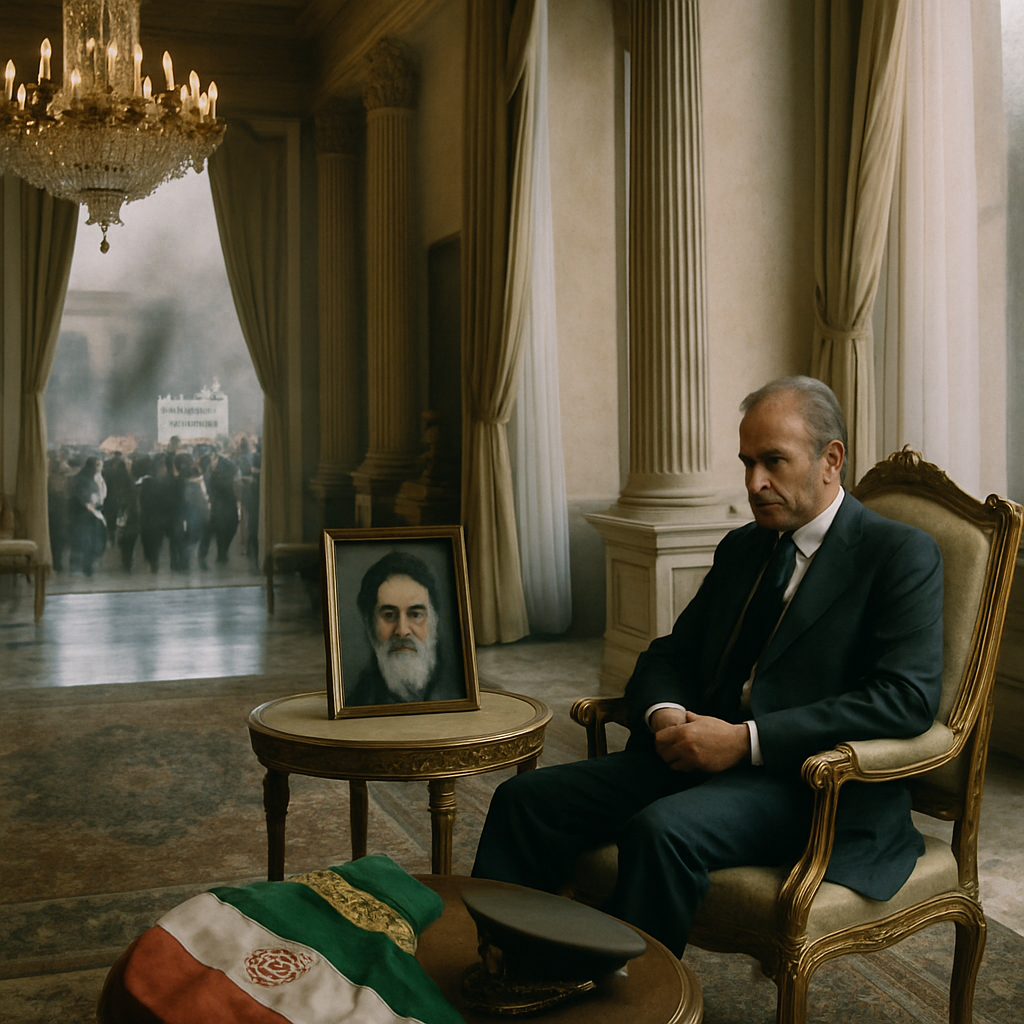
In that 1977 speech, Carter praised Shah Mohammad Reza Pahlavi’s leadership and “the admiration and love which your people give to you,” making no reference to Iran’s deep economic and social divisions. Within weeks those divisions burst into mass demonstrations; the shah fled a year later and the cleric Ruhollah Khomeini returned from exile to establish the hardline theocracy that the source says “remains in power today.” Scott Anderson, in King of Kings, frames the period as marked by “hubris, delusion and catastrophic miscalculation.”
Diplomatic signals that reassured Washington — William Sullivan, Andrew Young, and the embassy
Senior US officials offered public and private assessments that downplayed the revolutionary threat. The US ambassador to Iran, William Sullivan, expected Khomeini to return as a spiritual leader but “shorn of any political power.” America’s UN ambassador, Andrew Young, told journalists that Iran was too Westernised to become a fundamentalist Islamic state and suggested Khomeini would in time be hailed as “a saint.” The State Department even defended clerical writings that the US press described as aggressively anti‑Western, interpreting them as signs that Iran’s clerics were “turning towards moderation.”

Audit-ready is a season. It shouldn't be.
Evidence in spreadsheets, controls drifting between audits, frameworks multiplying on flat headcount. Nubivance runs continuous compliance on Rapid7 Cyber GRC - SOC 2, HIPAA, ISO 27001, PCI, CMMC.
End the scrambleIntelligence failures: screening, filtering and overreliance on Iranian sources
Anderson documents structural flaws that distorted Washington’s picture. Rather than producing its own independent stream of reporting, the Central Intelligence Agency “relied heavily on Iran’s own secret police,” which produced a biased view from the start. Intelligence was “screened, filtered and compartmentalised at several levels.” The embassy’s internal incentives amplified optimism: a proactive consul in Tabriz who reported social strife and an alleged mutiny plot at a local air force base had his warnings downplayed, and the ambassador threatened to destroy his career. In Washington, State Department desk officers with “little local knowledge” tended to ignore bad news. The net effect, Anderson argues, was that “Washington heard what it wanted to hear.”
Iranian fractures, strikes and an international energy shock
The book highlights sharp divisions inside Iran: a Westernised elite, the bureaucracy and the shah’s Imperial Guard on one side; the military, the clerics and the rest of society on the other. Those fissures fed escalating unrest. Widespread strikes in late 1978 led to a collapse of Iran’s oil industry; oil prices “skyrocketed,” triggering an international energy crisis, according to Anderson. The episode underscores his warning not to underestimate Iran’s leaders’ strategic skills or the domestic political effects that events in Iran can have elsewhere.
Hostages, 444 days, and allegations of clandestine negotiation
After the shah’s ouster, Iranian students seized US embassy staff and detained them for 444 days. Anderson records that Khomeini “seemed to be unaware of the hostage‑taking at the outset” but “quickly put the situation to good use.” The hostages were not released until “right after the inauguration of Carter’s opponent Ronald Reagan.” Anderson also examines allegations that Reagan’s team negotiated with Iran behind the scenes to delay the hostages’ release for political advantage, and he connects failed negotiations and a botched US rescue mission with a sharp erosion of Carter’s public support that “scuttled his chances of being re‑elected.”
How this lands for the US intelligence community, the State Department, and US energy policymakers
- US intelligence community: Anderson’s account is a caution about analytic pipelines that depend on local security services and that let reporting be “screened, filtered and compartmentalised.” The intelligence lesson in the text is procedural — diversify sources, reward inconvenient reporting, and guard against institutional optimism.
- The State Department and diplomats: The embassy’s tendency to downplay dissenting reporting — from the consul in Tabriz to desk officers in Washington — shows how political and institutional incentives can suppress warnings. The episodes of threatened careers and ignored dispatches are central examples.
- US energy policymakers: The late‑1978 strikes that collapsed Iran’s oil industry and “skyrocketed” prices are a reminder in Anderson’s narrative of how domestic unrest in a producer state can translate quickly into an international energy crisis.
Scott Anderson’s King of Kings, built on wide‑ranging interviews and sources, presents the Iran–US relationship in the shah’s era as a study in misjudgment — a sequence of missed warnings, optimistic spins, and institutional habits that culminated in diplomatic catastrophe. Anderson’s account leaves a pointed record: with an extensive US presence in the 1970s — a well‑staffed embassy, consulates in three major cities, “one of the largest CIA stations in the world,” thousands of military personnel and a large corporate petroleum footprint — the United States still misread the forces reshaping Iran and suffered consequences that reverberated far beyond Tehran.