"I don’t think that it’s a state secret that if we got into a high-intensity conflict right now in the Indo-Pacific, it would be difficult to meet all of the repair and resupply needs that we’re going to have out there," FLEETWERX director Morgan Bower told Breaking Defense, bluntly framing what the Navy and partners tried to address during last month’s 31-nation Rim of the Pacific (RIMPAC) wargames.
Morgan Bower and FLEETWERX at RIMPAC 26
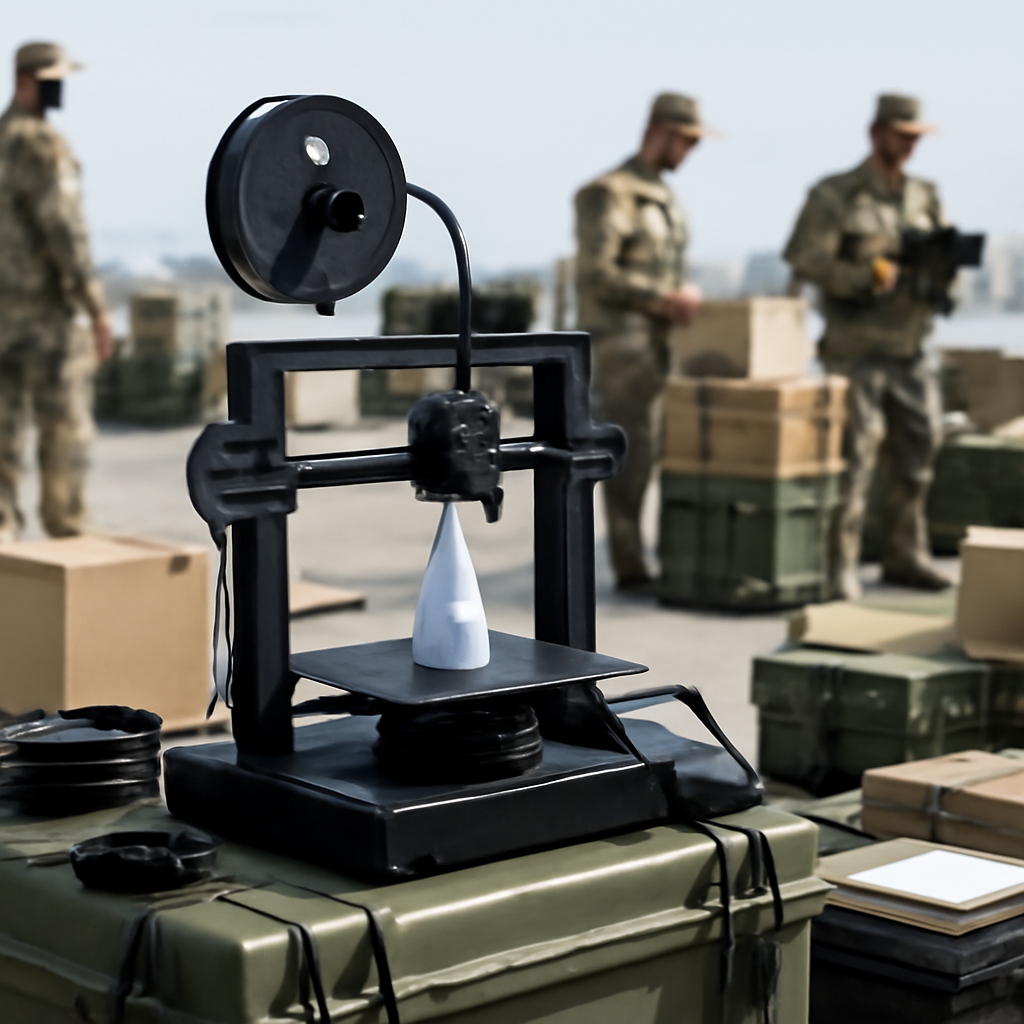
FLEETWERX and the Naval Postgraduate School (NPS) ran an experimental distributed advanced manufacturing network through RIMPAC 26 to see whether on-demand production could ease stretched logistics in a potential Pacific conflict. Bower described the effort as mapping resources and discovering supply-chain gaps: the team tracked strengths and weaknesses across many sites and experimented with practical fixes during the exercise.
Distributed advanced manufacturing and the IL-4 cloud
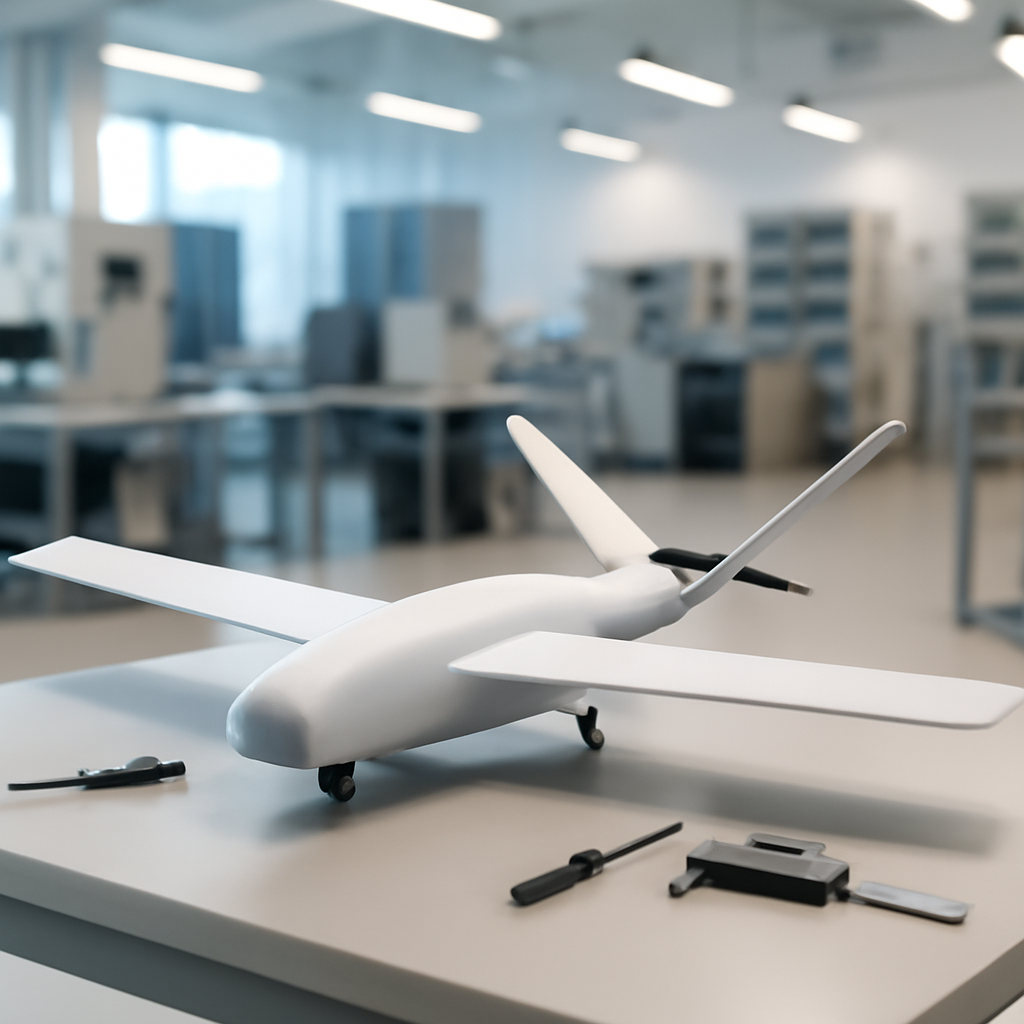
The prototype network used a secure but unclassified (IL-4) cloud to link more than 50 sites hosting a mix of 3D printers, CNC lathes and milling machines, and robotic boats that conducted unmanned supply runs. Some tools were physically aboard participating ships; many others operated from bases, depots, universities, and businesses in the United States. These remote makers took orders over the network and shipped parts out through commercial delivery services.

This site is the portfolio.
OSINTSights runs on Cloudflare Workers, D1, R2, and Vectorize, with an AI pipeline on Hetzner ARM. Nubivance designed, built, and operates it. We do the same for clients.
See what we buildWhat RIMPAC 26 produced: scale, successes, and failures
Demand was immense: across two weeks the network logged 2,741 part requests. The experimental system could not fulfill most of them. Of the requests suitable for 3D printing and CNC milling, the team produced roughly 75 different parts.
One clear success was a heavy-duty hose clamp used in ship-to-ship refueling. Through normal supply channels, "we were told it was about two months before we could even get a quote," Bower said — but 3D printing produced coated clamps that passed inspection in days. Conversely, some items proved unsuitable for on-demand manufacture: batteries and circuit boards were cited as impractical to produce with the tested methods, and at least one CNC-milled titanium part for a helicopter hydraulic system passed initial inspection only to develop a slight leak during pre-flight workups. A second iteration of that titanium part is now in testing.
Materials constraints: argon, nitrogen, and storage aboard ship
High-end metal 3D printing requires an inert atmosphere to avoid porosity and weak welds. FLEETWERX used racks of argon bottles during RIMPAC 26, which occupied roughly 7,000 square feet of storage space aboard ship. Argon is rare in the atmosphere (about one percent) and costly to produce; the exercise therefore explored alternatives.
On the USS Essex, the team trialed nitrogen generators small enough to pair with a printer. Nitrogen is more reactive than argon and raises the chance of defects, but Bower said it can be "good enough" for many parts. Determining which parts tolerate nitrogen and which require argon is a practical next step the project must resolve.
AI advisors and two Large Language Models
Bower emphasized that printers are not magic: they need raw materials, controlled environments and, crucially, the right tool for each job. To match parts to machines, the team moved beyond manual copying-and-pasting experiments with NPS’s Microsoft Copilot and deployed two different Large Language Models. One chatbot was trained on official Navy policies, procedures and technical standards; the other was trained on the capabilities of different printers and tools.
Together, those AIs produced roughly "about 70 percent of the answer" on which tool should make which part, with humans providing final decisions. The stated goal is to raise that accuracy to 95 percent so the network can automatically match jobs to tools most of the time and require only minimal human intervention.
What this means for technologists, policymakers, and fleet maintenance teams
- Technologists and engineers will focus on refining material workflows and tool diversity — deciding which parts can tolerate nitrogen atmospheres, expanding printer and CNC types on the network, and resolving failure modes such as the leaking titanium hydraulic component.
- Policymakers and logisticians will be watching storage and resupply tradeoffs: argon consumes hundreds of square feet and is expensive to produce, while shipboard argon generators and nitrogen capture units present different logistical burdens and risk profiles.
- Ship crews and fleet maintenance teams will track repair timelines demonstrated at RIMPAC 26 — from multi-week commercial lead times for simple clamps to the ability to field coated, inspected replacements in days — and will weigh which critical spares warrant distributed manufacturing investment.
RIMPAC 26 served as a functional stress test: it proved that a distributed network of printers, mills, and delivery partners can produce useful parts fast, but also exposed hard limits — materials, storage, quality control and AI decisioning among them. As Bower put it, the effort is not pitching a single, final solution; it is "more of the program of now." The next steps are concrete: define which parts can be trusted from low-cost nitrogen environments, deploy compact argon-generation options or alternative supply plans, improve AI match rates toward 95 percent, and continue iterative testing of failed or marginal components — like the second titanium hydraulic part now under test.