“We’re just an hour and a half away from each other,” Heaviside president Nils Haagenrud told Breaking Defense, describing the company’s close working relationship with Norwegian defense firm Nammo.
Heaviside, Nammo, and a transatlantic setup
Heaviside is a two-year-old US-Norwegian startup whose headquarters and most staff are in Los Angeles, while “most of the engineering, development, and testing” take place in Norway, Haagenrud said. The firm is VC-funded and not owned by Nammo; nonetheless, Nammo is described as Heaviside’s “most important partner.” Nammo supplies the Tyr loitering munition’s anti-tank warheads — derived from the company’s M72 LAW series — and provides a test range where Heaviside can fly prototypes and use live explosives on practice targets.
Tyr: size, warhead, and price framing
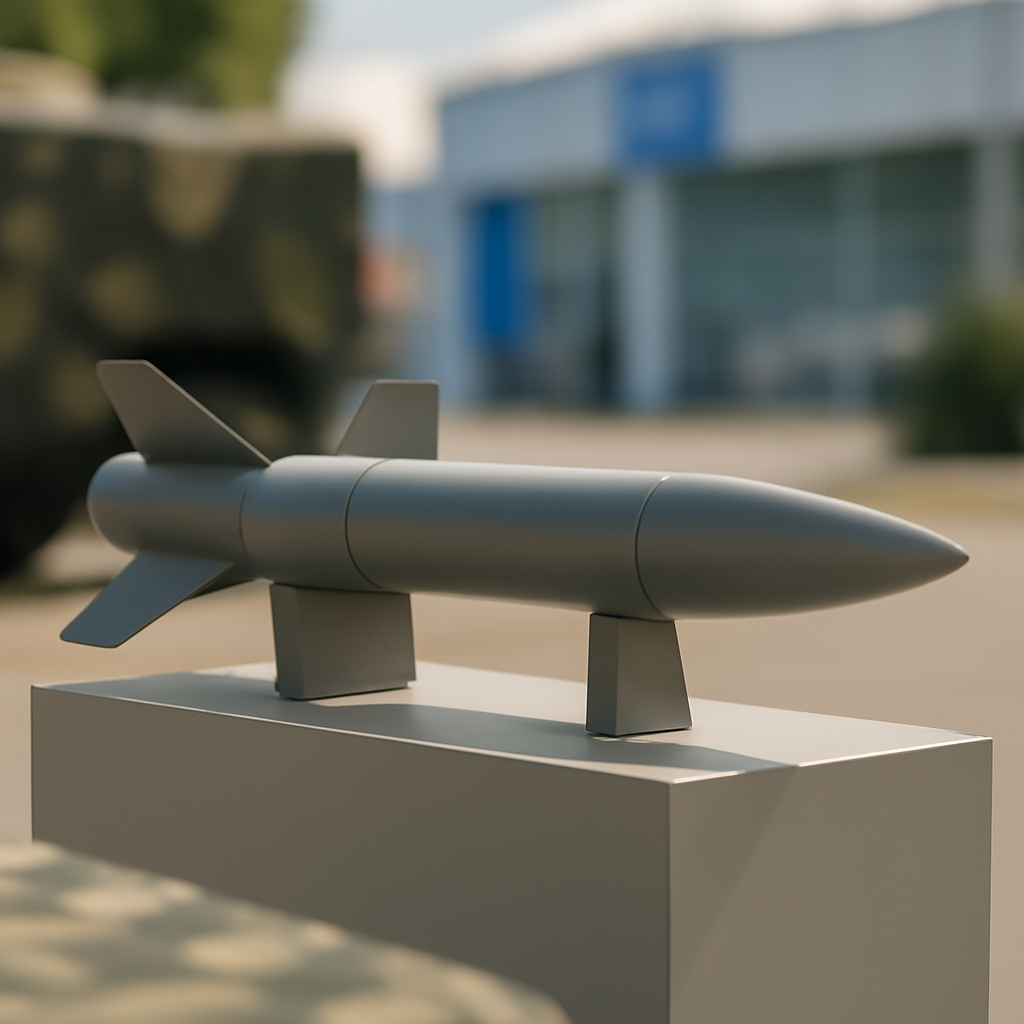
Heaviside unveiled Tyr as its entry into the competition for low-cost, expendable drones. The loitering munition weighs roughly 15 pounds, Haagenrud said, with about one third of that weight made up by the warhead. Heavisrud asserted the warhead has “enough explosive power to kill a main battle tank like the Russian T-72 or T-80.” The company declined to give a precise unit price for the complete system but Haagenrud said the drone is “way under $100,000,” a figure he tied to Heaviside’s use of commercial off‑the‑shelf components intended to keep costs down and supply chains robust. The stated weight and price apply to the drone itself, Haagenrud emphasized; they do not include a reusable launcher.

Audit-ready is a season. It shouldn't be.
Evidence in spreadsheets, controls drifting between audits, frameworks multiplying on flat headcount. Nubivance runs continuous compliance on Rapid7 Cyber GRC - SOC 2, HIPAA, ISO 27001, PCI, CMMC.
End the scrambleAutonomy, sensors, and human oversight
Heaviside describes Tyr as incorporating features drawn from battlefield testing of AI targeting in Ukraine. The drone fuses electro‑optical (EO) and infrared (IR) sensors and performs “video navigation,” Haagenrud said. According to the company, Tyr can fly itself to an operator-designated strike zone, autonomously search for recognizable targets such as a tank, and then request permission to attack. “The only thing I have to do is press ‘engage,’” Haagenrud said, underlining Heaviside’s assertion that a human remains in the loop to make the final firing decision.
Testing in Norway and environmental claims
Heaviside reported live-fire and environmental testing at Norwegian facilities. Haagenrud told Breaking Defense that some tests saw Tyr fly to and detonate targets in Norwegian winter weather down to 20 degrees below zero. The close proximity to Nammo — “just an hour and a half away” — is presented by Heaviside as permitting rapid iteration: Haagenrud said the two companies “can build and test the same day.”
Contracts, parallel projects, and DoD ties
Heaviside has one publicly announced defense contract: an Indefinite Delivery, Indefinite Quantity (IDIQ) award with a ceiling of $99 million from the Army’s Rapid Electronic Warfare and Signals Intelligence (REWSI) initiative. That award is for a handheld spectrum analyzer called MOTH, which Heaviside describes as a tool to detect the radio emissions associated with incoming drones. Separately, Haagenrud said Heaviside is developing an unmanned underwater vehicle called Nyx and that “we are working directly with the DoW,” using the semiformal alternative name for the Department of Defense; he did not disclose further details or an announced contract for Nyx.
What this means for technologists and security teams, policymakers and procurement leaders, and front-line users
- Technologists and security teams: The company’s emphasis on EO/IR fusion and "video navigation" with a human-in-the-loop decision point highlights integration challenges — sensor fusion, reliable target recognition, and secure human-machine interfaces — that will need validation in operational settings.
- Policymakers and procurement leaders: Heaviside frames Tyr as a low-cost, rapidly iterated system supported by a $99 million IDIQ in electronic-warfare-related tools; procurement officials will weigh claimed unit economics (“way under $100,000”) and launcher exclusion when assessing acquisition plans and logistics.
- Front-line users: At roughly 15 pounds and described as portable by a single soldier, Tyr is positioned as a man-portable loitering munition with an anti-tank warhead derived from the M72 LAW series; end users will focus on ease of carry, launcher integration, and the human-in-the-loop workflow for engagement.
Heaviside presents a tightly coupled production and testing model: an LA-based headquarters and staff, fast back-and-forth engineering in Norway, Nammo-supplied M72-derived warheads and local live-fire ranges, and a stated REWSI contract for electronic-warfare hardware. That combination — a small, VC-backed firm leaning on a well-resourced prime contractor for warheads and range access — is the company's declared differentiator in a crowded market for expendable drones. Whether the firm’s claims about cost, environmental performance, and operational readiness translate into fielded deployments will depend on the progression of MOTH deliveries under the REWSI IDIQ and any future contracts that formalize work on Nyx or further Tyr procurements.