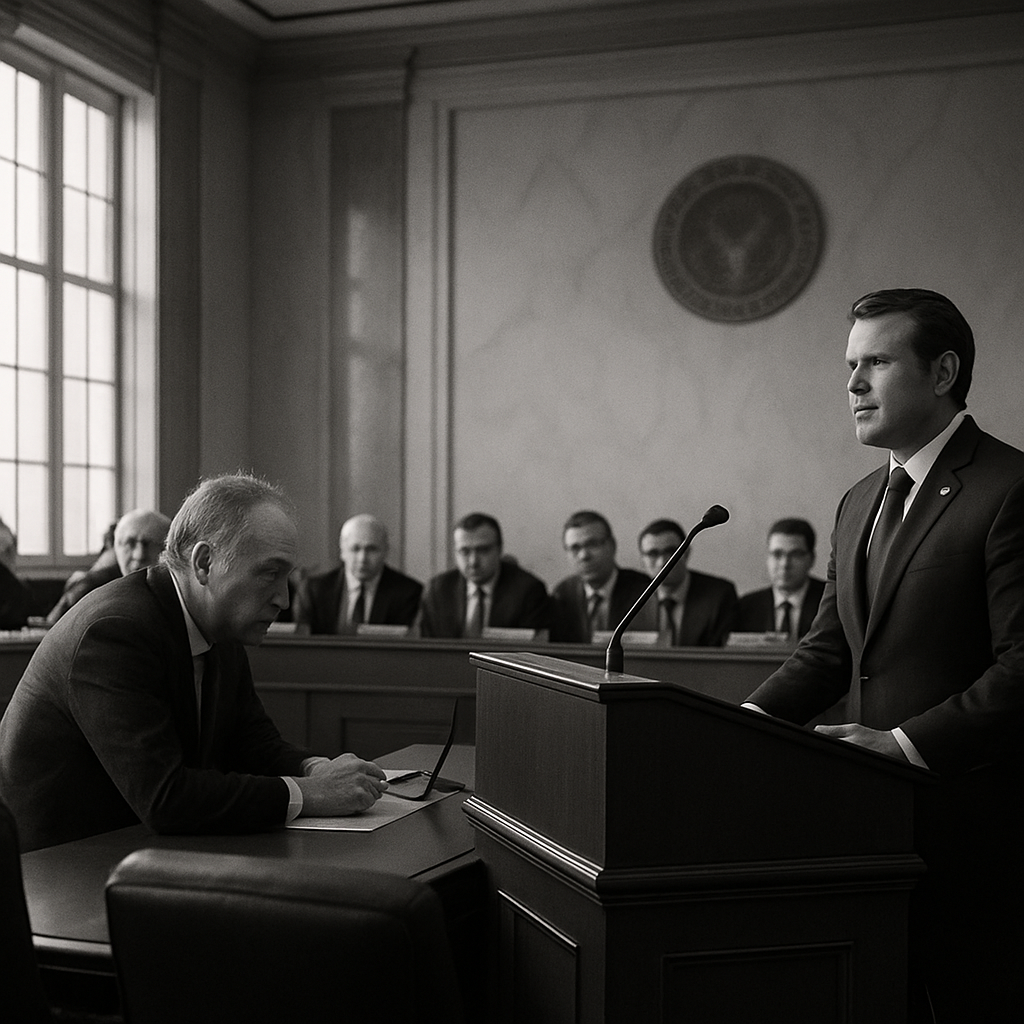
“I do not believe the statute supports that,” Sen. Tim Kaine, D‑Va., told Defense Secretary Pete Hegseth during a Senate Armed Services Committee hearing as lawmakers pressed whether the administration will seek congressional authorization to continue U.S. military action related to Iran.
The War Powers clock and the ceasefire
The statutory timetable created by the War Powers Resolution is central to the dispute: a president may carry out a military operation for 60 days without express congressional authorization, with a possible 30‑day withdrawal period if needed. That 60‑day window was nearing its end after two months of U.S. strikes on Iran. The administration has not signaled that it will seek an authorization for use of force in Iran or submit a written request for a 30‑day extension to push the operation legally past 60 days, and a White House spokeswoman did not respond to a request from Defense One for clarification.
Defense Secretary Pete Hegseth’s testimony
At the Senate Armed Services Committee hearing, Secretary Hegseth declined to say whether the president will ask Congress for an authorization or an extension. Instead, he argued that the current ceasefire with Iran has paused the 30‑day clock. That position drew pointed pushback from members of the committee, who raised constitutional and statutory concerns about whether a ceasefire halts the War Powers timetable.

This site is the portfolio.
OSINTSights runs on Cloudflare Workers, D1, R2, and Vectorize, with an AI pipeline on Hetzner ARM. Nubivance designed, built, and operates it. We do the same for clients.
See what we buildLegal view from the Constitution Project at POGO
David Janovsky, acting director of the Constitution Project at the Project on Government Oversight, offered a contrary legal reading. Janovsky told the hearing that “the current ceasefire does not affect the clock,” and said the War Powers Resolution is written broadly enough to cover “hostilities,” not just declared war. He emphasized that although the ceasefire began April 8, the U.S. has since instituted a blockade against Iran, which Janovsky called “an act of war in its own right, and one that has included U.S. troops boarding multiple Iranian ships.”
Senate maneuvering: Republicans block votes, Democrats force a same‑day initial vote
Lawmakers on the Hill responded with partisan maneuvering. Republican senators blocked multiple attempts by Democrats to hold a war powers vote. Senate Democrats announced they would force an initial same‑day vote, but the timetable remained tight: the initial procedural vote would be held the same day it was forced, while a final vote was not expected until the following day — even as the 60‑day clock was set to run out Thursday night.
Operation Epic Fury and congressional questions
Sen. Jack Reed, the ranking member of the Senate Armed Services Committee, invoked Secretary Hegseth’s earlier public remarks. Reed quoted Hegseth’s April 8 statement that “Operation Epic Fury was a historic and overwhelming victory” and that “By any measure, Epic Fury decimated Iran’s military and rendered it combat ineffective for years to come.” Reed juxtaposed that declaration of battlefield success with the administration’s reluctance to seek a statutory authorization to extend operations beyond the War Powers window.
What this means for the president, Senate Democrats, and U.S. forces
- The president: faces a choice made explicit by the War Powers Resolution — either seek congressional authorization for continued military operations related to Iran or submit a written request for a 30‑day extension to provide time for withdrawal. The administration has not publicly taken either step, and a White House spokeswoman did not answer Defense One’s request for clarification.
- Senate Democrats: have signaled they will press for a formal war powers vote, forcing an initial same‑day procedural vote even as Republican objections have repeatedly blocked such measures. Their actions raise the prospect of an expedited congressional test of executive action before the statutory period lapses.
- U.S. forces: operate under competing legal and operational signals. Officials cite a ceasefire that the defense secretary says pauses withdrawal timing, while legal experts point to ongoing actions — including a blockade and ship boardings, per Janovsky’s testimony — that may keep the War Powers clock running.
The dispute now turns on two narrowly defined, consequential questions the hearing laid bare: does a ceasefire legally halt the statutory countdown that limits military operations without congressional approval, and will the administration choose the route — authorization, extension, or neither — required by the War Powers Resolution to keep U.S. forces engaged beyond 60 days? Lawmakers pushed for answers in the hearing; as of the session, neither the president nor the White House had provided one.



