"We’re a combatant command and we fight to win wars. To win, we need credible, acknowledged, kinetic and non-kinetic fires," Gen. Stephen Whiting said at the Army Space and Missile Defense Symposium in Huntsville, Alabama.
Whiting’s FY29–33 priorities: integrated space fires and countering LEO constellations
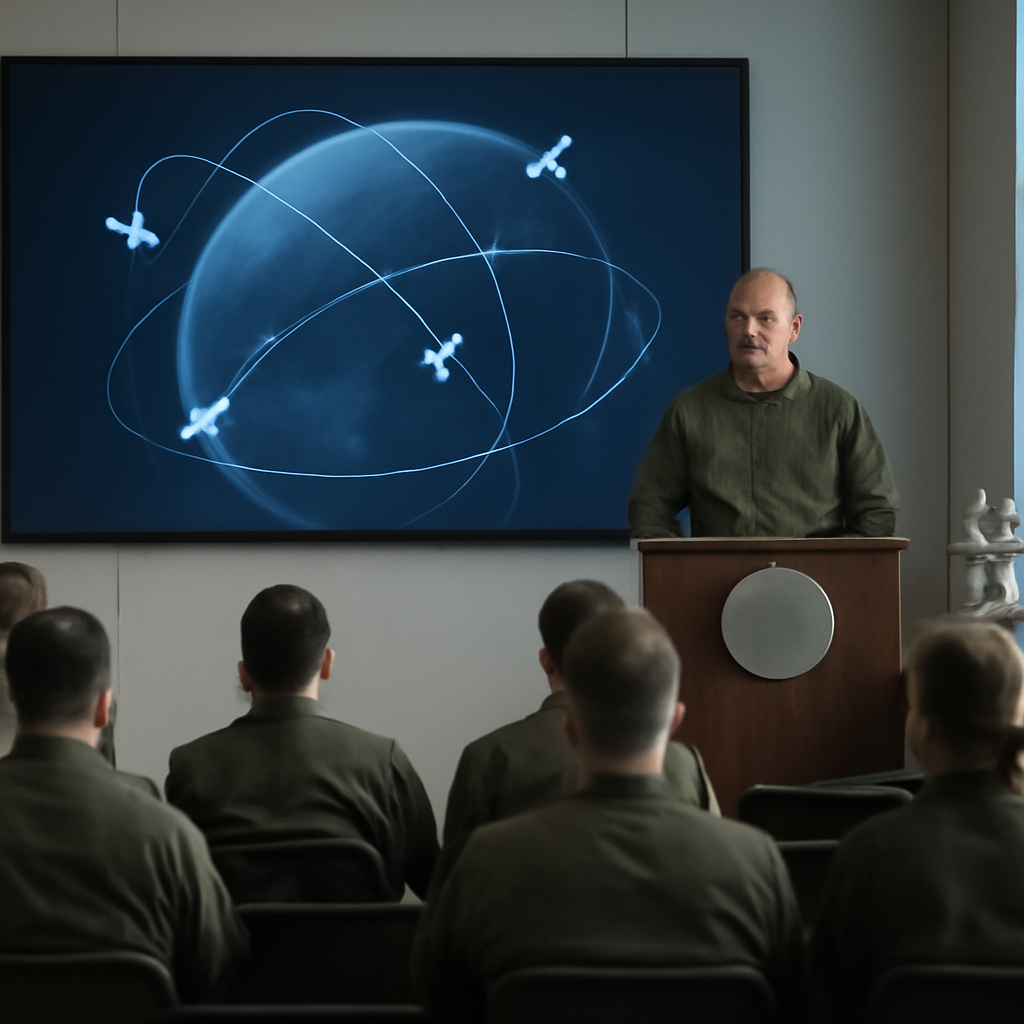
Gen. Whiting, head of US Space Command (SPACECOM), told the symposium that his top two priorities for fiscal years 2029 through 2033 are “integrated space fires” and capabilities to counter large constellations of satellites in low Earth orbit (LEO) in order to establish space superiority. He said those capabilities are essential to restore credible deterrence, repeating that both kinetic and non‑kinetic effects are required.
Whiting noted that “space fires” again topped his list (it also led his 2027 priorities), but he did not provide a formal definition of the term or cite specific weapons that would carry out such attacks.
Three types of space fires now have “policy” approval, according to Lt. Gen. Rick Zellman
Whiting’s deputy, Lt. Gen. Rick Zellman, said the US military now has “policy” approval for three basic types of space fires. He described them as:
- Ground‑to‑space fires, which he linked to systems the services have used “for years,” including “communications jamming systems.”
- Space‑to‑space attacks, which he called “orbital warfare.”
- Space‑to‑ground fires, cited in the context of the Trump administration’s plans to build space‑based interceptors for the Golden Dome missile shield.
Zellman framed the policy approvals as a formal acknowledgement of mission areas that SPACECOM and the joint force must be prepared to execute.

This site is the portfolio.
OSINTSights runs on Cloudflare Workers, D1, R2, and Vectorize, with an AI pipeline on Hetzner ARM. Nubivance designed, built, and operates it. We do the same for clients.
See what we buildDistributed execution: Army, Marine Corps and other combatant commands
Zellman emphasized that capabilities for space fires are not the exclusive domain of the Space Force or SPACECOM. He said the Army and Marine Corps “also have some of these fires that they can do from ground to space.”
He explained the approach as deliberately decentralized: “We’ve essentially outsourced that. We’ve decentralized that so that the other combatant commands can see to those fires, because they have to be integrated with the operations and timing and tempo that they’re conducting.” Zellman added that orbital warfare and space‑to‑ground fires will “still be the purview of Space Command.”
Joint, integrated command-and-control and target‑quality tracks
Beyond weapons and attacks, Whiting placed command-and-control and sensing at the center of the FY29–33 list. Number three on his Integrated Priorities List is “Joint, Integrated Space Command and Control,” where he urged enhanced machine‑to‑machine connectivity to support decision‑making and battle management of the global space flight on “tactically relevant timelines.”
He followed that with a call for “dedicated space domain awareness for space engagements,” arguing the need to adopt a “target‑quality track mindset to everything we do in space, just like the missile defense community has done for decades.” That language ties sensing and track quality directly to the ability to prosecute and protect against space fires.
Sustained space maneuver and counter‑constellation posture
The fifth priority Whiting listed is new capability for “sustained space maneuver.” He said satellites must be able to “move quickly and often to avoid adversary attack” and to “gain a position of advantage on our adversaries.”
Taken together with the priority to counter large LEO constellations, the list frames both defensive mobility and offensive options as central to SPACECOM’s approach to space superiority in FY29–33.
What this means for the Army, the Marine Corps, and the State Department
- Army and Marine Corps: Zellman’s remarks put ground‑to‑space fires squarely within their operational responsibilities; those services will be tasked with integrating jamming and other ground‑based effects with broader combat plans and timelines.
- Space Command: SPACECOM retains responsibility for orbital warfare and space‑to‑ground fires, and it will push for machine‑to‑machine C2 and target‑quality tracking to enable rapid engagement decisions.
- State Department: The source says the Trump administration continued to support the US moratorium on destructive anti‑satellite missile testing that the Biden administration declared in 2022, a moratorium now adopted by almost 40 other nations; State Department officials reportedly touted the concept at the United Nations Open‑ended Working Group meeting in Geneva July 6–10.
Gen. Whiting has laid out a clear set of operational priorities — integrated fires, counter‑constellation capabilities, improved C2, higher‑quality tracking, and sustained maneuver — and his deputy has described three policy‑approved types of space fires. What remains concrete in the record is the list of priorities and the policy categories; what remains unspecified in the public remarks is the technical definition of “space fires” and the specific weapons or timelines to implement the FY29–33 agenda. Those unanswered specifics will determine how the command’s priorities turn into capabilities and deployments.