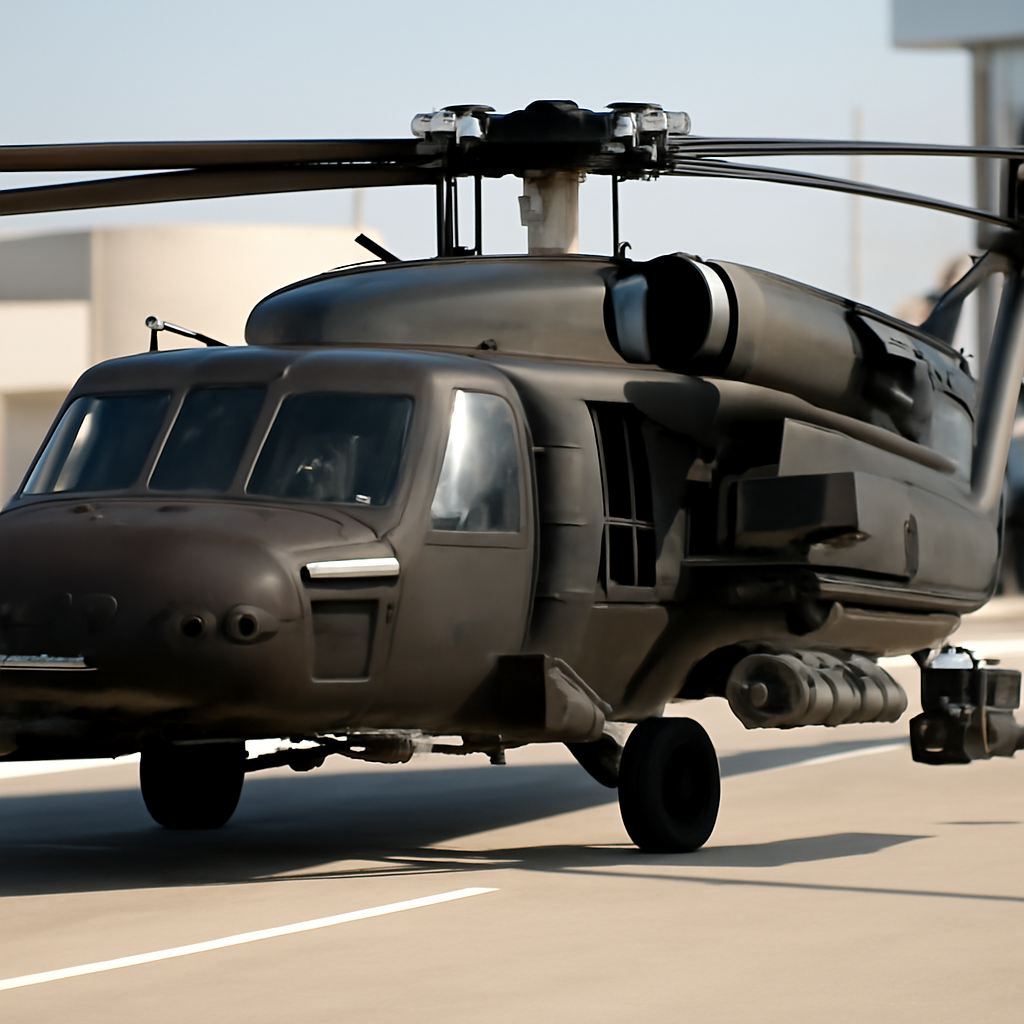
“As we expand the MATRIX family, we also extend the reach of uncrewed solutions for both civil and military customers,” said Rich Benton, vice president and general manager of Sikorsky.
R66 Turbinetruck: Robinson airframe plus Sikorsky’s MATRIX
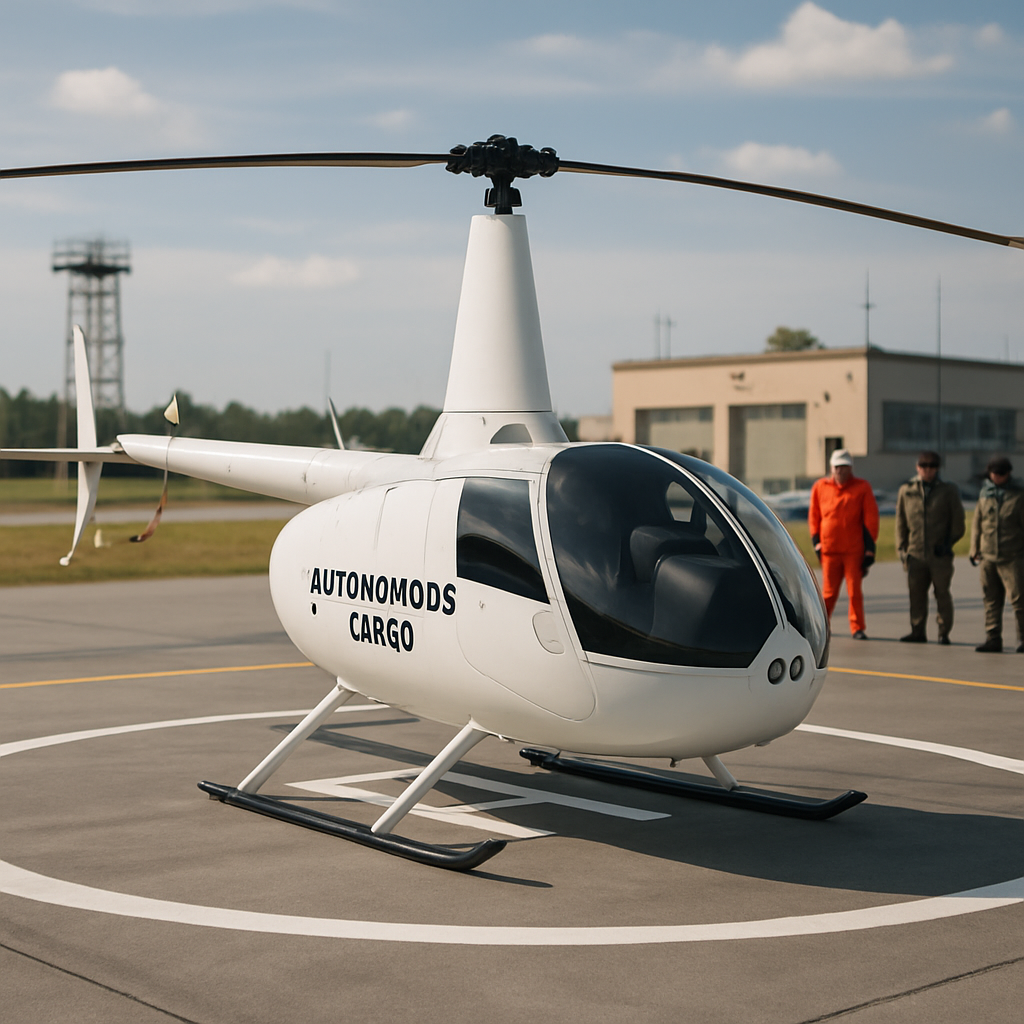
Lockheed Martin announced that its Sikorsky subsidiary and Robinson Unmanned have received a $15.5 million contract from the U.S. Marine Corps for the R66 Turbinetruck under MARV-EL Increment 2. The Turbinetruck pairs the Robinson R66 single-turbine airframe with Sikorsky’s MATRIX autonomy system to create an autonomous cargo helicopter designed for contested and austere environments.
Robinson and Sikorsky describe the R66 selection as driven by the platform’s “reliability, low maintenance demands, and high level of versatility.” Robinson says the Turbinetruck can carry 1,300 pounds internally, support external loads via a cargo hook, and transport a total useful load of 1,500 pounds with a range of more than 325 nautical miles. The fuselage includes front clamshell nose doors and a right-hand baggage door so a forklift can load cargo directly into the internal bay.
The MATRIX autonomy package has been demonstrated previously in a U.S. Army UH-60M, and Lockheed Martin frames the Turbinetruck as a means to deliver “ammunition, medical supplies, and other essential equipment directly to the troops that need it” regardless of terrain, weather, or enemy threat.
Uncrewed 505: Near Earth Autonomy, Bell, and Moog collaboration
The MARV-EL Increment 2 competition will also produce a prototype Uncrewed 505. Near Earth Autonomy is leading development of an autonomous version of the Bell 505 Jet Ranger X, working with Bell Textron, Moog Inc., and XP Services. Near Earth will integrate its Captain autonomy architecture with Moog’s Genesys avionics and the Bell 505 airframe.
Near Earth says it will spend the next 36 months integrating and flight-testing the autonomous system in the Uncrewed 505, progressing from early demonstrations to full mission capability. The company highlighted transportability as a design priority: the Uncrewed 505 is optimized so that two aircraft can fit inside a C-130 with minimal disassembly. Near Earth also said operators will be able to “request, dispatch, and manage missions through familiar command-and-control pathways, including MAGTAB and MANGL integration,” and that cargo can be loaded using standard pallet jacks and forklifts.
Near Earth CTO Lyle Chamberlain summarized the aim bluntly: “The program is to develop an uncrewed aerial logistics aircraft for where the risk and need are highest.”

The cyber insurance questionnaire just landed. Now what?
SOC 2, HIPAA, insurance renewals - someone has to own security strategy. Nubivance provides fractional CISO leadership without the full-time salary.
Get a security leadMARV-EL Increment 2: capability envelope and operational intent
The Marine Corps’ MARV-EL requirement for Increment 2 calls for an uncrewed aircraft that can carry a logistic payload between 1,300 and 2,500 pounds to a combat radius of 100 nautical miles and operate through a common digital handheld device. In the Turbinetruck concept, mission objectives would be entered on a digital tablet and the system would automatically create a flight plan, using onboard sensors and algorithms to guide the helicopter to the target location.
MARV-EL is explicitly tailored to expeditionary operations in the Indo-Pacific, including Expeditionary Advanced Base Operations from austere forward operating bases, unimproved landing zones, and ship decks. The service seeks a “middleweight” logistics capability that bridges the gap between small tactical drones and larger crewed airlifters while reducing risk to aircrews and easing maintenance and crew-rest constraints on crewed rotary-wing assets.
Past competitors and the decision to recompete
Earlier prototypes that emerged from related efforts included Kaman’s Kargo UAV and Leidos’ SeaOnyx. Kaman partnered with Near Earth Autonomy on autonomy for both the Kargo UAV and an optionally crewed K-Max, while Leidos won a 2023 contract under the Medium Unmanned Logistics Systems — Air (MULS-A) program for the SeaOnyx. According to the record, neither prior platform met Marine Corps requirements, prompting a recompete and a decision to raise the program’s payload and range goals.
Previous requirements had been smaller: delivering 300–600 pounds within a radius of 25 to 100 nautical miles. The revised MARV-EL Increment 2 envelope increases both payload and range substantially to meet the service’s expeditionary logistics needs.
What this means for the Marine Corps, Sikorsky/Robinson, and Near Earth Autonomy
- The Marine Corps: MARV-EL aims to field an uncrewed, medium-weight logistics capability for contested Indo-Pacific operations, enabling resupply to forward locations without putting additional aircrews at risk and filling a gap between small drones and large crewed lift.
- Sikorsky and Robinson: The $15.5 million Increment 2 contract pushes the MATRIX autonomy stack into a new commercial airframe; Robinson positions the R66 Turbinetruck as a reconfigurable, economical option for high-risk logistics tasks.
- Near Earth Autonomy and Bell Textron: The 36-month integration and test plan and the emphasis on MAGTAB/MANGL compatibility reflect a focus on fitting autonomous platforms into existing Marine Corps workflows and transport chains, including C-130 stowage constraints.
Both prototypes now move to integration, test, and demonstration: Robinson Unmanned will deliver the first R66 Turbinetruck to Sikorsky for MATRIX integration and evaluation, while Near Earth will pursue a three-year flight-test campaign for the Uncrewed 505. Whichever design — or combination of designs — satisfies MARV-EL’s escalated payload and range targets will determine whether this middleweight class of autonomous rotorcraft becomes a routine tool for expeditionary resupply in contested environments.