“The analogy I use is the ACV that Marines are using today is not the ACV that they’re going to use in the future.”
Chris Melkonian on adding an active protection system to the ACV
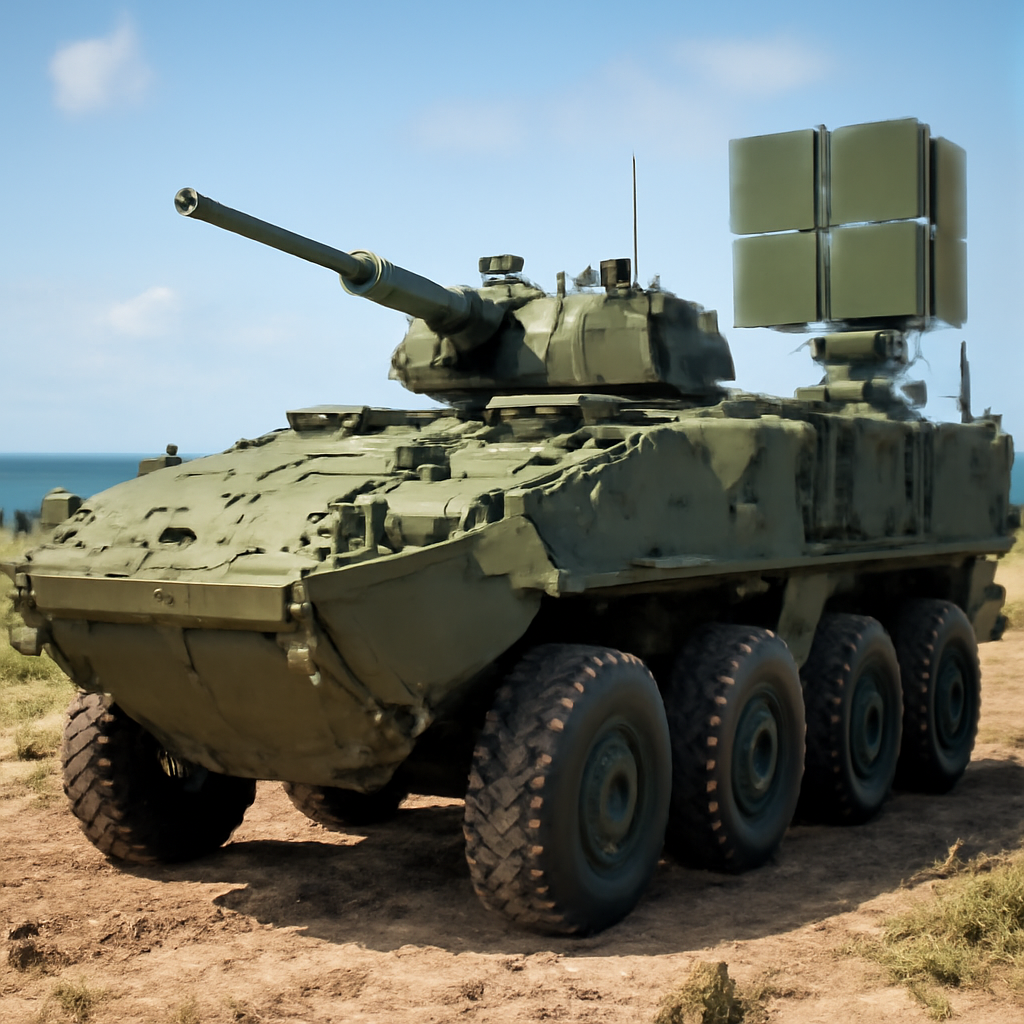
At the Modern Day Marine exposition, Chris Melkonian, the Marine Corps’ Program Manager for Advanced Amphibious Assault (PM AAA), said the service is “working with the vendor to mature that capability. We’re going to move that right into production.” He described the planned integration of an active protection system (APS) onto Amphibious Combat Vehicles (ACVs) as an incremental but durable improvement, adding that “that is not going to be the end-all, be-all.” Melkonian said Marines are “constantly looking at what the next generation of APS is and how we can get that onto the platform in a lightweight form factor,” and emphasized related survivability needs such as improved situational awareness, dehumidification, and marinized solutions.
ACV family, quantities, and timeline
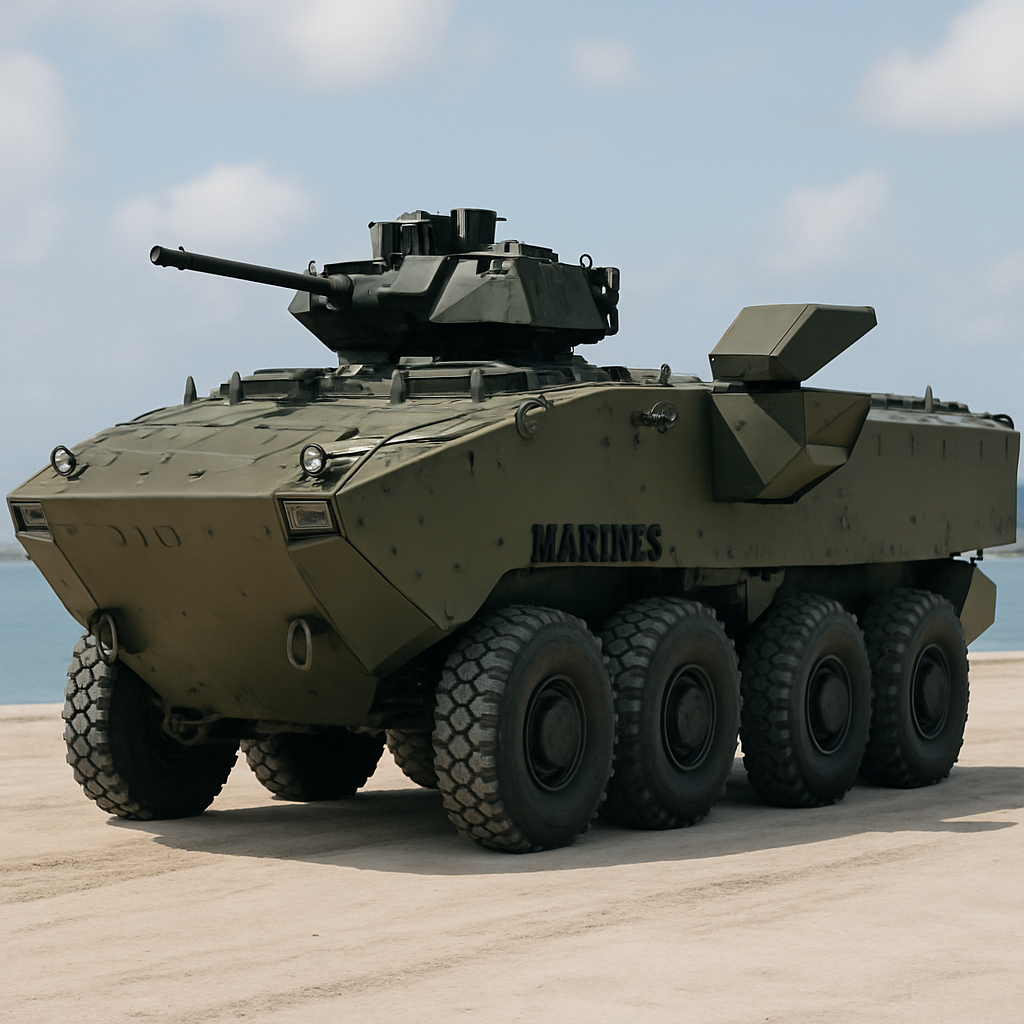
The Marine Corps fields two ACV variants today: the baseline personnel carrier (ACV‑P) and a command-and-control version (ACV‑C). The service is acquiring two more variants: an armed ACV‑30 fitted with a turreted 30mm cannon and a recovery variant, ACV‑R, fitted with a crane and specialized features. The Corps is targeting 2028 for initial operational capability with the ACV‑30 and ACV‑R. The planned total fleet is 608 vehicles: 389 ACV‑P, 33 ACV‑C, 152 ACV‑30, and 34 ACV‑R. Prime contractor BAE Systems has proposed additional variants, including electronic warfare and counter‑drone configurations.

Audit-ready is a season. It shouldn't be.
Evidence in spreadsheets, controls drifting between audits, frameworks multiplying on flat headcount. Nubivance runs continuous compliance on Rapid7 Cyber GRC - SOC 2, HIPAA, ISO 27001, PCI, CMMC.
End the scrambleFunding specifics: FY2027 request and the initial APS buy
Recently released budget documents show the Marines are requesting $28.35 million in Fiscal Year 2027 for “Ancillary Equipment” for the ACV fleet, which the documents say “is primarily attributed to the procurement of Special Mission Kits for the Active Protective System (APS).” The funding is described as providing APS production kits, integration kits, installation labor, countermeasures, and spares for 21 ACV‑P vehicles and “will add a new defensive capability to existing vehicles.” Neither Melkonian nor the budget documents specify which APS type will be procured or an exact delivery schedule beyond the program-level timelines.
How APS works and the counter‑drone context
APSs available today are generally designed to defeat anti‑tank guided missiles and infantry anti‑armor weapons. They typically employ “hard‑kill” interceptors—projectiles that defeat incoming threats via explosive warheads or kinetic impact—paired with cueing sensors such as small‑form‑factor radars and electro‑optical/infrared cameras. Many of these systems have demonstrated an ability to down incoming drones or have been modified to address unmanned threats.
The story notes limits and tradeoffs: hard‑kill APSs have a finite number of engagement opportunities and are “not really intended to defeat large volumes of threats simultaneously, such as drones attacking in swarms.” The article also highlights that first‑person view (FPV) kamikaze drones controlled via fiber‑optic cable can be impervious to radio‑frequency jamming, prompting development of both active and passive countermeasures. Melkonian identified other possible survivability upgrades under study for the ACV, including directed energy weapons and added overhead protection to counter top‑down attacks where vehicle armor is typically thinnest.
What this means for BAE Systems, Israeli APS developers, and Marines
- BAE Systems: as the prime contractor for the ACV family, proposals for additional variants (electronic warfare, counter‑drone) position BAE to integrate APS kits and other Special Mission Kits onto vehicles already in production and fielding.
- Producers of proven APSs (Trophy, Iron Fist): the article references U.S. Army integrations of Israeli‑designed systems—Trophy on M1 Abrams and Iron Fist (designated XM251) for Bradleys and future ground systems—illustrating available, combat‑proven technologies the Marines may consider or compare against other options.
- Marines in the field: APS integration will add a defensive layer for 21 ACV‑P vehicles in the near term and represents part of a broader push—improved sensors, marinized solutions, and dehumidification—to make ACVs more survivable and sustainable in amphibious and humid environments.
Active protection systems look set to become a standard survivability upgrade for the Marine Corps’ ACV family, but the record released to date makes two things clear: the Corps has committed funds to an initial fielding of APS kits for 21 ACV‑P vehicles in FY2027, and it is deliberately treating APS as one layer among many—sensor fusion, overhead protection, directed energy, and vehicle marinization—rather than a single, definitive fix. The unanswered operational choices left on the table are precise: which APS design will be selected, how integration will affect other add‑ons (cope cages and TAP-style armor were specifically noted as tradeoffs), and how the Corps will manage the limited engagement capacity of hard‑kill systems against evolving drone threats.