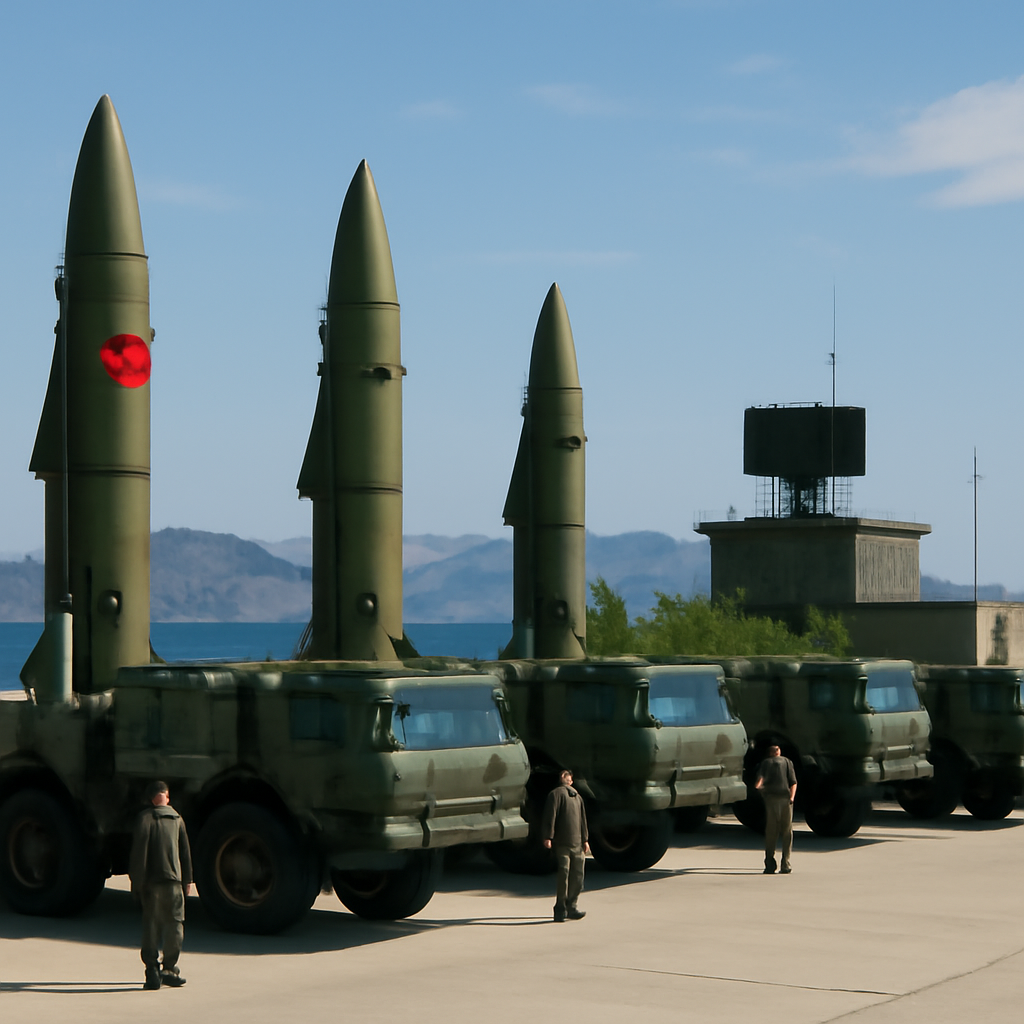
The Pentagon assessed that China fielded “600 missiles in the ‘boosted hypersonic’ category,” a category that the source says includes systems carrying hypersonic glide vehicles (HGVs) as well as air‑launched ballistic missiles.
DF-17 and the arrival of operational hypersonics
The People’s Liberation Army Rocket Force (PLARF) introduced the DF-17 as “the world’s first operational ballistic missile designed from the outset to deliver an HGV,” the source reports. Publicly unveiled in 2019, the DF-17 is estimated to have a range of 1,800–2,200 kilometers and to travel at speeds “reportedly approaching Mach 10.” The PLARF is likely to employ the DF-17 early in a conflict to attack time‑sensitive, high‑value coastal assets — integrated air and missile defenses, long‑range radars, and command nodes — to improve the effectiveness of follow‑on strikes. Chinese media describe the DF-17 as conventionally armed; U.S. officials and some Chinese reports have suggested a possible nuclear capability, and separate reporting has pointed to development of an anti‑ship variant.
SRBMs focused on Taiwan: DF-11, DF-15, DF-16
Short‑range ballistic missiles remain central to any Taiwan contingency. The PLARF fields multiple variants of the DF-11, DF-15, and DF-16 families, described in the source as road‑mobile, solid‑fueled, and increasingly precise. The DF-11A evolved from an original DF-11 that entered service in 1992; the DF-11A extended range to roughly 600 kilometers and a bunker‑busting DF-11AZT variant reportedly entered service in 2013. The DF-15 series has several iterations — the DF-15A in 1996, the triconic DF-15B (seen publicly in 2009) with a MaRV, and the DF-15C around 2013 believed to be optimized for hardened targets. The DF-16 has steadily replaced the DF-15: it debuted publicly in 2015, likely entered service earlier, and includes a MaRV‑equipped DF-16A spotted in exercises; some open‑source assessments place certain DF-16 ranges above 1,000 kilometers, though the article notes uncertainty on that point.

This site is the portfolio.
OSINTSights runs on Cloudflare Workers, D1, R2, and Vectorize, with an AI pipeline on Hetzner ARM. Nubivance designed, built, and operates it. We do the same for clients.
See what we buildDF-21 family and the anti-ship mission
The DF-21’s lineage reaches back to tests in the late 1970s and operational service in the 1980s. The family evolved from a single nuclear‑warhead strategic missile to include conventionally armed land‑attack and anti‑ship variants. The DF-21D — fitted with a MaRV and widely described in open sources as the first operational anti‑ship ballistic missile (ASBM) — has been tested against land and sea targets and is attributed a range of more than 1,500 kilometers. The DF-21C was a conventionally armed land‑attack variant; reporting indicates it has been retired as units transition to newer systems. The article also references a more modern nuclear‑armed addition to the series first reported in 2016, sometimes labeled DF-21E in Western reporting, though public details remain scarce.
DF-26 and DF-27: striking Guam and stretching regional reach
The DF-26 is described as “increasingly the centerpiece” of the PLARF’s regional strike force. A two‑stage, solid‑fueled road‑mobile missile mounted on a six‑axle TEL, the DF-26 first appeared publicly around 2012 and entered operational service after 2015. It is believed to be dual‑capable — able to carry conventional or nuclear warheads — and to have an anti‑ship variant equipped with a MaRV; published range estimates exceed 3,000 kilometers, putting Guam and U.S. facilities there within reach. The U.S. Department of Defense estimated more than 200 DF-26 launchers by 2020, rising to about 250 two years later. The DF-27, described in the Pentagon’s 2023 assessment as under development, was reported in leaked documents to have at least limited service; the DoD has said it “could have a range of 5,000–8,000 kilometers” and is expected to carry an HGV in land‑attack and anti‑ship configurations.
Air‑launched missiles, inventory estimates, and what this means for U.S. forces, Taiwan, and regional navies
The source documents an expanding mix of air‑launched options and large inventories that create “magazine depth.” The JL-1 ALBM, carried by the H-6N bomber, is described as an adapted air‑launched version of the DF-21 family with a MaRV; China has said the JL-1/H-6N pairing has a not‑confirmed range of roughly 8,000 kilometers. The Pentagon refers to the H-6N as a “nuclear weapons‑capable bomber” and characterizes the JL-1 as a “highly precise theater weapon that would be well suited for delivering a low‑yield nuclear weapon,” while noting a conventional option may exist. The KD-21 — a smaller ALBM carried on H-6K pylons — resembles exported CM-401 land‑based ASBMs and is identified as an anti‑ship design that can strike land targets too.
Pentagon estimates cited in the article place PLARF inventories at roughly 200 SRBM launchers backed by about 1,000 missiles, some 300 MRBM launchers with about 1,300 missiles, and roughly 300 IRBM launchers fielding roughly 550 DF-26‑class missiles. The article emphasizes that sheer numbers, combined with dual‑capable designs and hypersonic and anti‑ship variants, complicate crisis stability and provide the PLARF with the ability to conduct repeated waves of strikes in a high‑intensity campaign.
China’s regional ballistic missile force, the article concludes, has shifted from a limited strategic deterrent into a diverse, dual‑capable strike arm that reaches across the First and Second Island Chains — and, with new systems, potentially well beyond.