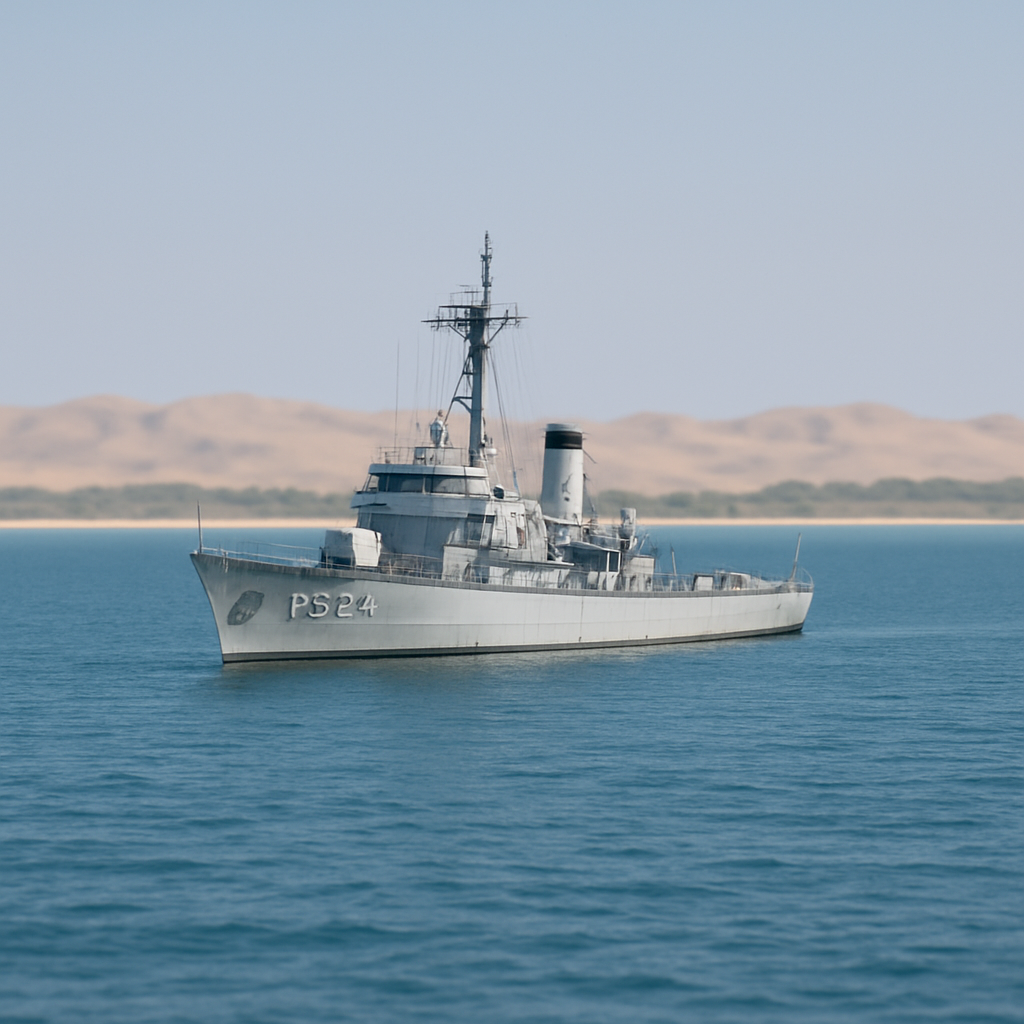
The target vessel was the decommissioned Philippine Navy Rizal‑class patrol corvette BRP Quezon — a former U.S. Auk‑class minesweeper completed as USS Vigilance during World War II — which sank after live‑fire strikes roughly 50 miles offshore in the Luzon Strait.
The ship and the strike: BRP Quezon at Paoay Sand Dunes
The live‑fire maritime strike (MARSTRIKE) took place off the coast of Ilocos Norte, around the Paoay Sand Dunes on Luzon, the Philippines’ largest island. The vessel used as the SINKEX target was the former BRP Quezon, a Rizal‑class patrol corvette with a standard displacement of 890 tons that was decommissioned in 2021. According to the reporting, the target was confirmed about 15 minutes after an initial probing shot, and the ship sank rapidly after being struck.
Weapons and platforms used during the exercise
The drills drew a wide range of munitions and launchers from Japanese, Philippine, and U.S. forces. Opening the attack, a U.S. Army M30/31 Guided Multiple‑Launch Rocket System (GMLRS) was fired about 10:00 a.m. local time as a “probing round.” GMLRS is described in the reporting as a precision artillery rocket with a range around 50 miles and as incapable of engaging moving targets. It was launched from an M142 High Mobility Artillery Rocket System (HIMARS), which the source notes can carry six 227mm rockets or a single ATACMS missile without reloading.
Anti‑ship strikes reportedly followed from multiple systems: a Philippine C‑Star coastal anti‑ship missile (a turbojet, sea‑skimming design with around a 90‑mile range), and U.S. Marine Corps Navy‑Marine Expeditionary Ship Interdiction System (NMESIS) launchers. NMESIS uses an uncrewed variant of the 4×4 JLTV, called ROGUE‑Fires, carrying two ready‑to‑fire Naval Strike Missiles (NSM) with a range of around 130 miles and low‑observable features. Two Japanese truck‑mounted Type 88 (SSM‑1) coastal anti‑ship missiles, each with an approximate range of 100 miles and developed by Mitsubishi Heavy Industries in the 1980s, were also fired and reportedly struck the hull.

Audit-ready is a season. It shouldn't be.
Evidence in spreadsheets, controls drifting between audits, frameworks multiplying on flat headcount. Nubivance runs continuous compliance on Rapid7 Cyber GRC - SOC 2, HIPAA, ISO 27001, PCI, CMMC.
End the scrambleSequence of events: the timeline the source lays out
- About 10:00 a.m.: A U.S. Army GMLRS is fired as a probing round.
- About 10:15 a.m.: The location of the target vessel is confirmed.
- Shortly after: Anti‑ship missiles from Philippine and U.S. systems are reportedly launched; Japanese Type 88 rounds struck the hull around 10:30 a.m.
- The vessel sank rapidly, stopping further planned air strikes; FA‑50 and A‑29 aircraft were prepared but stood down.
- After the ship was sunk or sinking, a U.S. HIMARS fired on the same coordinates to provide a coup de grâce.
Other participating assets mentioned in the reporting included a U.S. Navy P‑8 Poseidon maritime patrol aircraft and an MQ‑9 drone. The Royal Canadian Navy frigate HMCS Charlottetown was noted as part of Balikatan but did not appear to take part in the SINKEX.
Japan Self‑Defense Forces’ Type 88 firing and Tokyo’s expanded role
The Type 88 coastal anti‑ship missile was fired from land for the first time in a Balikatan exercise and reportedly the first time anywhere outside Japan. Video released of the live‑fire event showed the Type 88 launcher truck receiving close protection from a Marine Air Defense Integrated System (MADIS) — itself built around JLTV variants to protect coastal batteries from short‑range aerial threats such as kamikaze drones. The reporting frames the event as a notable expansion of Japan’s military role in the region amid rising regional tensions.
What this means for the U.S., the Philippines, Japan, and China
- U.S. forces: The exercise displayed integration of mobile, ground‑based strike and maritime surveillance assets — from GMLRS and HIMARS to NMESIS, P‑8s, MQ‑9s, and the Typhon system mentioned elsewhere in the exercise. The reporting also notes a recent U.S. Army Tomahawk test from a Typhon launcher in the central Philippines that hit a target about 370 miles away, underscoring layered strike options available during Balikatan.
- Philippine military: The Philippines provided the target vessel and hosted the live‑fire off its northern coast; Philippine naval platforms (including frigates armed with C‑Star missiles) and Philippine Air Force aircraft were prepared to engage the target and may take part in a subsequent scheduled SINKEX round the following day, per a Philippine military spokesperson.
- Japan: The Type 88 firing outside Japan signals a deeper JSDF role in combined exercises and demonstrates coastal anti‑ship capabilities being exported into international drills.
- China: The reporting notes that the Luzon Strait lies between Taiwan and the Philippines and is a strategic corridor; earlier reporting referenced in the article says China has voiced displeasure over deployments such as Typhon to the Philippines. The presence and regular appearance of mobile strike systems near the strait is presented as likely to draw Beijing’s concern.
The exercise left little mystery about its immediate aim: to practice sinking a hard target with a layered, multinational palette of shore‑based, ship‑launched, uncrewed, and rocket artillery systems in a corridor the report calls “highly strategic.” Philippine forces have a stand‑by target vessel for another round of live‑fire drills tomorrow, meaning the short episode off Ilocos Norte will be followed quickly by more integrated firing lanes and more opportunities to test tactics and interoperability in one of the Indo‑Pacific’s most consequential waterways.
https://www.twz.com/news-features/missiles-clobber-target-ship-in-highly-strategic-luzon-strait