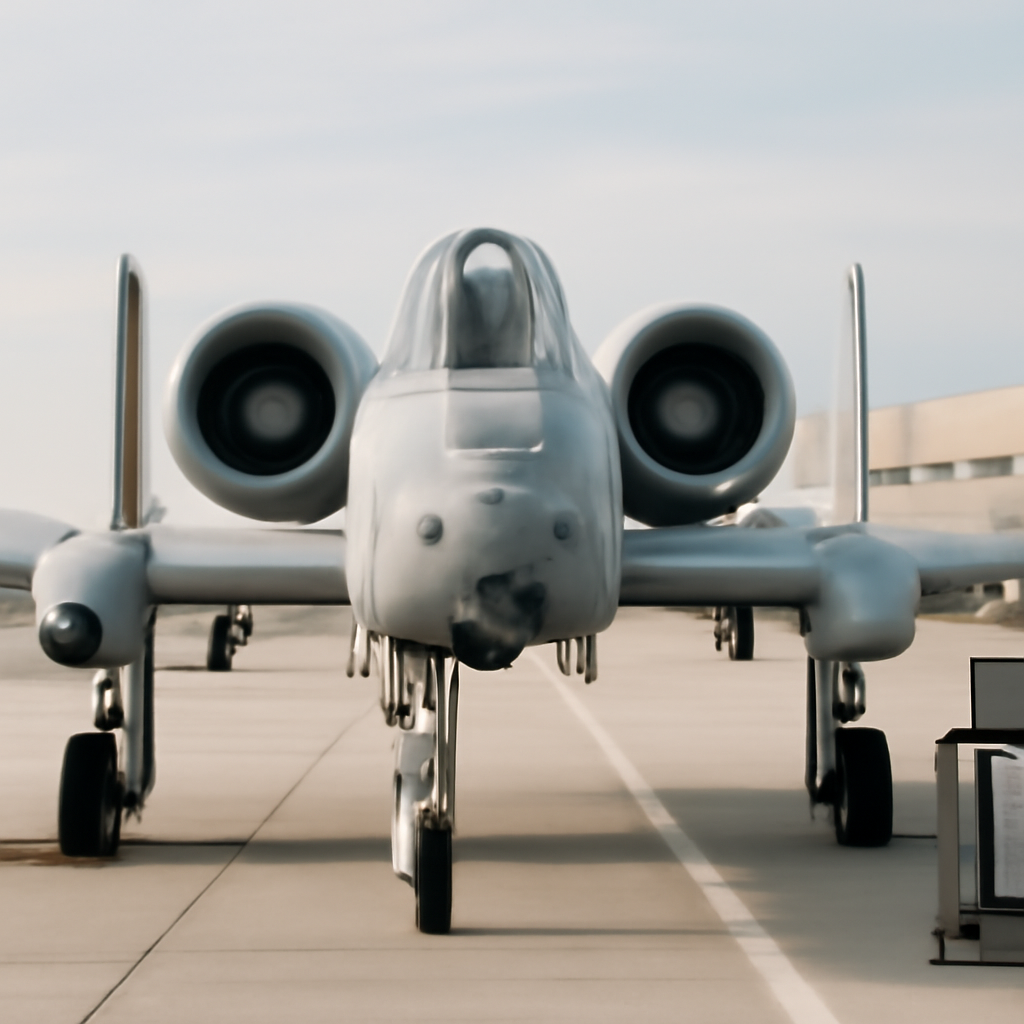
What is at stake for the A-10 Thunderbolt II — and for the communities and missions that depend on it — is whether artificial intelligence, electronic‑warfare gear, or better communications can “improve the operational return on continued sustainment” of the Cold War–era Warthog.
House Armed Services Committee’s A‑10 provisions
The House Armed Services Committee (HASC) included several A‑10 measures in an en bloc package in its version of the annual defense policy bill. The package passed by voice vote, and the committee’s bill cleared the panel 44–12 late Thursday evening. Those provisions must still clear further House and Senate action before becoming law as part of the National Defense Authorization Act (NDAA).
Rep. Abraham Hamadeh’s amendment: the technologies to probe
The central amendment, proposed by Rep. Abraham Hamadeh (R‑Ariz.), directs Defense Department officials to study “potential incremental modernization options for the A‑10 aircraft,” naming specific areas for examination: electronic‑warfare capabilities; decoy or stand‑in effects delivery; aerial refueling enhancements; digital communications; sensor integration; precision weapons integration; survivability improvements; open‑systems architecture; and human‑machine teaming applications. The amendment frames the review as a way to determine whether those changes would “improve the operational return on continued sustainment” of the platform.

This site is the portfolio.
OSINTSights runs on Cloudflare Workers, D1, R2, and Vectorize, with an AI pipeline on Hetzner ARM. Nubivance designed, built, and operates it. We do the same for clients.
See what we buildReporting requirements and timelines for defense leaders
Hamadeh’s amendment requires a report by Jan. 15, 2027, from the Defense Secretary, Pete Hegseth; the Air Force Secretary, Troy Meink; and the leaders of Air Combat Command and U.S. Central Command. A separate Hamadeh provision would have the Air Force make A‑10 aircraft and equipment available for research on “autonomous or semi‑autonomous aircraft integration, mission systems development, digital battlefield communications, or other related capabilities,” with an Air Force report due roughly six months after the passage of the NDAA.
Operational missions under review: rescue, close air support, and more
The committee’s language explicitly asks the Air Force to analyze whether “currently programmed or planned Air Force capabilities are expected to replicate or improve upon the principal operational effects historically provided by the A‑10 aircraft as rescue mission commander, close air support, armed overwatch, forward air controller‑airborne, and personnel recovery support missions.” Air Force Chief of Staff Gen. Kenneth Wilsbach told lawmakers that the A‑10 could be replaced on combat‑search‑and‑rescue (CSAR) missions by F‑15 Eagles or F‑35 Lightning IIs. The committee also asked for a study of how existing or emerging platforms would absorb the CSAR mission.
How the Air Force, lawmakers, and Davis‑Monthan are affected
- Air Force leadership: The service must deliver two formal analyses — one by Jan. 15, 2027, and another roughly six months after NDAA passage — assessing modernization options and how other platforms might replicate A‑10 mission effects.
- Lawmakers pressing to preserve the fleet: Authors of the amendments, led by Rep. Hamadeh and Rep. John McGuire (R‑Va.), inserted language to explore modernization, research access for autonomous and digital systems, and the “potential transfer of certain A‑10 aircraft” slated for retirement to other services.
- Davis‑Monthan Air Force Base and local communities: The committee’s measures arrive as A‑10 operations are slated to wind down at Davis‑Monthan; how those transition plans interact with any modernization or retention decisions will hinge on the forthcoming reports and subsequent congressional approvals.
The A‑10, which entered service in 1977 and has been the subject of repeated congressional efforts to prevent retirement, saw renewed attention after the aircraft helped rescue a U.S. airman downed in Iran during this year’s Operation Epic Fury; following that event, Air Force leaders promised to keep some squadrons flying until 2030. The HASC package now sets a formal process to test whether incremental upgrades — from AI‑enabled mission planning to electronic‑warfare suites and improved communications — could change that calculus.
The near‑term path is procedural and concrete: defense officials must deliver the studies the committee demanded, the committee’s A‑10 provisions must survive negotiation with the full House and the Senate, and the Air Force must decide whether and how to make retiring airframes and systems available for research. Those steps will determine whether the Warthog’s future is governed chiefly by sustainment costs, by new mission roles enabled by emerging technologies, or by a combination of both.