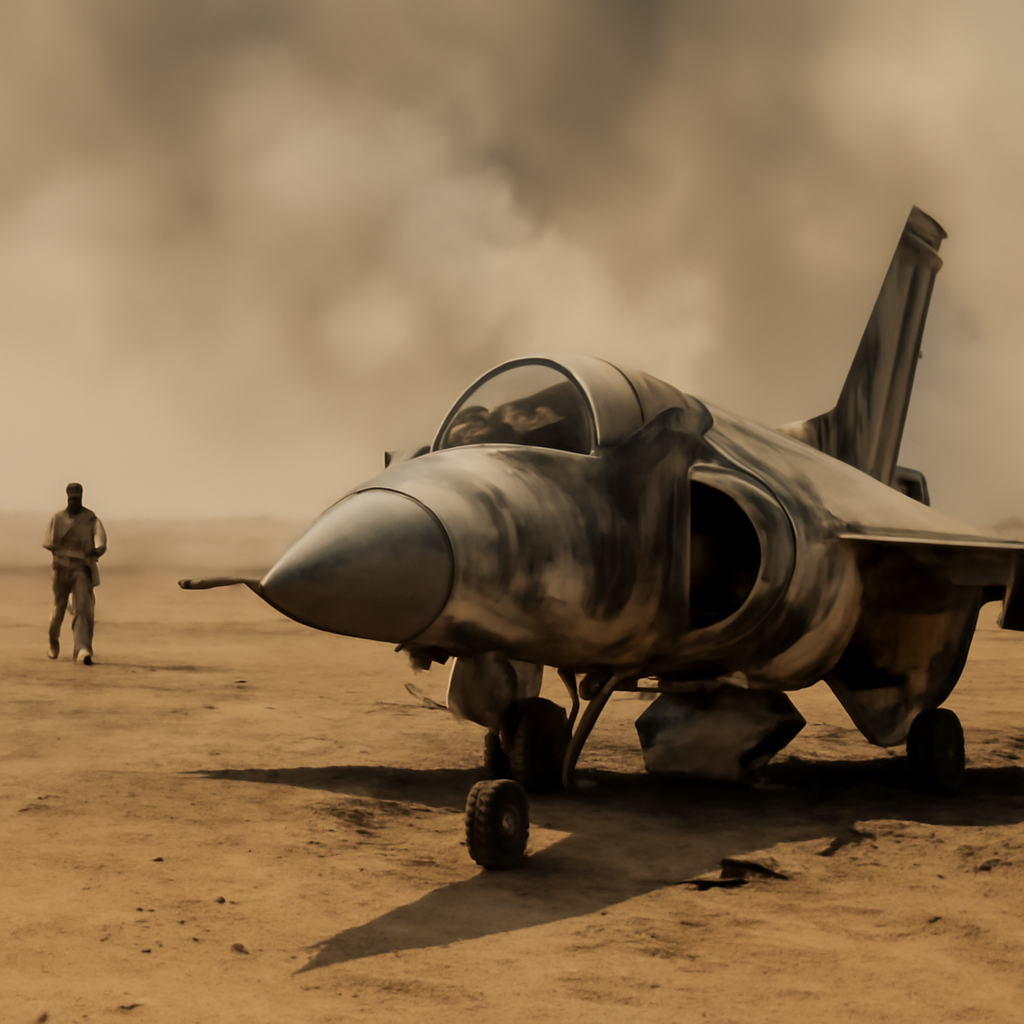
"We hit ’em hard yesterday, and we’re going to hit ’em again hard today," President Donald Trump told reporters on June 10, underscoring a rapid escalation in U.S.-Iran military exchanges that has put a fragile ceasefire under severe strain.
U.S. strikes and the stated rationale
U.S. Central Command launched three waves of strikes on targets in southern Iran after what President Trump said was Iran’s downing of an AH-64 Apache helicopter, reportedly by an Iranian Shahed drone. Iran denied attacking the Apache. U.S. officials described the U.S. strikes as hitting 20 Iranian targets, including air defense systems and radar sites. A U.S. official speaking on condition of anonymity told TWZ that, according to initial reflections from ongoing assessments, there have been no reported injuries among U.S. personnel and no indication yet of damage to American installations.
Iran’s retaliatory missiles and drones: claims, footage, and damage assessments
Iran responded by launching missiles and drones across the Middle East, with the Islamic Revolutionary Guard Corps (IRGC) saying it targeted the U.S. Navy’s Fifth Fleet headquarters in Manama, Bahrain, Muwaffaq Salti Air Base in Jordan, and other U.S. military sites. Videos circulated online claimed missile interceptions over Jordan and explosions in Manama; IRGC-linked outlets also posted footage claiming a strike on Fifth Fleet. The extent of any damage remains unknown. The U.S. official told TWZ that “just about all were intercepted” in initial assessments, but the report also noted that similar U.S. damage assessments during the height of Epic Fury were later contradicted by reports of widespread damage from Iranian attacks.

This site is the portfolio.
OSINTSights runs on Cloudflare Workers, D1, R2, and Vectorize, with an AI pipeline on Hetzner ARM. Nubivance designed, built, and operates it. We do the same for clients.
See what we buildMaritime front: CENTCOM blockade, tanker strikes, and regional incidents
Maritime incidents intensified alongside kinetic exchanges. At 11:14 p.m. on June 9, U.S. forces disabled the Palau-flagged oil tanker M/T Settebello in the Gulf of Oman by firing “precision munitions” into its engine room, CENTCOM said, describing the ship as attempting to transport oil from Iran. CENTCOM added that since initiating the blockade on April 13 it has redirected 134 ships that complied and allowed 42 vessels supporting humanitarian aid to pass. The International Maritime Organization’s Secretary‑General, Arsenio Dominguez, “expressed deep concern and strong condemnation” of the attack on M/T Settebello and said he “strongly condemn[s] any act from any party that endangers the lives of seafarers and the safety of international shipping.”
The attack on the tanker had human consequences: The Hindu reported two Indian seafarers died and one was reported missing. The IMO statement referred to “the families of the three missing seafarers.” Separately, the United Kingdom Maritime Trade Operations (UKMTO) warned that a cargo vessel 88 nautical miles south of Balhaf, Yemen, in the Gulf of Aden reported being approached by a craft with six armed persons onboard; an exchange of fire occurred and the small craft turned away. UKMTO said authorities are investigating and advised vessels to transit with caution.
On the same day, trade intelligence firm Windward said five Iranian-trading LPG carriers broke the U.S. blockade: four discharged in India and one in Pakistan, using spoofing and AIS blackouts to mask movement, though Windward said the crude oil blockade remained effective.
Diplomacy under pressure: Qatar mediators, Iran’s review, and competing rhetoric
Diplomatic channels remained active even as shots were exchanged. CNN reported that, “following consultations with the United States, Qatari negotiators headed to Tehran” to try to bridge remaining gaps—an indication that diplomacy continued despite a significant test of the ceasefire. A U.S. official told CNN the United States believes the strikes would not derail the negotiations.
Iran, however, publicly signaled a reassessment. Iranian Foreign Ministry spokesperson Esmaeil Baqaei told the IRNA news outlet, “We have to review it,” saying diplomacy and the battlefield “run alongside and complement each other in safeguarding Iran’s interests and security.” Baqaei added that Iran’s military and diplomatic tracks operate in coordination and that “wherever the Armed Forces deem it necessary, they respond to the enemy with authority and strength.”
What this means for CENTCOM, Iranian negotiators, and commercial shippers
- CENTCOM and U.S. forces: CENTCOM’s public tally of disabled and redirected vessels, and its reported strikes on Iranian targets, indicate an operational focus on enforcing the blockade and degrading Iranian air defenses and radar. CENTCOM’s actions also carry political and human costs—most notably the casualties aboard M/T Settebello cited by The Hindu and condemned by the IMO.
- Iranian negotiators and Tehran’s political leadership: Iran’s IRNA-cited statement from Esmaeil Baqaei shows Tehran is weighing whether diplomacy can continue in parallel with military responses; the arrival of Qatari mediators suggests negotiators will press to salvage remaining gaps even as Iran “reviews” the talks.
- Commercial shippers and maritime security providers: UKMTO’s warning about small‑boat approaches near Bab al‑Mandeb and Windward’s finding that LPG carriers used AIS spoofing and blackouts underline heightened operational risk. Ship operators will face tougher routing decisions and increased scrutiny over AIS behavior and vessel flags.
The overnight exchange crystallizes a simple fact: kinetic action and negotiations are now intertwined in plain view. Tempered by competing claims about damage, intercepted strikes, and the movement of oil out of the Gulf, the immediate future will hinge on whether mediators in Tehran can bridge remaining gaps or whether each military step further erodes the ceasefire calculus on both sides.