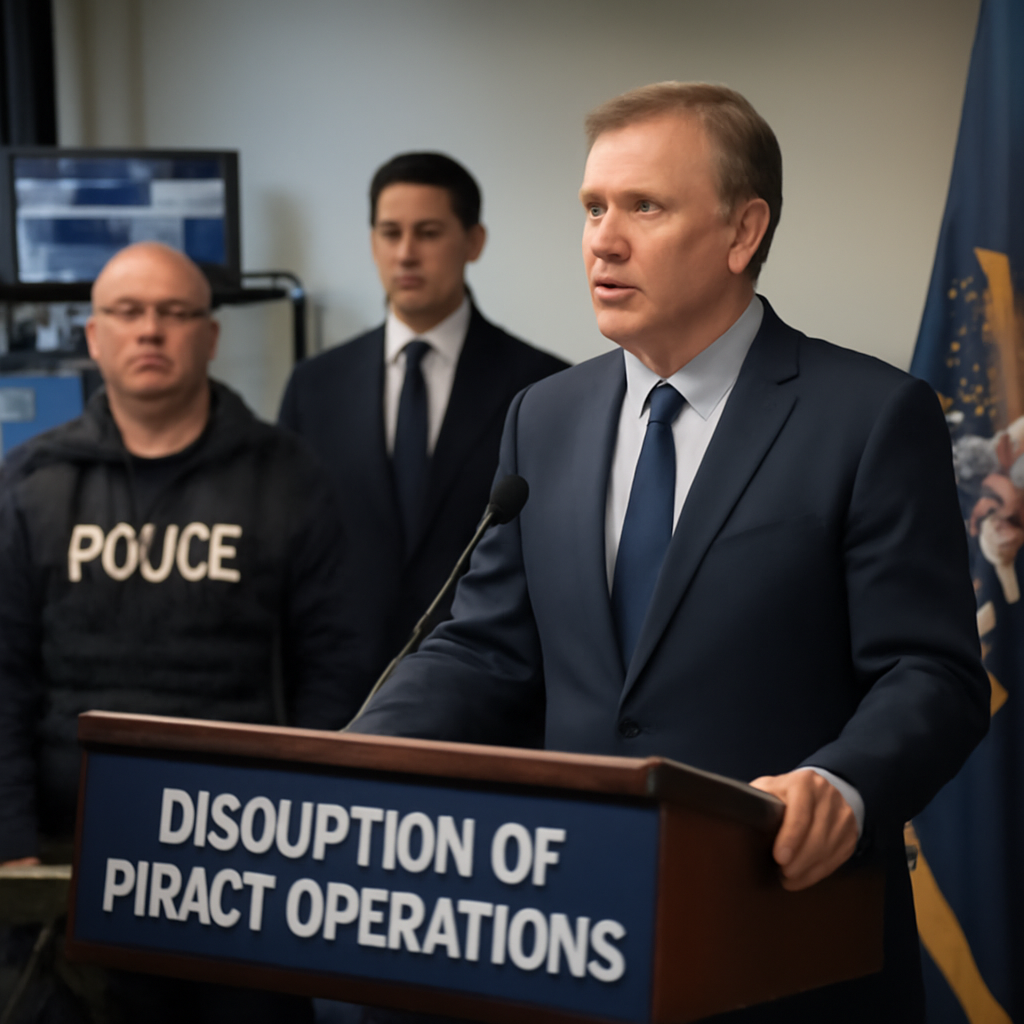
"Operation Offsides is part of the Department's ongoing effort to protect copyright while reducing the risk to American consumers from the malicious software embedded in many illicit streaming services," said Assistant Attorney General A. Tysen Duva.
Operation Offsides and the Justice Department seizure
The U.S. Justice Department's Criminal Division announced that it has seized more than 1,000 websites and blocked 1,970 domains used to stream FIFA World Cup 2026 matches without authorization. Those actions were carried out as part of Operation Offsides, a joint law enforcement effort led by the National Intellectual Property Rights Coordination Center (IPR Center) in coordination with Homeland Security Investigations (HSI) Washington.
Operation Offsides, the announcement says, involved 14 partners across 54 countries and had identified and seized hundreds of domains, with nearly 400 web domains seized by the end of last month. The seizures are presented as a mix of criminal enforcement and consumer-protection activity aimed at removing unauthorized broadcasts ahead of a major international sporting event.
Operation Red Card and arrests in Colombia
Parallel to Offsides, authorities executed Operation Red Card through the Justice Department's International Computer Hacking and Intellectual Property program. That operation blocked hundreds of illegal streaming sites across Argentina, Ecuador, Peru, Brazil, the Dominican Republic, and Colombia.
A second phase of Operation Red Card, launched July 10 in Colombia, also led to the arrest of four members of the Los Ciberinfiltrados cybercriminal group. The four are charged with illegally accessing telecommunications systems and selling pirated streaming content since at least 2024, according to the announcement.

Audit-ready is a season. It shouldn't be.
Evidence in spreadsheets, controls drifting between audits, frameworks multiplying on flat headcount. Nubivance runs continuous compliance on Rapid7 Cyber GRC - SOC 2, HIPAA, ISO 27001, PCI, CMMC.
End the scrambleFIFA, ACE, beIN Media Group, NBCUniversal, UFC, and Warner Bros.
Law enforcement said it identified many of the seized domains using leads provided by U.S. authorities, FIFA, the Motion Picture Association's Alliance for Creativity and Entertainment (ACE), and multiple entertainment networks — explicitly naming beIN Media Group, NBCUniversal, Ultimate Fighting Championship (UFC), and Warner Bros. These private-sector partners are credited with supplying information that helped direct law enforcement investigations and takedowns.
Consumer risk and the enforcement rationale
Officials framed the seizures not only as copyright enforcement but as consumer protection. "These streamers not only violate copyright laws but also expose viewers to potential threats — including malware attacks and unsecure connections that can compromise personal and financial data," said HSI Special Agent in Charge Eric Weindorf. That risk narrative was reiterated by IPR Center director Ivan J. Arvelo, who said the unauthorized broadcasts "violate intellectual property rights and fuels criminal organizations."
The Justice Department and its partners emphasized disrupting the infrastructure used to steal and distribute copyrighted content as a means to reduce both economic harm to rights holders and the security threats posed to viewers who visit illicit streaming sites.
How law enforcement, broadcasters, and consumers are responding
- Law enforcement agencies: The IPR Center and HSI Washington coordinated transnational investigations and executed seizures and blocks, working with 14 partners across 54 countries and conducting parallel operations such as Operation Red Card to broaden enforcement reach.
- Broadcasters and rights holders: FIFA, ACE, and named networks provided leads used to identify domains, reflecting active private–public information sharing aimed at protecting broadcast rights and disrupting the revenue streams that sustain piracy networks.
- Consumers and ticket buyers: The announcement followed an FBI warning in May that fake websites impersonating FIFA were selling fake tickets and hospitality packages and stealing personal and financial information, indicating authorities are also tracking scams tied to the event beyond streaming piracy.
The enforcement actions represent a coordinated, multi-jurisdictional push against a sprawling piracy ecosystem that authorities say reaches millions of visitors each year. Mexican authorities separately shut down 44 domains linked to the PirloTV streaming platform and a major sports piracy ring in June — a group of domains that collectively generated over 950 million visits every year, including around 230 million visits from Mexico alone, the announcement noted.
The seizures, arrests, and cross-border cooperation underscore a twofold message from officials: intellectual property enforcement remains a priority, and the operational disruptions are intended to reduce the security and fraud risks that accompany illicit streaming. Whether taking down domain names and arresting operators will significantly dent the broader piracy market is an open question the authorities have left to enforcement follow-up; for now, they have removed a large swath of infrastructure and highlighted the continuing link between copyright theft and cybercrime.