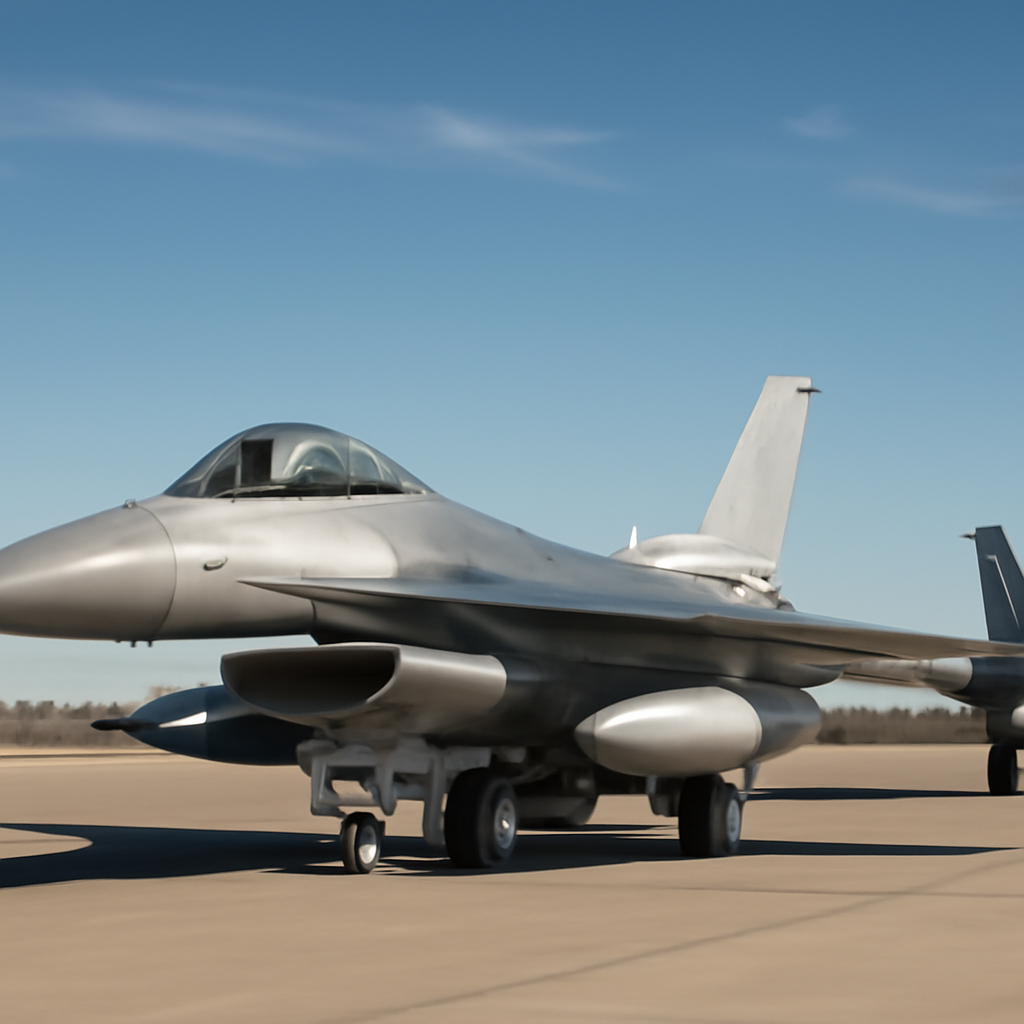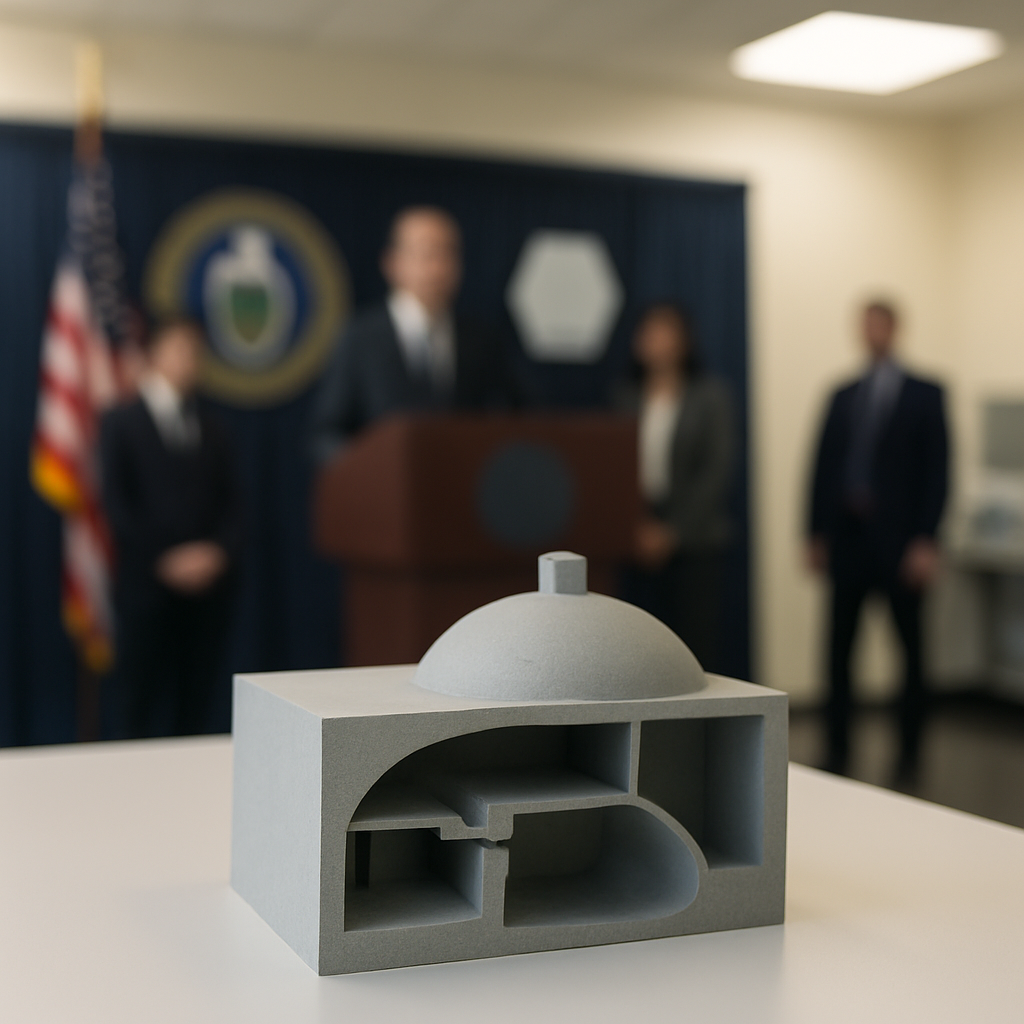
The Department of Energy is asking for $99.794 million in Fiscal Year 2027 to begin work on a new air‑delivered nuclear bunker‑busting weapon now identified in budget materials as the Nuclear Deterrent System‑Air‑delivered (NDS‑A).
Department of Energy's FY2027 $99.794 million request
The Fiscal Year 2027 budget request released last month adds a new line under Weapons Activities for Future Programs and lists $99.794 million to support the NDS‑A effort. A public summary of the Future Program funding says, in part, “The Increase represents the start of one new Phase 6.X program, currently known as Phase 1 Nuclear Deterrent System‑Air‑delivered (NDS‑A), as well as supporting production assessments for two new Rapid Capability Team (RCT) projects.” The request places the work squarely inside DOE’s weapons account and signals an initial investment to move the activity into the Department’s multi‑phase life‑cycle rubric.
NNSA’s public description and the Phase 6.X process
The National Nuclear Security Administration (NNSA) — the DOE component that develops, produces, and sustains nuclear warheads — has characterized NDS‑A as intended to “provide the President with additional nuclear options to defeat Hard and Deeply Buried Targets, ensuring that adversaries cannot place their most valued assets beyond the reach of America’s nuclear forces.” An NNSA spokesperson added that “the program is moving aggressively, and further information will become publicly available when it is strategically beneficial to the United States.”
Budget materials place the new start in the Phase 6.X series, the NNSA rubric that covers activities from concept definition through full‑scale production. The reference to “Phase 1” in the budget could indicate Phase 6.1 — the basic concept assessment stage — but the documents do not publicly disclose the program’s current phase status, its warhead architecture, or whether the design would be an unpowered gravity bomb or a powered, standoff weapon.

This site is the portfolio.
OSINTSights runs on Cloudflare Workers, D1, R2, and Vectorize, with an AI pipeline on Hetzner ARM. Nubivance designed, built, and operates it. We do the same for clients.
See what we buildB61‑11, the B61 family, and the B83‑1 as context
At present the only specialized U.S. air‑delivered deep‑penetrating nuclear weapon publicly known to be in the stockpile is the B61‑11 gravity bomb. The B61‑11 is based on the earlier B61‑7 but “is substantially different in form and function,” budget background material notes: it has a heavily reinforced outer shell, possibly a depleted‑uranium penetrating nose section, and a rocket booster at the rear intended to help drive the weapon down into underground facilities.
Sources differ on the B61‑11’s maximum yield — reports place it between about 340–360 kilotons or closer to 400 kilotons — and the yield remains officially classified. There are reportedly fewer than 100 B61‑11s in the stockpile.
Other B61 variants have featured in past planning: the precision‑guided B61‑12 (highest reported yield ~50 kilotons) was at one point considered as a potential successor but the plan to supplant the B61‑11 with the B61‑12 was abandoned. A B61‑13 variant with a higher yield comparable to the B61‑7 has been developed “to provide the President with additional options against certain harder and large‑area military targets,” though the government has said the B61‑13 is not intended as a direct B61‑11 replacement. Separately, the megaton‑class B83‑1 remains in the stockpile and is identified as intended for certain deeply buried and hardened targets owing to its large yield.
Air Force prototyping and prior budget lines (FY2025–FY2026)
An update to the budget reporting notes that Air Force budget submissions in recent years have already funded early NDS‑A work under different line items. The FY2025 Air Force budget requested — and received — just over $39 million for work on NDS‑A under a line titled “Hard and Deeply Buried Target Defeat System (HDBTDS) Prototyping.” Those FY2025 documents state: “The Air‑delivered Nuclear Delivery System (NDS‑A) is a new start project to address a capability gap identified in the 2022 Nuclear Posture Review (NPR).”
The FY2025 Air Force documents spell out planned early activities: modeling and simulation (M&S) analysis of several nuclear explosive package (NEP) options; ground tests such as wind tunnel, static ejection, vibration and thermal, cable pull‑down, and sled tests; and flight tests performed by USAF F‑15E developmental flight test aircraft with final prototype demonstrations flown on B‑2 aircraft. In the Air Force’s proposed FY2026 budget the line was renamed “Nuclear Delivery Systems Prototyping” while references to NDS‑A by name were omitted; the requested funding rose by nearly $18 million year‑over‑year, to almost $57 million, to emphasize prototype design, component procurement, subsystem and test assembly, and initiation of ground tests.
President, the U.S. military, and Congress: practical tensions
- For the President: NNSA frames NDS‑A as providing the executive with “additional nuclear options to defeat Hard and Deeply Buried Targets,” a capability that, according to the budget text, addresses a gap cited in the 2022 Nuclear Posture Review.
- For the U.S. military: operational considerations already noted in budget documents include a host of modeling, ground and flight tests, and likely integration work with Air Force platforms — flight testing has been slated for both F‑15E developmental aircraft and B‑2s in the prototype phase.
- For Congress: there is historical precedent for pushback — the Robust Nuclear Earth Penetrator effort in 2005 was halted after congressional concern — and affordability is a named constraint given the “hundreds of billions” in planned modernization across the nuclear triad referenced in the reporting.
The record in the budget papers is explicit in one respect and opaque in others: DOE and Air Force documents identify a new program, funded at multiple stages, intended to close a capability gap against hard and deeply buried targets, but they do not disclose the weapon’s architecture, yields, or the platforms that would carry it in operational service. The program’s next concrete public steps will be budgetary and programmatic: fiscal requests moving from concept (Phase 6.1) toward prototyping and the testing sequence the Air Force has already mapped in its earlier submissions. Whether the NDS‑A will be a modified gravity bomb, a rocket‑assisted penetrator, or a powered standoff system — and how Congress will weigh cost, deterrent posture, and potential diplomatic consequences — remain the central, open questions arising from the DOE’s FY2027 request.
Source: The War Zone — New Nuclear Bunker Buster Bomb Plans Revealed (Updated)