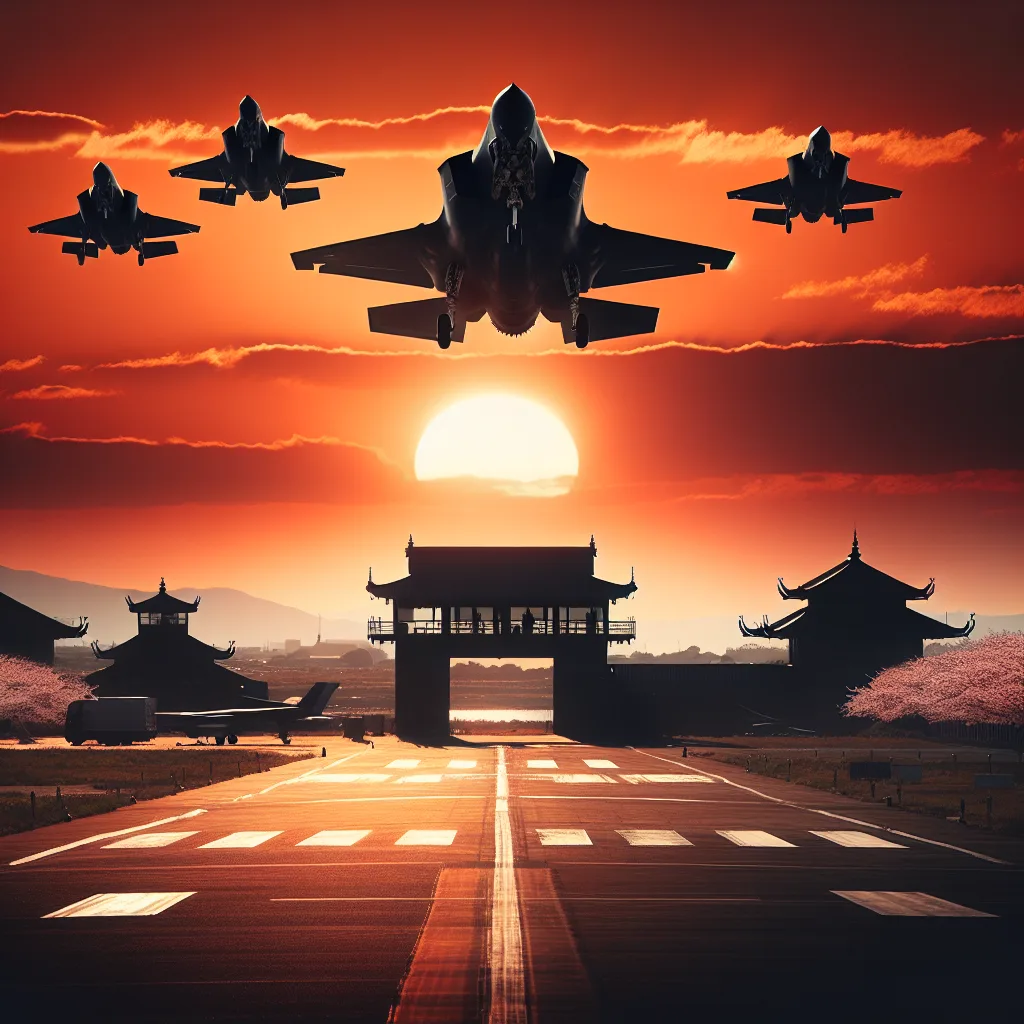
American F-35B Squadron Joins the Strategic Chessboard in the Indo-Pacific
When the U.S. Marine Corps redeployed its Marine Fighter Attack Squadron (VMFA) 211 with the advanced F-35B Lightning II stealth fighter to Marine Corps Air Station Iwakuni, Japan, on May 10, 2025, strategic interests in the Indo-Pacific underwent another significant recalibration. This deployment, part of the longstanding Unit Deployment Program (UDP), underscores the careful realignment of U.S. military assets to maintain balance in a region characterized by evolving geopolitical dynamics.
Historically, the UDP has been instrumental in bolstering American military readiness abroad, by routinely dispersing combat-ready units to forward operating locations. The longstanding presence in Japan, which has served as a critical nexus for U.S. forces since World War II, continues to prove its significance. Recent initiatives reflect an operational adaptation to emerging threats and the acceleration of technological advancements in aerial combat. The F-35B, with its unique short take-off and vertical landing capabilities combined with stealth technology, represents a leap in power projection—particularly relevant in theater environments where rapid deployment and agile response remain paramount.
In Iwakuni, the deployment of VMFA-211 is designed to strengthen the U.S. military’s rapid reaction capability. The precision, advanced sensor suite, and networked communication systems of the F-35B present a robust deterrence posture in a region increasingly marked by military modernization among potential adversaries. Official statements from Marine Corps leadership confirm that this move is a methodical step in a broader strategic recalibration aimed at ensuring interoperability with allies and maintaining a credible presence across the Indo-Pacific.
Understanding the strategic underpinnings is essential. Over recent years, the Indo-Pacific region has witnessed significant military investments by regional powers. U.S. defense analysts note that the deployment corresponds with renewed emphasis on multi-domain operations and joint force integration. From a military operations perspective, the F-35B’s capabilities provide not only air superiority but also critical battlefield information, which, in concert with ground and naval assets, enhances the overall mission effectiveness within complex regional theaters.
The implications extend beyond military calculus. For Japan, a key partner and host nation, this deployment is a reinforcement of their security architecture in an era of shifting maritime dynamics. The F-35B’s presence resonates with Japan’s own modernization efforts and its commitment to regional stability. It seamlessly integrates into a broader framework of collaborative defenses, aligning with meetings and strategic dialogues between the United States and Japan. While government officials in Tokyo have refrained from extensive commentary, defense observers see strong alignment in security strategies that honor longstanding alliances.
Several defense experts, including retired Admiral Samuel J. Locklear and defense policy analyst Michael O’Hanlon from the Brookings Institution, have pointed out that such deployments are less about provocation and more about adaptation. The deployment of stealth fighters to forward positions in the Indo-Pacific acts as both a deterrent and a test bed for integrating new battle management systems. These experts underscore that the evolving technological landscape, coupled with the complexities of modern warfare, necessitates a robust presence that combines rapid deployment capabilities with cutting-edge aerial warfare technology.
The strategic calculus extends into other interrelated domains. Economists and international relations scholars have observed that such deployments also signal a commitment to maintaining the rules-based international order amid rising challenges from non-traditional actors. In balancing regional power dynamics, the U.S. is reconciling the need for military readiness with the importance of diplomatic engagement—a delicate equilibrium that is continuously tested by unpredictable global events.
Looking ahead, the focus remains on closely monitoring the operational integration of VMFA-211 while watching for potential shifts in regional security postures. U.S. defense planners and policymakers have underscored that this deployment is part of a progressive sequence rather than an isolated event. The continued evolution of advanced military technology, the enhancement of interoperable defenses, and the broadening of international security partnerships are all indicated outcomes of this recalibration.
In an era marked by rapid technological shifts and complex international relationships, the deployment of the F-35B squadron to Japan is more than a routine military maneuver—it is a strategic repositioning that seeks to assure allies, deter potential aggressors, and uphold regional stability. As policy directors and military strategists assess both immediate operational benefits and long-term security implications, one is reminded that in the chessboard of international relations, each move is both deliberate and consequential. What remains to be seen is how these calibrated deployments shape the evolving narrative of Indo-Pacific security amid an increasingly interconnected global order.



