“We can say that we have the export licence for the engine,” Turkish Aerospace chief executive Mehmet Demiroğlu told reporters at the Farnborough International Airshow, announcing a break in a long-running technical and political logjam over powerplants for Türkiye’s KAAN fifth-generation fighter.
Mehmet Demiroğlu and Turkish Aerospace move to secure engines
Demiroğlu’s confirmation followed the end of a mandatory 15‑day congressional review period in which a joint resolution seeking to block the sale failed to advance. With the export licence now in hand, Turkish Aerospace says it is working with GE Aerospace to secure the F110 powerplants and move the KAAN programme into an intensive phase of flight testing and early production support.
Congressional clearance and the sanctions background
The export licence clearance came only after the joint resolution did not advance during the statutory review window, effectively allowing the proposed transfer to proceed. The licence had been suspended under the Countering America’s Adversaries Through Sanctions Act (CAATSA), a suspension triggered in 2019 by Türkiye’s purchase of the Russian S‑400 air defence system — the same decision that removed Ankara from the Lockheed Martin F‑35 programme. Congress has framed the F110 approval in that context, treating the clearance as a limited opening rather than a full reset of defence ties.

The cyber insurance questionnaire just landed. Now what?
SOC 2, HIPAA, insurance renewals - someone has to own security strategy. Nubivance provides fractional CISO leadership without the full-time salary.
Get a security leadThe F110‑GE‑129E/F package: numbers, cost, capability
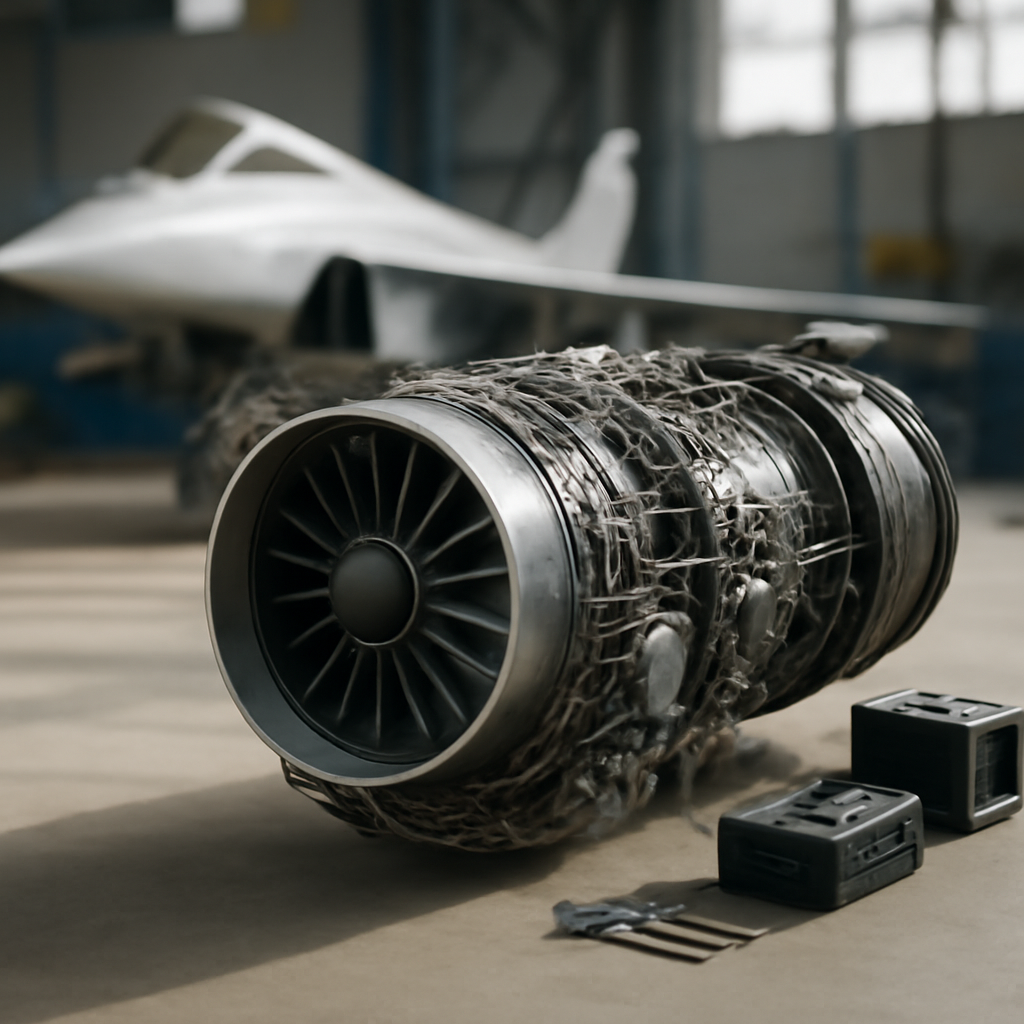
The engine identified for KAAN is the F110‑GE‑129E/F, a low‑bypass afterburning turbofan in the roughly 29,000‑pound thrust class already used on late‑model F‑16 and F‑15 fighters. Türkiye had sought about 80 engines in total to support flight testing and initial low‑rate production, and had already taken delivery of ten F110s before export restrictions took hold. The proposed package has been reported at roughly $700 million. The ten engines already in hand are sufficient to sustain the two flying KAAN prototypes, and Turkish Aerospace has said it intends to return those prototypes to flight before the end of 2026.
KAAN programme timeline and the engine roadmap
KAAN, developed by Turkish Aerospace under the Presidency of Defence Industries, made its first flight in February 2024 and is intended to enter Turkish service toward the end of the decade. The programme’s initial production tranches, designated Block 10 and Block 20, will fly with the F110 engine. Later tranches — Block 30 and Block 40 — are planned to transition onto a domestically developed engine from around 2032, shifting the type off US‑controlled propulsion.
TEI’s TF35000, export ambitions, and Indonesia’s order
TUSAŞ Engine Industries (TEI) already assembles F110s under licence in Türkiye for the Turkish Air Force’s large F‑16 fleet, but that assembly does not remove the F110 from US export controls. Türkiye’s long‑term export plans therefore hinge on the TF35000, an indigenous afterburning turbofan targeting roughly 35,000 pounds of thrust that reached critical design review in early 2026, with first tests slated for 2026. A domestically produced engine would lift the US licensing constraint and was the condition attached by Indonesia to its purchase: Jakarta’s order for 48 KAANs — the type’s first export deal and reported at around $10 billion — required freedom from US export restrictions. Pakistan and Azerbaijan (the latter already a programme partner) are among the next potential customers Ankara is courting as it seeks to turn KAAN into an exportable platform.
What this means for Ankara, GE Aerospace, and Indonesia
- Ankara: The cleared licence removes a final major obstacle to sustained KAAN flight testing and early production. With the ten engines already delivered and the licence in place for the remainder, Turkish Aerospace can press to return prototypes to the air before the end of 2026 and advance Block 10/20 production while planning the TF35000 transition for the early 2030s.
- GE Aerospace and the U.S. administration: The move shifts the interaction from political clearance to detailed technical and commercial discussions — delivery schedules, integration and certification — but within a narrowly framed political context owing to CAATSA and past controversy over the S‑400 purchase.
- Indonesia: Jakarta’s 48‑jet purchase — conditioned on removing US export controls — turns the TF35000’s schedule into a commercial linchpin. Indonesia’s order, reported at about $10 billion, is the first export contract Ankara must fulfil; that places a premium on both F110 deliveries for near‑term needs and on meeting the domestic engine’s development timeline.
The congressional clearance does not erase the political and technical complexities around KAAN, but it does change the programme’s immediate priorities. With an export licence in hand, Turkish Aerospace must now translate permission into engines in the hangar, integration work on the prototypes, and certified propulsion for initial production tranches — even as the longer ambition of a Turkish‑built TF35000 remains the decisive factor for KAAN’s wider export future.