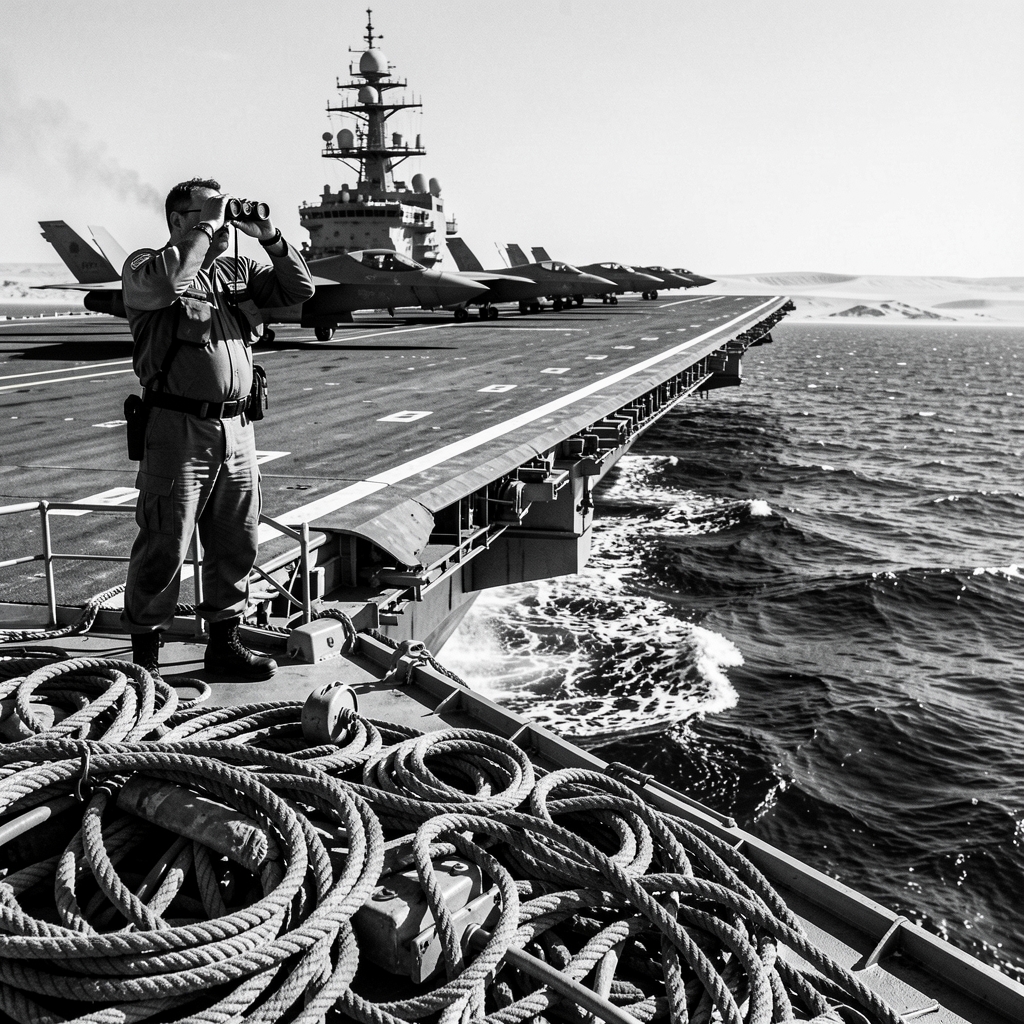
What does it mean when the sea fills with carrier power? The War Zone reported on April 20, 2026, that a second American carrier strike group has entered the U.S. Central Command area of responsibility and that a third is en route. That simple update raises immediate operational questions and longer-term strategic considerations.
What The War Zone reported
On April 20, 2026, The War Zone published a brief update noting two concrete movements: a second American carrier strike group has entered the U.S. Central Command (CENTCOM) area of responsibility, and a third carrier strike group is on its way. The report presented those movements as the current status of carrier deployments in the region.
Immediate implications
The presence of multiple carrier strike groups in a single geographic area of responsibility concentrates a set of maritime capabilities in close proximity. While The War Zone did not elaborate beyond the movements themselves, grouping carriers typically affects operational tempo, force availability, and the range of maritime and air options commanders can draw upon. The addition of a second carrier strike group, with a third following, indicates a notable increase in carrier-level naval presence in CENTCOM's AOR as of the date of the report.

This site is the portfolio.
OSINTSights runs on Cloudflare Workers, D1, R2, and Vectorize, with an AI pipeline on Hetzner ARM. Nubivance designed, built, and operates it. We do the same for clients.
See what we buildHow different actors might view the movement
- Policymakers: From a policy perspective, the reported redeployment could be seen as a tool to signal resolve or to expand options for crisis response. Lawmakers and civilian leaders often weigh such deployments against broader strategic aims and resources.
- Military planners and operators: For planners, multiple carrier strike groups in one AOR change logistics, air operations, tasking priorities, and coordination demands. The War Zone’s update indicates an operational picture that commanders would need to integrate into planning and sustainment cycles.
- Technologists and analysts: Those focused on sustainment, sensors, and communications would note that increased carrier presence places additional demand on networks, maintenance chains, and supporting infrastructure—even though The War Zone’s report did not detail those elements.
- Adversaries and regional actors: Observers, competitors, and regional states monitor carrier movements for signals and to reassess risk calculations. The report’s simple geographic fact—second carrier strike group in CENTCOM’s AOR, third en route—provides a datapoint that other actors can interpret in light of their own objectives.
Why it matters
Movements of carrier strike groups are visible, resource-intensive, and strategically resonant. The War Zone’s April 20 note is short on commentary but long on implication: the buildup it records changes the operational landscape by concentrating high-end naval aviation and strike capabilities within a single theater. Even without further detail, that concentration matters to decision-makers, operators, and regional observers because it affects choices about deterrence, crisis response, and maritime posture.
How those choices will be made, and what consequences they will have, depend on decisions that extend beyond the movement itself. The War Zone provided the fact; interpreting its meaning is now up to policymakers, commanders, and regional actors.
Read the original report on The War Zone: https://www.twz.com/sea/carrier-tracker-as-of-april-20-2026