“Australia’s National Defence Strategy warns that a ‘strategic risk window’ is already open.” That sentence from the source captures what is at stake: a narrowing interval before AUKUS nuclear submarines arrive in the 2030s, during which China’s rapid military expansion and shifting US expectations of allies combine to strain Australia’s security assumptions.
AUKUS timing, industrial limits and fiscal pressure
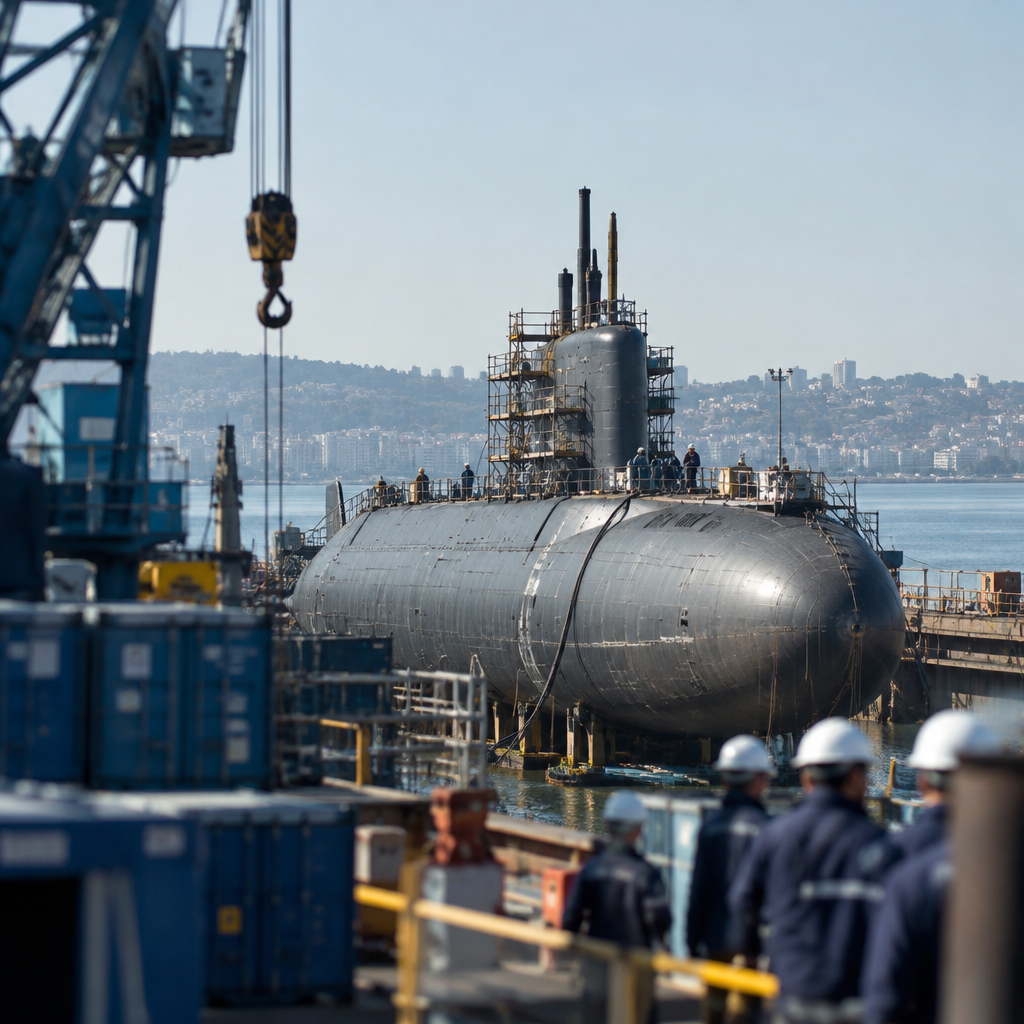
The alliance’s long-term submarine plan is undercut by a set of near-term constraints the source spells out plainly. US shipyards face capacity constraints that threaten Virginia‑class delivery schedules. Australia is coping with defence workforce shortages and friction caused by inertia in US export controls. Continuous US fiscal pressures are forcing trade‑offs between funding surface fleet remediation and financing costly submarine acquisitions. While Washington has eased some export controls for approved Australian companies, checking supplier compliance with those rules remains a point of friction.
Operational foundations — solid ties, fragile industry
Operationally, the partnership already shows concrete links: US Marines rotate through Darwin, and joint naval maintenance at Perth’s HMAS Stirling lays groundwork for Submarine Rotational Force‑West. Yet beneath these operational ties the industrial foundation for AUKUS Pillar One is fragile. The source warns that Canberra “cannot afford to wait” for long‑lead platforms and should prioritise capabilities deployable today, even as the first AUKUS nuclear boats are years away.

Audit-ready is a season. It shouldn't be.
Evidence in spreadsheets, controls drifting between audits, frameworks multiplying on flat headcount. Nubivance runs continuous compliance on Rapid7 Cyber GRC - SOC 2, HIPAA, ISO 27001, PCI, CMMC.
End the scrambleSix upgrades to make ANZUS a deterrence network
The article proposes six immediate, interlocking upgrades to transform ANZUS from a passive safety net into a deterrence network built around quickly deployable hardware and regional partners:
- Move from importing to making munitions. The Guided Weapons and Explosive Ordnance Enterprise should advance beyond assembly to domestic production of solid rocket motors and hypersonic components, building stocks and a second‑line supply chain for the Indo‑Pacific.
- Harden northern bases and decentralise logistics. Vulnerable airbases such as Tindal and Darwin should be made attack‑resistant, and dual‑use civilian infrastructure bolstered so it can absorb strikes. The US Oversight and Support Group should be empowered to store fuel, medical assets and ammunition across a decentralised, resilient grid.
- Strengthen conventional–nuclear integration. Establish a regular Australia–US dialogue, modelled on US dialogues with Japan and South Korea, to address how Washington extends strategic protection to Australia and to coordinate nuclear and non‑nuclear planning so a crisis is less likely to escalate.
- Anchor a broader coalition in Australia’s neighbourhood. Build on Anzac 2035 by bringing New Zealand into sub‑surface maritime surveillance and expand maritime capacity‑building with willing Southeast Asian partners, beginning with the Philippines, to formalise an interconnected regional security grid.
- Make AUKUS Pillar Two deliver practical, near‑term capabilities. Prioritise advanced undersea warfare, autonomous systems and AI. Avoid overly broad tech lists; expand participation only when an outside partner makes a concrete project contribution (for example, Japan on undersea work or New Zealand on niche software). For now, strengthen cooperation among AUKUS partners before broader regional expansion.
- Cultivate long‑term human pipelines. Create dedicated pipelines for defence, diplomatic and tech experts through expanded bilateral fellowships, joint planning exchanges and multilateral postings to sustain the evolving network.
What this means for Australian defence planners, the US military, New Zealand and the Philippines
- Australian defence planners: Face urgent choices between investing in long‑lead submarine programs and funding more immediate hardening, munitions production and logistics decentralisation to operate inside the “strategic risk window.”
- The US military and policymakers: Must manage shipyard capacity and export‑control frictions while using the US Oversight and Support Group to enable resilient basing and logistics in Australia.
- New Zealand: Has an avenue to re‑engage practically by joining sub‑surface maritime surveillance, providing non‑nuclear burden‑sharing that resurrects trilateral cooperation.
- The Philippines: Is identified as the logical starting point for expanded maritime capacity‑building to weave a regional security grid.
Conclusion — sovereignty, politics and a test of execution
Critics will say deeper integration erodes Australian sovereignty; the article rejects that, arguing strategic isolation invites coercion while a capable regional network increases independence. The test ahead is execution: turning the first AUKUS Pillar Two signature project — the Shangri‑La Dialogue revealed it focuses on uncrewed submarines — into a near‑term capability, and delivering the six upgrades fast enough to matter inside the strategic risk window. Equally important will be managing domestic politics, including public debate over nuclear stewardship, to sustain long‑term backing as the alliance reshapes itself.