“The battlefield is changing. The Homeland is no longer a sanctuary, and peer adversaries can disrupt our ability to generate and project combat power before our formations close with the enemy,” Gen. Christopher LaNeve declared in the foreword to the Army’s How the Army Fights and again at the Dwight D. Eisenhower Luncheon during AUSA 2026.
LaNeve’s strategic pivot: speed, precision, and scale
LaNeve used AUSA 2026 to frame a strategic pivot: the Army must deliver technologies that increase speed, precision, and lethality—and it must do so at scale. In his remarks he said that “[t]he speed, the precision, and lethality Soldiers require to execute these missions demand cutting-edge technology, and [acting Army Secretary Adam] Telle and I intend to give it to them at scale.” The statement situates the Army’s modernization program as a deliberate effort to field systems rapidly across formations rather than in isolated experiments.
AI, autonomy, long-range fires, and contested communications as defining features
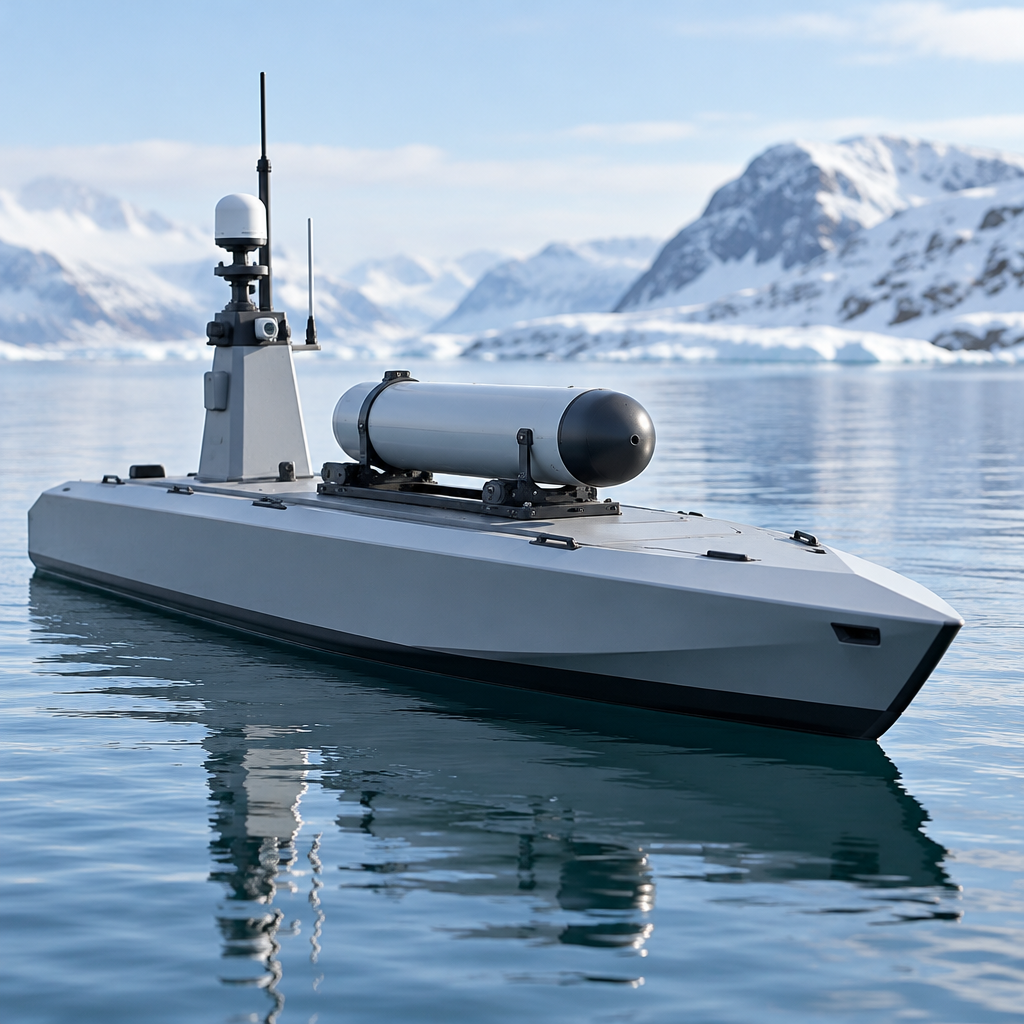
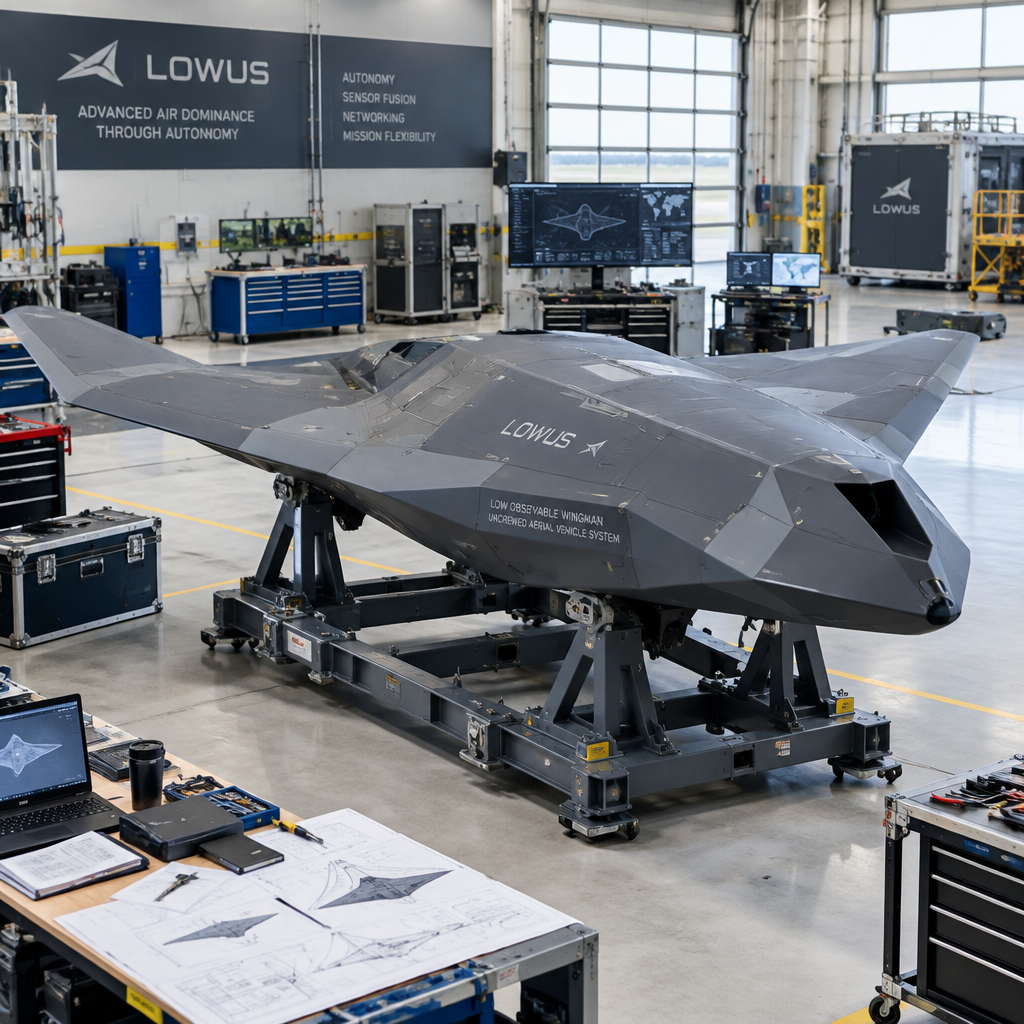
Industry and service leaders at the conference described the coming battlefield in specific operational terms. Fernando Pereira of Astraeus Operations said the Army is shifting “toward large-scale combat operations and in preparation for a battlefield shaped by AI, autonomy, long-range fires, and contested communications.” That combination, participants agreed, will require new architectures for sensing, decision-making, and command-and-control.

This site is the portfolio.
OSINTSights runs on Cloudflare Workers, D1, R2, and Vectorize, with an AI pipeline on Hetzner ARM. Nubivance designed, built, and operates it. We do the same for clients.
See what we buildResilient enterprise services and modern command-and-control — Christopher “Brian” Andrews
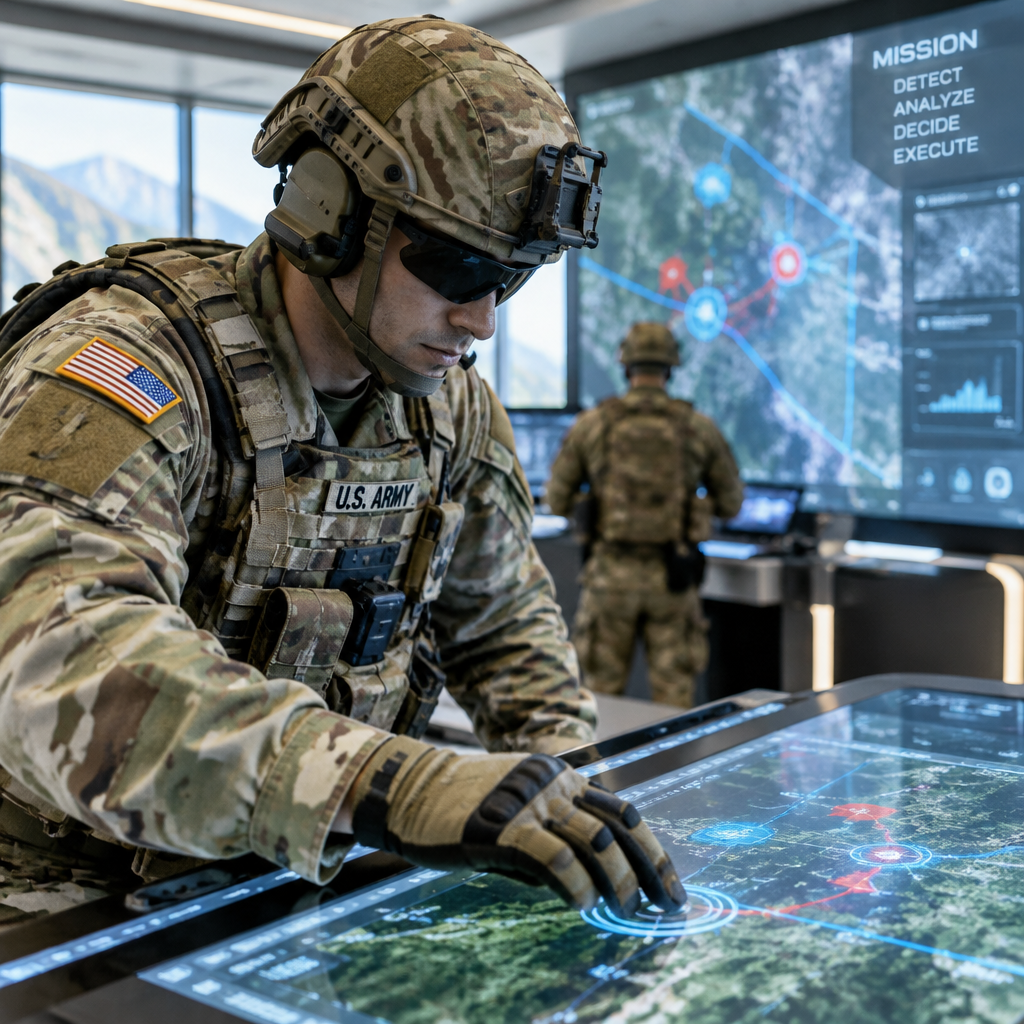
Christopher “Brian” Andrews of Chenega IT Enterprise Services framed a practical technology requirement: the Army must deliver “resilient enterprise services, secure data environments, and modern command-and-control capabilities that enable information dominance.” According to Andrews, those investments are not an abstract aim but an operational necessity—tools to help leaders “make faster, better informed decisions in contested environments, while preserving the critical human elements of warfighting.”
Training, workforce, and the human element — Randy Centanni and Fernando Pereira
Both industry voices at AUSA emphasized that technology alone will not secure operational advantage. Randy Centanni, Vice President for Business Development at Venturi, LLC and Chenega Analytic Business Solutions, said the Army’s evolution “requires Soldiers to be adaptable, technologically proficient, and empowered to make informed decisions in complex operational environments.” Centanni added that “without the understanding and experience needed to effectively integrate these capabilities in operational environments it is not enough that the warfighter is knowledgeable about the technology, they must also understand the processes required to optimize mission effectiveness across multi-domain operations.”
Echoing that point, Pereira stressed that technology supports but does not replace human judgment: “there is no algorithm today that can replicate the moral courage required of a Soldier in combat,” he said, and added that technology “helps Soldiers process information faster, improve situational awareness, and make more informed decisions under pressure.”
What this means for Soldiers, industry partners, and procurement planners
- Soldiers: Expect more emphasis on technological proficiency and training to operate in contested, multi-domain environments where AI, autonomy, and degraded communications are expected conditions.
- Industry partners (Venturi, Astraeus, Chenega, and others): Will be judged on the ability to deliver resilient enterprise services, secure data environments, and scalable command-and-control solutions that can be fielded rapidly to formations in the FY27 and FY28 planning cycle.
- Procurement and budget planners: Face the immediate task of aligning FY27 spending and FY28 requests with the Army’s stated priorities—scalable technologies, workforce development, and systems that preserve human decision authority while accelerating information processing.
AUSA 2026 returned focus to fundamentals: large-scale combat demands integrated technical and human solutions, and the Army is signaling its intent to invest both in platforms and in the people who operate them. Christopher “Brian” Andrews closed the message from a vendor perspective by underscoring commitment and accountability: “At Chenega MIOS we recognize the tremendous responsibility that comes with supporting the U.S. Army... Our success is measured by the value we deliver to the warfighter and our ability to help the Army accomplish its mission.”
The immediate budgetary horizon makes the next year consequential: as the Army moves to execute its FY27 budget and prepare FY28 requests, the practical test will be whether investments in AI, autonomy, long-range fires, contested-communications resilience, and workforce training are delivered at scale to the formations LaNeve described.