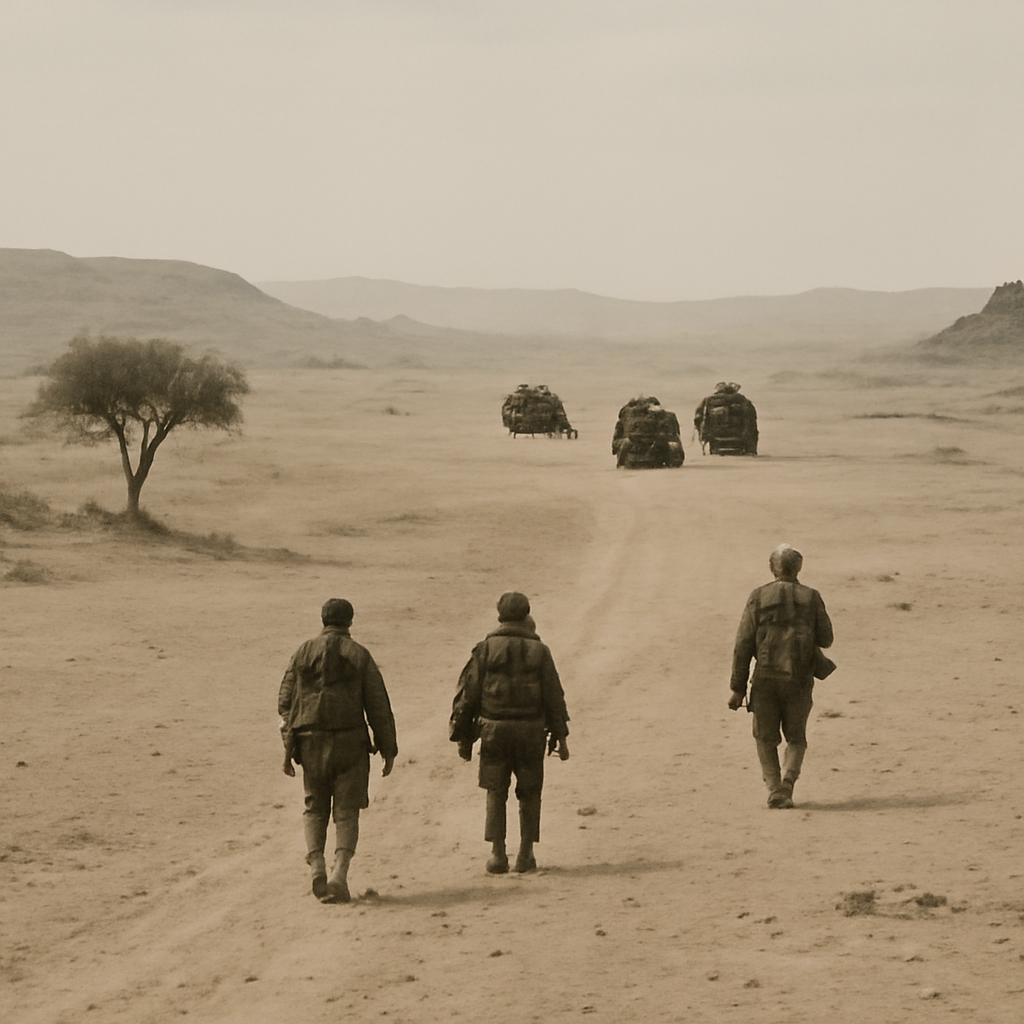
What does it mean when a new category of Army aircraft inherits a name that carries two very different legacies — a Native American tribe whose members "have served in every major U.S. war," and a cancelled helicopter project? The Army’s choice to call its first tiltrotor "Cheyenne II" forces that question onto the runway.
Background: a name with two pedigrees
The Army has named its first tiltrotor aircraft Cheyenne II. The designation explicitly ties the new platform to two prior referents: a tribe whose members have served in every major U.S. war, and a cancelled helicopter project that previously carried the Cheyenne name. Those two strands — a human legacy of service and a material legacy of an abandoned program — now converge in a single label.
What the name evokes
- The tribal namesake invokes long-standing service and sacrifice. The source notes that members of the tribe have participated in every major U.S. war.
- The cancelled helicopter project links the new tiltrotor to a past program that did not reach fruition. By reviving the Cheyenne name, the Army creates an explicit line to that unfinished effort.
- Putting both referents together in Cheyenne II layers cultural and programmatic meanings: heritage and continuity on one hand, and the memory of a terminated program on the other.

Audit-ready is a season. It shouldn't be.
Evidence in spreadsheets, controls drifting between audits, frameworks multiplying on flat headcount. Nubivance runs continuous compliance on Rapid7 Cyber GRC - SOC 2, HIPAA, ISO 27001, PCI, CMMC.
End the scrambleWhy the choice matters to different audiences
- For servicemembers and communities, the tribal connection is a symbolic honor that highlights a record of service. The naming may be received as recognition of a long history of military participation.
- For program managers and defense planners, reviving a cancelled program’s name can signal intent: to learn from, revise, or reclaim past efforts. It also poses reputational hazards if stakeholders remember the earlier program’s cancellation.
- For technologists and industry observers, the label creates expectations about continuity or lessons learned, even though the source does not disclose technical details about the new tiltrotor.
- For critics and historians, the juxtaposition of a tribal namesake and a failed program raises questions about how institutions reuse names and histories — and whose stories are centered when they do.
Analysis: symbolism, risk, and narrative control
Naming is not a neutral act. By choosing Cheyenne II, the Army has bundled cultural recognition with programmatic memory. That bundling can strengthen a narrative of perseverance — honoring a people while asserting a new chapter in aviation — but it also risks reopening debates about previous program shortcomings. Without additional context from official statements or technical descriptions in the source, observers are left to interpret the choice through the lenses of symbolism, institutional memory, and public perception.
The decision invites scrutiny of both intentions and consequences: whether the name will be welcomed as tribute, criticized as appropriation or insensitive reuse, or read as a deliberate effort to overcome a past cancellation. Each reading carries implications for morale, public relations, and program legitimacy.
How the Army manages subsequent communications around Cheyenne II — clarifying the rationale for the name, engaging the communities involved, and explaining lessons taken from the cancelled project — will shape whether the name becomes an emblem of renewed purpose or a reminder of unfinished business.
Will Cheyenne II prove to be a bridge between history and innovation, or a reminder that names alone cannot resolve the complexities of programmatic failure and cultural recognition?