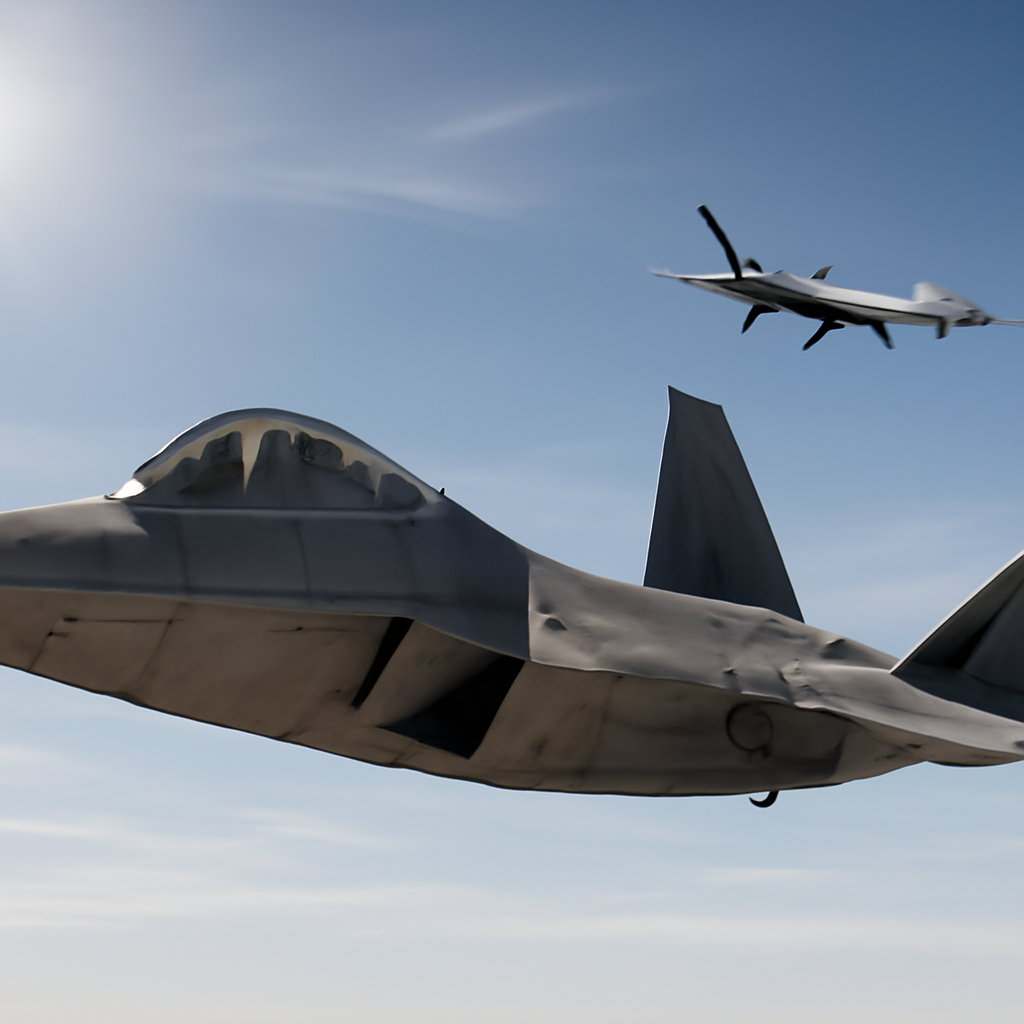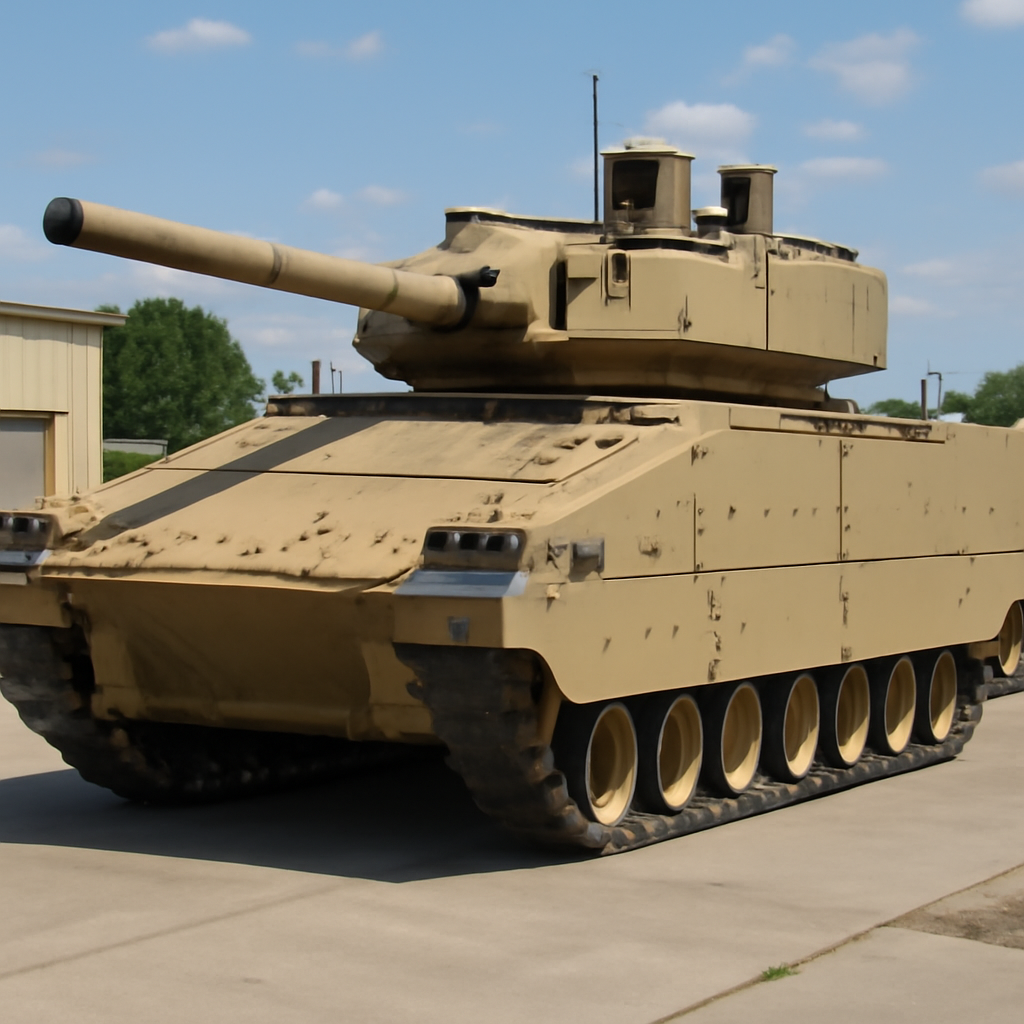
"Delivering our first prototype to the Army is an important step as the XM30 Combat Vehicle program enters a more visible phase," Matt Warnick, CEO of American Rheinmetall, said.
American Rheinmetall’s Lynx-based XM30: first example delivered, eight prototypes promised
American Rheinmetall’s U.S. subsidiary announced delivery of its first Lynx-family XM30 prototype to the U.S. Army and said it will eventually supply eight prototypes for testing. The Lynx-based entry features hybrid-electric propulsion, a remotely operated turret with a two-person crew, and room for up to six passengers in the hull. Rheinmetall’s design is reported to be able to fire versions of Raytheon’s Coyote Block 3 loitering munition and its launchers are also known to be capable of firing anti-tank guided missiles such as TOW and Javelin.
General Dynamics Land Systems’ Wolf: on site at Aberdeen, Switchblade 300 integration
General Dynamics Land Systems (GDLS) confirmed delivery of its first Wolf prototype to Aberdeen Proving Ground, with a company statement saying the vehicle arrived on August 21. GDLS describes the Wolf as derived from the Griffin III/ASCOD 2 family and, like the Lynx entry, uses hybrid-electric propulsion and a remotely operated turret with a two-person crew plus passengers. GDLS has integrated AeroVironment’s Switchblade 300 loitering munition onto its design.

This site is the portfolio.
OSINTSights runs on Cloudflare Workers, D1, R2, and Vectorize, with an AI pipeline on Hetzner ARM. Nubivance designed, built, and operates it. We do the same for clients.
See what we buildFirepower, networking and crewed–uncrewed teaming as program priorities
Both XM30 contenders mount the XM913 50mm automatic cannon as their main armament — a larger-caliber system compared with the Bradley’s 25mm M242. The Army expects the XM30 to provide significant boosts in lethality and to offer next‑generation fire control, sensor, and networking capabilities. Budget documents describe the XM30 as a “software-defined platform” that will use digital engineering and a modular open systems architecture (MOSA) to enable interoperability, adaptability, and the ability to control robotic systems and semi-autonomous platforms. The service has already used Bradleys to prove out crewed-uncrewed teaming concepts.
Testing plan: National Training Center rotation with M1E3 prototypes
The Army plans to put XM30 prototypes through a regularly scheduled rotation at the National Training Center (NTC) at Fort Irwin, California, in the spring. Soldiers from the 1st Brigade Combat Team, 1st Cavalry Division (1/1st Cavalry) will operate the vehicles; that brigade is also expected to bring early prototypes of the next‑generation M1E3 Abrams tank to the NTC. Army officials have previously discussed aiming to field a winning XM30 design by Fiscal Year 2029, but a final selection remains uncertain.
How 1/1st Cavalry, the Army acquisition office, and vehicle makers will respond
- 1/1st Cavalry: will operate the prototypes at NTC next spring and assess operational performance alongside M1E3 examples, directly testing crewed-uncrewed teaming and networked capabilities in a brigade context.
- Army acquisition leadership: Brig. Gen. Troy Denomy, Program Acquisition Executive of Maneuver, has said the Army plans “to carry two vendors as long as we possibly can,” but that budget constraints make dual-sourcing a resource question; he added that if there is not a clear winner after the NTC rotation, the Army “may be worth not selecting at that point.”
- Vendors (Rheinmetall and GDLS): will continue prototype deliveries and refinement — Rheinmetall has committed to eight prototypes, and GDLS has delivered its first Wolf and indicated soldiers can begin testing; GDLS has not explicitly confirmed a total prototype count at the time of reporting.
The program now sits at a critical demonstration phase: two contenders with hybrid-electric drive, remotely operated turrets, the XM913 50mm cannon, and integrated loitering munitions are in Army hands and headed to a live, brigade-level test environment. Army budget documents show a planned buy of at least 108 XM30s through Fiscal Year 2031, while the service today fields roughly 2,500 Bradleys across multiple variants. Program history and contemporary debate add pressure — previous replacement efforts including the Optionally Manned Fighting Vehicle (OMFV) effort preceded the MICV program, and the Army cancelled the M10 Booker light tank program in 2025. Reporting also notes a broader debate over the utility of heavy armored vehicles amid growing threats such as more capable anti-tank guided missiles and kamikaze drones, and recent reporting has suggested tanks are being increasingly sidelined due to drone attacks.
Administrative turbulence touches the effort as well: reports say Army Secretary Dan Driscoll resigned amid friction with Secretary Pete Hegseth, including over modernization efforts. Meanwhile, the immediate next public test—NTC in the spring—will be the first direct comparison of both XM30 contenders alongside M1E3 prototypes and will shape whether the Army narrows vendors or extends the competitive phase.
Source: TWZ — Competing Bradley Fighting Vehicle Replacement Prototypes Delivered To The U.S. Army (Updated)