“We are following very closely what the Army is doing with ITEP. We are hoping that we will get it,” Lt. Col. Aron Hauquitz said, summarizing the dependency that now ties future Night Stalker Black Hawk upgrades to the fate of the Improved Turbine Engine Program (ITEP).
How the T901 engine became central to MH-60M plans
The Army selected General Electric’s T901 as the winner of ITEP in 2019; the engine remains in development and began flight testing on a modified Black Hawk in May 2025. Lockheed Martin and program officials have framed the engine as a leap in capability for H-60 family aircraft, promising “50 percent more shaft‑power while delivering significantly higher fuel efficiency,” according to Lockheed Martin. That performance increase is being pitched as enabling additional payload or fuel carriage and better high‑altitude, high‑temperature performance.
Program health, funding, and certification status
ITEP has been through delays tied to manufacturing and supply-chain issues and has faced potential cancellation. The Army requested no additional funding for ITEP in its 2026 Fiscal Year budget proposal; Congress then appropriated $238 million for continued work in the current fiscal cycle. In the Army’s 2027 Fiscal Year budget request, the service again did not ask for new money for ITEP, raising renewed questions about the program’s future.
Senior Army acquisition officials have offered guarded optimism. At the Army Aviation Association of America’s 2026 Warfighting Summit, Army Maj. Gen. Clair Gill said he was “very excited about where they’re going there” with ITEP and called the engine “almost nearing completion of certification.” Army Brig. Gen. David Phillips described ITEP as “performing as intended,” and said that the resourcing Congress added in 2025 and 2026 “is being used to deliberately continue that testing.” From industry, GE’s Executive Program Manager for the T901, Mike Sousa, told reporters there is “a little bit of money that is still required” to complete the engineering, manufacturing and development (EMD) phase.

Audit-ready is a season. It shouldn't be.
Evidence in spreadsheets, controls drifting between audits, frameworks multiplying on flat headcount. Nubivance runs continuous compliance on Rapid7 Cyber GRC - SOC 2, HIPAA, ISO 27001, PCI, CMMC.
End the scrambleSOCOM’s Block 1.2 / Block 2 upgrade decision hinges on ITEP
SOCOM officials say their planned next tranche of MH-60M upgrades — described as either a Block 1.2 or a Block 2 program — is scheduled to start in Fiscal Year 2030 and will “hinge on what’s going on with the Improved Turbine Engine, the T901 program that the Army’s running,” Lt. Col. Cameron Keogh said. SOCOM’s Program Manager for the MH-60 explained that the immediate upgrade focus is “payload restoration”—reducing aircraft weight and shifting the center of gravity forward without surrendering capability.
Practical steps identified by Keogh include relocating heavier avionics forward into the crew department to shorten cable runs (noting that “copper weighs a lot”), preserving systems such as the anti‑ice system, and otherwise rearranging equipment so the MH-60M can carry more personnel or fuel for missions. Keogh said those changes will “give the operators more butts in seats” while improving fuel flexibility for mission planning.
Why the 160th (Night Stalkers) and MH-60M design traits matter
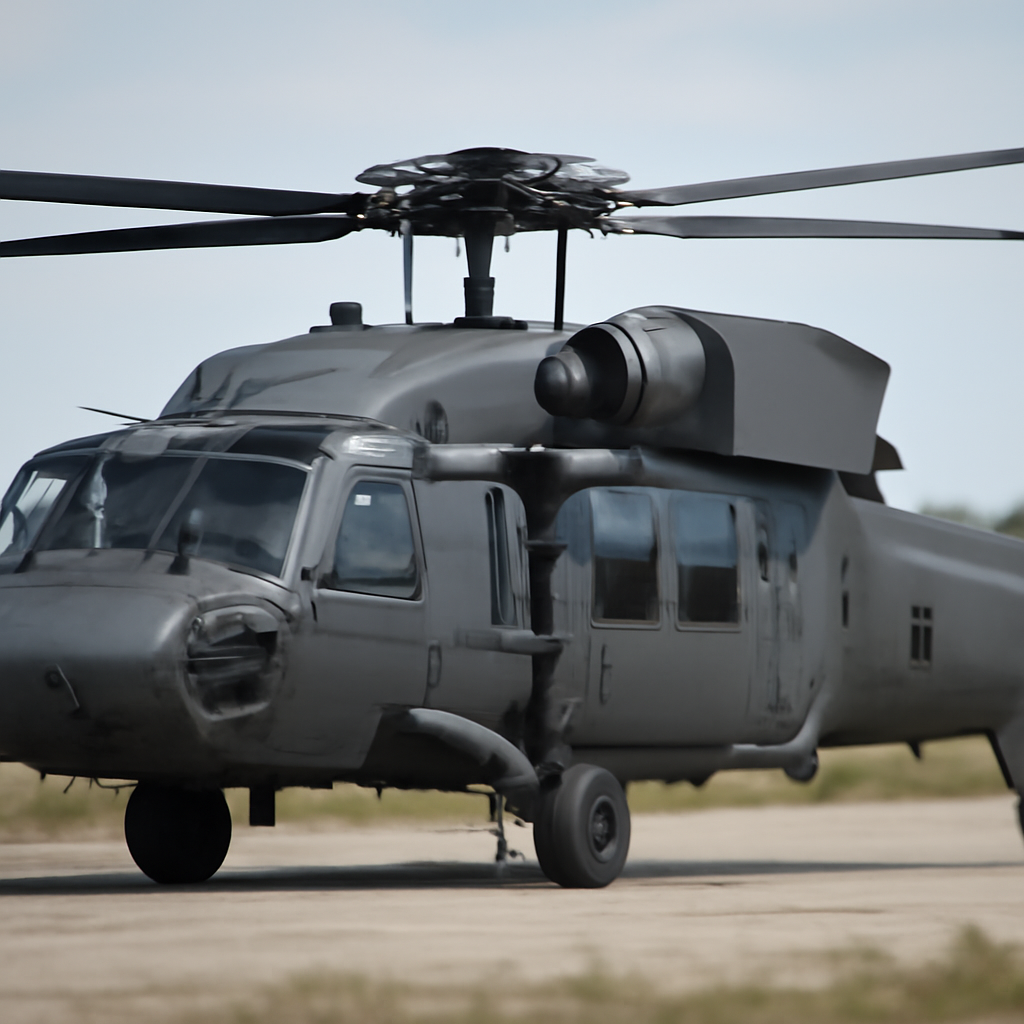
The Army’s 160th Special Operations Aviation Regiment (the Night Stalkers) operates MH-60M Black Hawks that are heavier and outfitted with unique systems compared with typical H-60 variants. Night Stalker MH-60Ms feature terrain‑following/terrain‑avoidance radar, other sensors, defensive systems, and an extensive communications suite. A subset of MH-60Ms are configured as Direct Action Penetrators (DAP) armed with guns, missiles, launched effects, and rockets to provide organic close air support.
To handle extra weight, many Night Stalker MH-60Ms already fly with GE YT706 turbine engines, which Lt. Col. Keogh said have “higher fuel consumption, but … a higher output to help us keep that extra weight in the air.” Any move to integrate the T901 into SOCOM aircraft is attractive because of the engine’s promised combination of higher power and better fuel economy—benefits that align with the Regiment’s long‑range, austere operating profile.
The source also notes operational use: the 160th’s MH-60Ms, including DAP-configured helicopters, were a key element of Operation Absolute Resolve to capture Nicolas Maduro, then Venezuela’s dictatorial president, in January.
What this means for SOCOM, the Army, and Congress
- SOCOM and the 160th: They will continue planning Block 1.2/Block 2 upgrades with a clear dependency on whether the T901 becomes available and mature; officials are configuring current hardware and weight distribution to preserve mission capability even if re‑engining is delayed.
- The Army acquisition community: Program executives describe ITEP as “performing as intended” and press on with testing funded in part by congressional appropriations, while the service’s own budget submissions have repeatedly declined to request new ITEP funding in recent fiscal cycles.
- Congress and appropriators: Congress directly influenced near‑term program life by appropriating $238 million after the Army requested no new funds in FY26; future congressional decisions will be decisive for EMD completion if the Army’s 2027 request again omits new funding.
The MH-60M will remain a central component of Night Stalker fleets for years to come, SOCOM officials emphasize, whether or not those helicopters are re‑engined. But the degree to which Block 1.2 or Block 2 upgrades can exploit the promised performance gains of the T901 depends on two interlinked facts: whether ITEP completes its testing and certification trajectory, and whether the program receives the funding it needs to finish EMD. Those are the milestones to watch as the clock ticks toward Fiscal Year 2030.