U.S. Aircraft Carriers Deploy and Redeploy Across the Globe
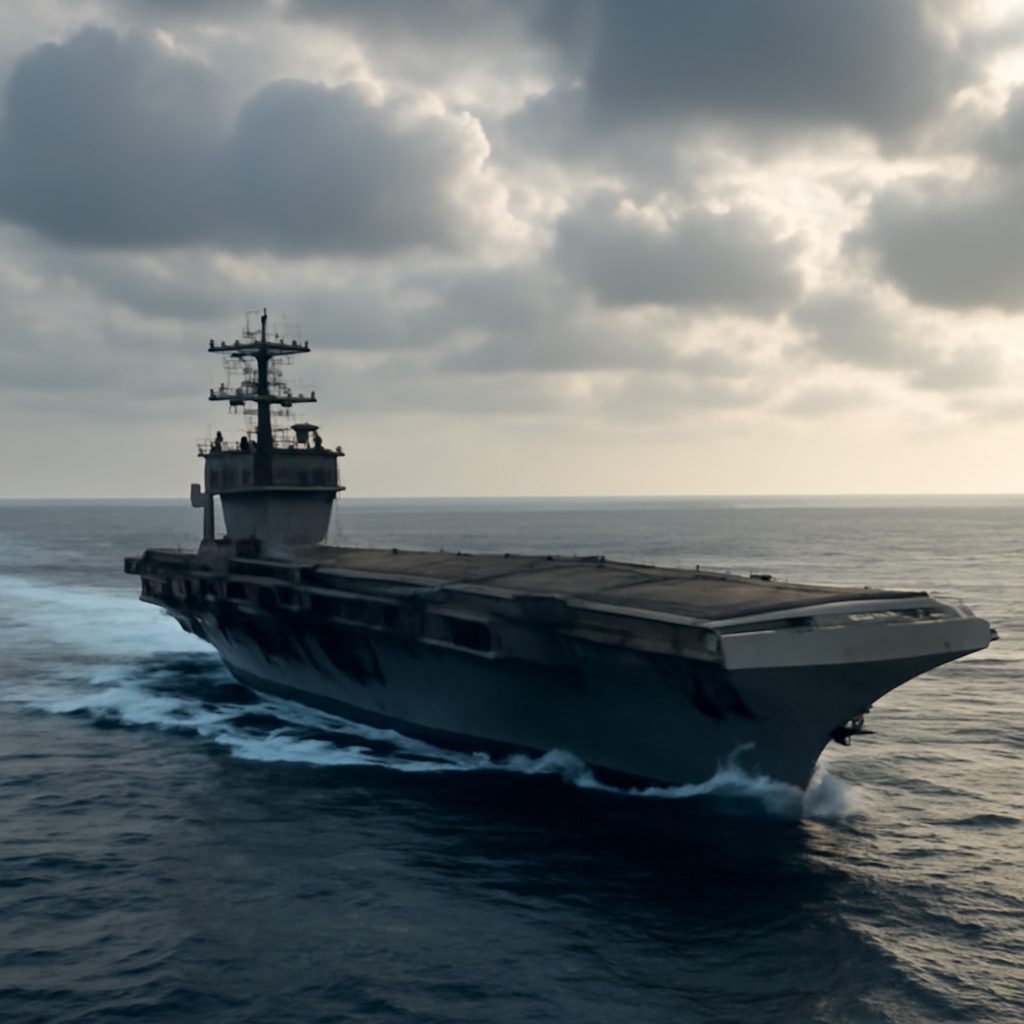
On a hazy, humid Sunday morning, just before 9:30 a.m. local time, the USS Theodore Roosevelt sailed out of San Diego Bay for a much-anticipated but little-advertised deployment. The Nimitz class flagship of Carrier Strike Group 9 (CSG-9), nicknamed “The Big Stick,” departed on September 27 and is expected to head to the Middle East to relieve one of the two carriers on station supporting operations against Iran, according to USNI News.The USS Theodore Roosevelt’s transit leaving San Diego was tracked via MarineTraffic, which showed the supercarrier steaming past Point Loma at seven knots before sailing west and picking up speed, topping 24 knots, then making a hard turn south and stopping transmitting on Automatic Identification System (AIS) roughly three hours after departing.
The three guided-missile destroyers, USS Paul Hamilton, USS Decatur, and USS Carl M. Levin, are part of CSG-9 and will escort the flattop. The Ticonderoga class guided-missile cruiser USS Chosin will serve as the Integrated Air and Missile Defense (IAMD) commander for the CSG. The carrier has embarked Carrier Air Wing (CVW) 11 off the West Coast before beginning the long journey toward the Western Pacific.
Theodore Roosevelt’s Deployment and Relief Efforts
USNI News was the first outlet to confirm the deployment and suggests the CSG is headed to the Middle East. “The Theodore Roosevelt Carrier Strike Group is expected to move to U.S. Central Command to relieve the Japan-based USS George Washington (CVN-73),” they wrote in a report published on Monday. In response to a request to confirm the deployment, a Navy official told TWZ, “The Theodore Roosevelt Carrier Strike Group is underway conducting routine operations in the U.S. 3rd Fleet area of operations.”Roosevelt has been preparing for the cruise for the better part of a year. The CSG last deployed from January 11 to October 15, 2024, to the U.S. 5th and 7th Fleet areas of responsibility (AOR) in support of Operation Prosperity Guardian. After arriving back home nearly two years ago, the carrier underwent an eight-month Planned Incremental Availability (PIA).

Audit-ready is a season. It shouldn't be.
Evidence in spreadsheets, controls drifting between audits, frameworks multiplying on flat headcount. Nubivance runs continuous compliance on Rapid7 Cyber GRC - SOC 2, HIPAA, ISO 27001, PCI, CMMC.
End the scrambleOther U.S. Carrier and Amphibious Ready Group Deployments
The three-ship Makin Island Amphibious Ready Group (ARG), with the 13th Marine Expeditionary Unit (MEU) embarked, got underway for a deployment on September 28. No destination has been formally announced, but there is an obvious candidate for relief: the Boxer ARG, currently on station in the U.S. Central Command (CENTCOM) AOR supporting blockade and interdiction operations in the Arabian Sea and Indian Ocean.Meanwhile, USS Abraham Lincoln is 314 days into her deployment and less than two weeks shy of surpassing the 326-day record USS Gerald R. Ford set in May. Acting Secretary of the Navy Hung Cao visited the ship as it transited in the U.S. 7th Fleet AOR, en route to her homeport in San Diego.
Recent Incidents and Upcoming Port Calls
A Growler mishap occurred on the aircraft carrier USS Dwight D. Eisenhower (Ike) on Monday, with two crew members ejecting due to an arresting gear failure. The incident took place off the coast of Virginia, and the aviators were rescued safely.Reports surface that USS George H.W. Bush and destroyer USS Delbert D. Black will make a port call in Phuket, Thailand, in early October. If confirmed, this would leave one carrier, the USS George Washington, on station in the U.S. 5th Fleet AOR for the first time since April.
What this means for U.S. Naval Operations and Allies
The ongoing deployments and redeployments of U.S. aircraft carriers and amphibious ready groups have significant implications for U.S. naval operations and its allies. The U.S. Navy’s ability to project power and maintain a strong presence in various regions, particularly in the Middle East, will be closely watched by policymakers, military strategists, and the general public.For the U.S. naval forces, the focus will be on maintaining readiness and ensuring successful transitions between deploying and returning units. Allies and partners will be monitoring the situation closely, as the U.S. naval presence often serves as a deterrent and a symbol of commitment to regional security.